
Manufacturing Halted, Jobs Lost at Derbyshire Ceramics Giant
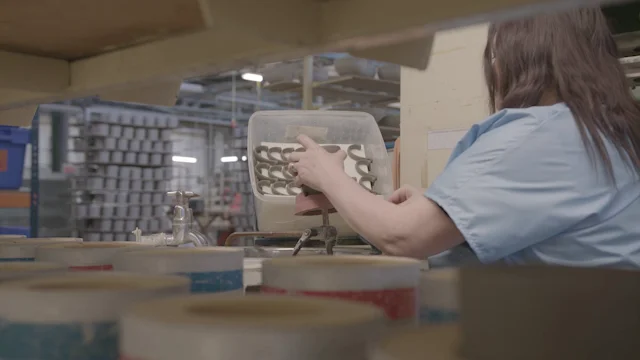
One of Britain's most storied ceramics makers has reached a breaking point. Denby Pottery, which has been handcrafting tableware in Ripley, Derbyshire since 1809, has permanently shut down its making and design departments after administrators confirmed they could not find a buyer for its manufacturing operations. The announcement, made on April 23, 2026, adds a further 49 redundancies to the roughly 80 jobs already lost earlier this month, deepening what workers and union officials are calling a national industrial tragedy.
FRP Advisory, the firm appointed as administrators on March 31, confirmed the closure in a statement acknowledging the gravity of the decision. Joint administrator Tony Wright said the news was "another very difficult day for the skilled workers at Denby," adding that "despite extensive efforts, we have been unable to find a buyer for the manufacturing operations." Discussions are said to be continuing with interested parties regarding other parts of the Denby business, though no further details have been provided.
Workers and Union Respond with Anger
The GMB union, which represents workers at the site, did not mince words. Local organiser Craig Thomson described the closures as "shameful and totally avoidable," accusing administrators of stripping the company of its most vital asset — the skill of its potters. "We will resist and fight for workers for their voice to be heard," Thomson said, warning that the union would not accept what it characterised as a rushed process that may be breaching legal obligations to employees. Thomson went further, placing responsibility squarely on the government: "The collapse of a British icon will be on their watch if they don't intervene."
Why Denby Collapsed — and Why It Matters Beyond Derbyshire
Denby's descent into administration was not sudden. Former CEO Sebastian Lazell has pointed to soaring energy costs as the primary cause of mounting losses, a structural problem that has been eroding margins for years but was dramatically accelerated by global energy market instability — including disruptions linked to the Iran conflict, which has driven up industrial electricity prices across British manufacturing.
Denby employed more than 500 people across its Derbyshire operations and supplied major retailers including John Lewis, Lakeland, and Dunelm, as well as hospitality clients such as the José Pizarro Group and Morston Hall. Its "made in England" identity was central to the brand's premium positioning — a heritage now at severe risk of disappearing entirely from the production side of the business.
The Energy Cost Crisis Threatening UK Ceramics
Denby's story is not an isolated one. According to former marketing director and now activist Hayley Baddiley, who was made redundant from Denby, the ceramics sector as a whole employs more than 20,000 people across the UK and contributes roughly £2 billion to the national economy. Yet ceramics manufacturers are currently excluded from the British Industry Supercharger scheme — a government initiative that provides relief on electricity costs for energy-intensive industries such as steel and chemicals.
Baddiley launched a petition calling on the government to extend the Supercharger scheme to ceramics manufacturers. The petition gathered 40,000 signatures in just four days, and by April 22 had surpassed 50,000 — with 100,000 signatures required to trigger a parliamentary debate. Amber Valley MP Linsey Farnsworth, who represents the constituency where Denby is based, is backing the campaign and has described public support as a "key factor" in attracting any future strategic investor.
Baddiley, who spent 12 years at Denby before losing her role, was candid about the emotional weight of the campaign. "Personally, it's been a real challenge. I came to love the brand, the business and the incredible people," she told the BBC, while acknowledging it may already be "too late" to save Denby's manufacturing operations. Her goal, she said, is to ensure other British ceramics companies do not face the same fate.
A Warning Sign for British Industrial Policy
The Broader Stakes for UK Manufacturing
Denby's collapse is a case study in the vulnerabilities of energy-intensive British industry at a time when global supply shocks are becoming more frequent and more severe. The firm's difficulties mirror those seen in other traditional manufacturing sectors — glassmaking, foundries, brick production — where high fixed energy costs make it almost impossible to absorb sudden price spikes without state support.
Critics argue that the exclusion of ceramics from schemes like the British Industry Supercharger reflects a piecemeal approach to industrial policy, where support is allocated reactively rather than through a coherent framework for protecting foundation industries. The Denby case has brought fresh urgency to that debate. Whether Parliament ultimately holds a debate on the petition remains to be seen, but the political pressure is clearly mounting.
For now, administrators continue to seek buyers for the non-manufacturing elements of the Denby business — potentially its brand, retail operations, and distribution network. Whether the Denby name survives in any meaningful form, and whether future products can still credibly claim to be "made in England," depends on decisions that may be made in the coming weeks. What is already certain is that more than two centuries of unbroken ceramic craft production in Derbyshire have come to an end.
Comments