
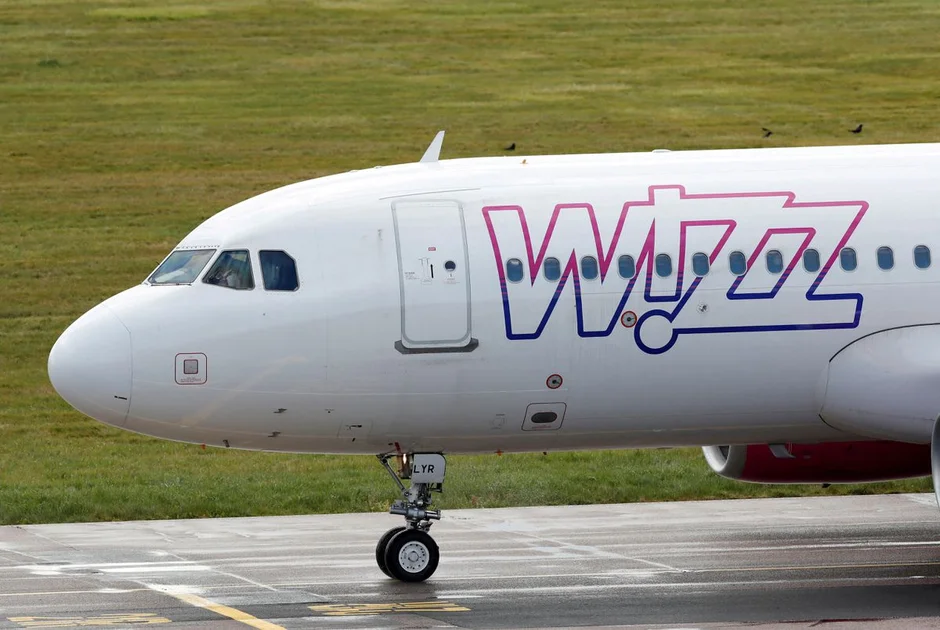
Wizz Air Doubles Down on European Routes After Shuttering Middle East Venture
Wizz Air is making headlines this week on two fronts: a bold expansion push at Málaga Airport and a candid reckoning with the costly failure of its Abu Dhabi joint venture. The Budapest-based ultra-low-cost carrier (ULCC) announced it will increase capacity at Málaga-Costa del Sol Airport by 26% in 2026, operating some 7,400 annual flights from the southern Spanish hub. At the same time, industry analysts and the airline's own executives are still processing the lessons learned from Wizz Air Abu Dhabi, which ceased operations on September 1, 2025 after a troubled four-year run.
Three New Routes Put Málaga on the Map
In a presentation held in partnership with Turismo Costa del Sol, Wizz Air confirmed three new international routes launching from Málaga in 2026: Varna (from June), Venice (from September), and Turin (from October). The airline says 75% of its Málaga operations will be operated by Airbus A321neo aircraft, among the most fuel-efficient narrowbodies currently in commercial service. According to Andras Rado, Wizz Air's head of communications, Málaga is no longer simply a beach destination — it is a "business and cultural hub that demands first-class connectivity." Antonio Díaz, director general of Turismo Costa del Sol, echoed that sentiment, pointing to growing demand from markets including Poland, Albania, Bulgaria, Hungary, Lithuania, and Romania as evidence that the city's international appeal is broadening well beyond traditional British and Western European tourism.
The Abu Dhabi Experiment: What Went Wrong
The optimism surrounding Málaga stands in stark contrast to the turbulence that characterized Wizz Air's Middle East chapter. The airline launched Wizz Air Abu Dhabi in January 2021 as a 49%-owned joint venture with the Abu Dhabi Developmental Holding Company. The premise was straightforward: leverage the emirate's geographic position to offer low-cost connectivity between Abu Dhabi and destinations across Europe, Asia, and Africa — catering both to tourists and migrant laborers.
In practice, the model struggled from the start. Long-haul flying is structurally incompatible with the ULCC playbook, which depends on short stage lengths, rapid aircraft turnarounds, and consistently full planes. Wizz Air Abu Dhabi faced high maintenance costs, persistent engine reliability problems, and restrictions on the routes it was permitted to operate. The 12-aircraft fleet was closed down in September 2025.
Geopolitics Adds an Unexpected Twist
What nobody at Wizz Air headquarters could have planned for was what came next. Months after the Abu Dhabi closure, military exchanges between Israel, the United States, and Iran led to missile and drone strikes targeting the UAE — a scenario that would have severely disrupted any remaining operations in the region. By that point, only around 4.7% of Wizz Air's total capacity was still deployed to Middle Eastern destinations, primarily long-haul services from European bases to Saudi Arabia, the UAE, Israel, and Jordan.
Wizz Air chief commercial officer Ian Malin acknowledged the timing with dry understatement in a recent interview. "A lot of people say, 'You look really smart,'" he noted, while being clear that the withdrawal was driven by persistent operational headaches rather than geopolitical foresight. Malin pointed to a recurring pattern: whenever political instability flared in the region, the airline's capacity plans were thrown into disarray. The decision to exit, he argued, was fundamentally about restoring operational predictability — even if history made it look prescient in hindsight.
It is worth noting that Ryanair's Michael O'Leary had been vocal for years about the structural flaws in Wizz's Abu Dhabi strategy, arguing that ULCCs are built for short-haul density, not long-haul ambition in unfamiliar markets. Events have largely validated that critique, though the geopolitical dimension was beyond anyone's forecast.
What Wizz Air's Pivot Means for the ULCC Landscape
The dual storyline — contraction in the Middle East, expansion in southern Europe — illustrates a broader recalibration underway at Wizz Air. The carrier appears to be refocusing on the geographic and demographic sweet spot where it has historically outperformed: Eastern and Central European origin markets, combined with leisure-heavy Mediterranean destinations. Málaga fits squarely within that template, offering high-frequency demand from price-sensitive travelers across a wide spread of European cities.
The emphasis on A321neo aircraft also signals a longer-term strategic logic. Fuel efficiency and reduced noise emissions are increasingly important as European airports face environmental scrutiny, and airlines that can demonstrate lower per-seat carbon output gain a competitive edge in route negotiations with airport authorities and regional governments.
For investors and industry watchers, the question is whether Wizz Air's European refocus is enough to restore confidence after several years of turbulence — financial, operational, and reputational. The Abu Dhabi episode cost the airline real money and management bandwidth. But the Málaga announcement, combined with reported strengthening of operations in Italy and other Eastern European markets, suggests that Wizz Air's leadership is determined to return the airline to the fundamentals that made it one of Europe's fastest-growing carriers in the first place.
The road back is unlikely to be smooth. Competition from Ryanair remains fierce across virtually every market Wizz Air serves, and macroeconomic pressures continue to squeeze discretionary travel budgets. But if the ULCC model is to work anywhere, it is in the short-haul, high-density corridors connecting Europe's cities — precisely where Wizz Air is now redoubling its efforts.
Comments