
Rare Tornadoes and Typhoon Flooding Leave Dozens Dead in China
At least 17 people have been killed and hundreds more injured after a series of rare tornadoes tore through central China's Hubei province late Monday, while Typhoon Maysak continues to unleash catastrophic flooding in the southern Guangxi region. The extreme weather, which state media has described as sudden and intense, has affected tens of thousands of people and prompted Chinese President Xi Jinping to order "all out" rescue and relief operations.
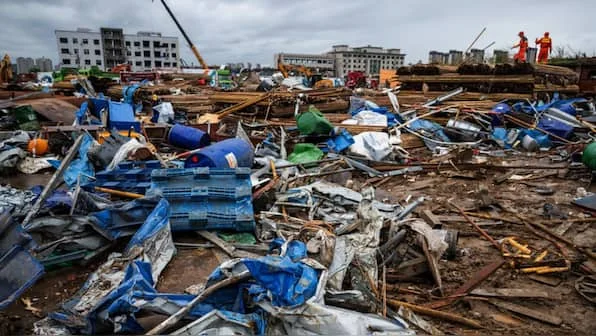
According to the official Xinhua News Agency, the severe weather in Hubei impacted approximately 14,600 residents. Over 330 people were injured, and one person remains missing. More than 20 houses collapsed, and over 4,800 others sustained damage. The storms, which were accompanied by violent thunderstorms, spawned a rare EF2 tornado that swept through Huanggang city, lifting multiple trucks and severely damaging a logistics company and a warehouse project. Winds reached speeds strong enough to displace vehicles as far as 98 feet, according to local reports.
Videos circulating on social media and broadcast by outlets like Shanghai Daily captured the terrifying moments as the storm struck. One clip showed people on the ground floor of a building screaming as high winds forced open glass doors, shattering one of them. Armed police officers and rescue workers have been deployed to the hardest-hit areas, where they are evacuating residents and searching for survivors amidst the debris.
Meanwhile, in southern China, the situation remains dire. Typhoon Maysak, the first typhoon to make landfall in the country during the 2026 season, has caused record-breaking rainfall in the Guangxi region. In Hengzhou city alone, at least four people have died and eight remain missing. The Guangxi government issued a red alert, the highest possible level, for flooding on Tuesday. River levels have reportedly risen to up to 24 feet above warning levels. More than 53,000 people have been evacuated in Hengzhou, with an additional 8,000 evacuated in neighboring Binyang county.
The Unfolding Crisis: From Rapid Flooding to Tornadoes
The devastation began to unfold over the weekend as Typhoon Maysak swept through the region. In Renhe village, Guangxi, residents described the terrifying speed at which the water rose. One woman, surnamed Zhou, told the BBC that the floods happened so rapidly that villagers had no time to take food with them as they fled. By Monday morning, the water had completely submerged the first floors of homes, forcing families to seek refuge on rooftops, where many called for rescue.
The typhoon's impact was not limited to Guangxi. Its remnants interacted with local weather patterns to trigger the deadly thunderstorms and tornadoes in Hubei, an area where tornadoes are considered exceptionally rare. Meteorological expert Wang Xiaoling told the Hubei Daily that multiple factors, including the remnants of Tropical Storm Maysak, contributed to the outbreak. Typically, tornadoes in China are recorded in southern and coastal provinces such as Guangdong and Jiangsu, making the Hubei event particularly notable.
The scale of the disaster has mobilized the highest levels of government. President Xi Jinping has urged for all-out efforts to rescue those affected, recover the missing, and restore basic services. Emergency response teams are working around the clock, but the combination of widespread flooding, damaged infrastructure, and the threat of further storms presents significant challenges.
The Human Toll and Immediate Response
In Hubei, rescue teams are prioritizing the search for the missing individual while providing medical care to the hundreds of injured. The collapse of over 20 homes and damage to thousands more has displaced many families, though official evacuation numbers for the province are still being compiled. The destruction of the logistics and warehouse facility in Huanggang has raised concerns about supply chain disruptions in the region, which is a key industrial and transport hub.
In Guangxi, the situation is more widespread. The flooding has inundated the city of Nanning and surrounding villages. Tens of thousands of people are in temporary shelters, and the government has deployed boats and helicopters for rescue operations. The bursting of a dam wall in the region, as reported by state media, has exacerbated the flooding, leading to even more rapid rises in water levels in low-lying areas.
Why This Matters: A Convergence of Rare and Severe Weather Events
The simultaneous occurrence of record-breaking typhoon floods and rare inland tornadoes underscores the increasing volatility of weather patterns in China. While typhoons are a seasonal norm, the intensity of Maysak—described by state media as having "sudden onset and intense, short-duration winds"—has caught many communities off guard. The fact that tornadoes struck in Hubei, a province not prone to such phenomena, highlights the complex and sometimes unpredictable interactions between tropical systems and local weather fronts.
This disaster also carries significant economic and logistical stakes. Hubei is a major manufacturing and logistics center, and Guangxi is a key agricultural region. The destruction of warehouses, transport routes, and farmland could have ripple effects on local economies and supply chains. The evacuation of over 60,000 people in Guangxi alone represents a massive humanitarian and logistical effort.
A Nation on Alert: Escalating Risks
China is no stranger to severe summer weather, but the 2026 season is off to a particularly violent start. The compound effects of Typhoon Maysak—which has already caused widespread flooding and tornadoes—are being compounded by the approach of another major storm. Super Typhoon Bavi is currently churning across the Pacific and is forecast to hit China's eastern coast later this week. This raises the specter of a back-to-back disaster scenario, where emergency services are stretched thin even as new threats emerge.
The government's response has been swift, but the scale of the damage is immense. In Guangxi, the red alert for flooding means that further evacuations may be necessary as river levels continue to rise. The situation in Hubei remains critical as rescue workers continue to sift through damaged structures.
Broader Implications: Climate Change and Infrastructure Vulnerability
These events fit into a broader global pattern of extreme weather events that scientists increasingly link to climate change. China, like many countries, is experiencing more frequent and intense storms, heatwaves, and floods. The fact that a region like Hubei—which is not historically prone to tornadoes—experienced an EF2 tornado suggests that weather patterns are shifting in unpredictable ways.
This evolving reality places immense pressure on China's infrastructure and emergency preparedness systems. While the country has made significant investments in flood control and disaster response, the speed and intensity of this week's events have exposed vulnerabilities. The rapid flooding in Guangxi, which overpowered a dam wall, raises questions about the resilience of existing flood defenses against record-breaking rainfall.
The Global Context of the Disaster
The impact of Typhoon Maysak and the accompanying tornadoes is not just a Chinese story. It is a stark reminder of how interconnected weather systems can create cascading disasters. The same storm system that flooded Guangxi also spawned tornadoes hundreds of kilometers away in Hubei, demonstrating the far-reaching influence of tropical cyclones. As global temperatures rise, experts warn that such compound events—where one storm system triggers multiple types of severe weather—may become more common.
For context on other recent global events shaping the news cycle, while the focus remains on the humanitarian crisis in China, readers can find related international coverage elsewhere. For instance, the ongoing NATO spending feud has led to Trump ordering a halt to US trade with Spain, a development that continues to dominate geopolitical headlines. Meanwhile, the sporting world watches as Wimbledon 2026 Quarterfinals feature Fery and Djokovic in a heavily anticipated match.
What This Changes: The Future of Disaster Preparedness
The events of July 7-8, 2026, are likely to prompt a significant reassessment of disaster preparedness in central China. The rarity of tornadoes in Hubei means that early warning systems and public awareness campaigns for such events may be inadequate. Similarly, the unprecedented flooding in Guangxi will likely lead to reviews of dam safety and urban drainage systems.
President Xi's directive for "all out" rescue efforts signals the government's recognition of the severity of the situation. Moving forward, we can expect increased investment in meteorological monitoring and rapid response capabilities, particularly for the kinds of rare but devastating events that have just occurred.
A Warning for the Coming Days
With Super Typhoon Bavi looming, the immediate focus is on preventing further loss of life. Evacuation efforts in the eastern coastal provinces are likely already underway. The combination of saturated ground from Maysak's rains and the potential for new flooding from Bavi could create a catastrophic scenario if the two storms overlap in impact zones.
The coming days will test the resilience of China's emergency management systems. For now, the toll stands at 17 dead, hundreds injured, and tens of thousands displaced. Those numbers may rise as rescue operations continue and the full extent of the damage becomes clear. The nation—and the world—watches as China battles the fury of nature on an extraordinary scale.
Comments