
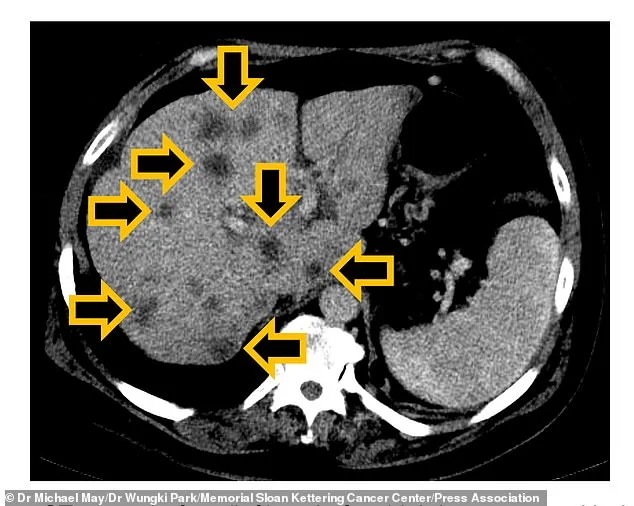
Breakthrough Trial Results
A once-daily pill has been hailed as the biggest breakthrough in pancreatic cancer treatment in decades after early clinical trial results showed it could shrink – and in some cases eliminate – tumours in patients with advanced disease. The drug, daraxonrasib, was given in combination with standard chemotherapy to 61 patients newly diagnosed with metastatic pancreatic cancer. In 8.2% of participants – roughly one in 12 – the cancer became undetectable on CT scans. Tumours stopped growing in 90.2% of patients, and 60.7% saw their tumours shrink or disappear. After one year, 76.6% of patients were still alive, compared with 40-45% typically seen with chemotherapy alone.
The findings were presented by Dr Wungki Park, a gastrointestinal medical oncologist at Memorial Sloan Kettering Cancer Center in New York, at the EORTC-NCI-AACR Symposium on Molecular Targets and Cancer Therapeutics in Barcelona. Dr Park described the results as “the closest to cure” he had seen for patients whose cancer had spread, adding that he had never witnessed so many tumours disappear in this group. “We are beginning to see not only a higher percentage of tumour response rates, but also deeper responses and a near doubling in the duration of disease control,” he said. The trial followed patients for an average of 18 months, with some showing no sign of the cancer returning during that period.
Key Numbers from the Phase 1/2 Study
- 8.2% of patients had complete responses (cancer undetectable)
- 60.7% saw tumours shrink or disappear
- 90.2% achieved disease control (tumours stopped growing)
- 76.6% survival at one year, versus ~40-45% with chemotherapy alone
- 12.8 months average time before tumours returned or started growing again
A Deadly Cancer Finally Yields
Pancreatic cancer is among the deadliest of all common cancers. Half of those diagnosed die within three months, and only about 3% survive five years once the disease has spread. In the UK, it has the lowest survival rate of all common cancers, and the prognosis is similarly poor globally. Chemotherapy can slow progression but rarely stops the cancer for long, and most patients with advanced disease survive months, not years.
Daraxonrasib works by locking onto the mutated KRAS gene, which is present in more than nine in 10 pancreatic tumours and continuously signals cancer cells to grow. By shutting down this signal, the drug can prevent tumours from spreading and, in some cases, trigger their disappearance. The drug made headlines in May when earlier data showed it nearly doubled survival time compared with chemotherapy alone and caused fewer side effects. The latest results build on that promise, suggesting that the combination with chemotherapy may offer even greater benefit.
“What this new drug has done is it's found a way of drugging the undruggable,” Dr Sam Godfrey of Cancer Research UK told the BBC. “We are finally seeing progress in pancreatic cancer which is so long overdue.” Cancer Research UK called the results “the biggest leap forward in decades” for patients.
From ‘Undruggable’ to Treatable
The KRAS gene has long been considered undruggable because its protein product lacks obvious binding pockets for drugs. Daraxonrasib is part of a new wave of RAS-targeted therapies that have begun to change that. In May 2026, the US Food and Drug Administration granted expedited approval to daraxonrasib (brand name Rasonque) as the first direct RAS-targeting oral therapy for metastatic pancreatic ductal adenocarcinoma after at least one prior systemic treatment or when combination chemotherapy is not feasible. The approval was based on Phase 3 data showing improved median overall survival (13.2 vs 6.7 months) and disease control (7.2 vs 3.6 months) compared with chemotherapy, alongside better pain and quality-of-life trajectories.
For patients like Brad Dugai, a 53-year-old from Virginia, the drug has been life-changing. Diagnosed with Stage 3 pancreatic cancer in spring 2024, Dugai underwent chemotherapy and radiation, but the cancer returned in a lymph node eight months later. By the time he enrolled in a daraxonrasib trial at Duke Health, the lymph node had grown to the size of a large plum and was pressing on nerves in his leg, causing a limp. Within months of starting the pill, his tumour shrank dramatically. “It’s given me my life back,” he said in an interview with CURE. “I’m back on the water, back at work, and planning trips again.”
Challenges on the Road to Wider Access
Despite the enthusiasm, doctors caution that daraxonrasib is not yet a cure. It is unclear how long the drug can keep the disease at bay, and longer studies are needed to determine whether any patients can achieve sustained remission. The trial is ongoing, and researchers are monitoring participants for signs of recurrence. Side effects are also a consideration: dermatologic toxicity is common, with rash occurring in 86% of patients. Prophylactic antibiotics and topical treatments, early dermatology involvement, and planned dose holds or reductions can help preserve treatment continuity, but managing these side effects requires careful coordination.
Cost is another barrier. Daraxonrasib has a list price of approximately $40,000 per month, which requires early payer engagement, specialty pharmacy coordination, and manufacturer assistance programs to prevent therapy interruption. As with many oncology drugs, access may vary by country and insurance coverage. In the UK, the National Institute for Health and Care Excellence (NICE) is expected to review the drug for cost-effectiveness, a process that could take months.
What Patients Should Know
- Daraxonrasib is approved for metastatic pancreatic cancer after at least one prior treatment or when chemotherapy is not feasible.
- Biomarker testing (NGS) at diagnosis and at progression is critical to confirm RAS status and guide treatment sequencing.
- The drug is taken orally once daily, often in combination with chemotherapy.
- Side effects, particularly rash, are manageable with proactive care.
- Clinical trials are ongoing for earlier-stage disease and combination approaches.
A New Era for Pancreatic Cancer?
The daraxonrasib results come amid a broader renaissance in cancer treatment, with targeted therapies and immunotherapies transforming outcomes for many hard-to-treat cancers. Pancreatic cancer, however, has remained stubbornly resistant. The latest findings offer a glimmer of hope that the disease may finally be succumbing to precision medicine. Researchers are now exploring combination strategies with immunotherapy and other targeted agents, and earlier use of daraxonrasib in newly diagnosed patients is being tested.
For now, the focus is on longer follow-up to see if the complete responses translate into durable remissions. Dr Park and his colleagues plan to present updated data at future conferences. “This is a massive, massive breakthrough,” Dr Park said. “But we need to be cautious. We don’t know how long it will last. We need more time and more patients.”
As the oncology community gathers in Barcelona, the mood is one of cautious optimism. For patients like Dugai, the drug has already delivered more than anyone dared to hope. “I was told I might have months,” he said. “Now I’m looking at years.”
The Path Ahead
The trial’s findings have sparked interest from regulators and payers worldwide. In the US, the FDA’s expedited approval in May was based on earlier data; the new results may support broader labelling. In Europe, the European Medicines Agency is reviewing the drug under its accelerated assessment programme. Meanwhile, patient advocacy groups are calling for swift access and expanded biomarker testing to identify those most likely to benefit.
“We need to make sure that patients who could benefit can get tested and treated,” said Dr Godfrey. “This is a treatment that works, and it’s our job to make sure it reaches the people who need it.”
Comments