
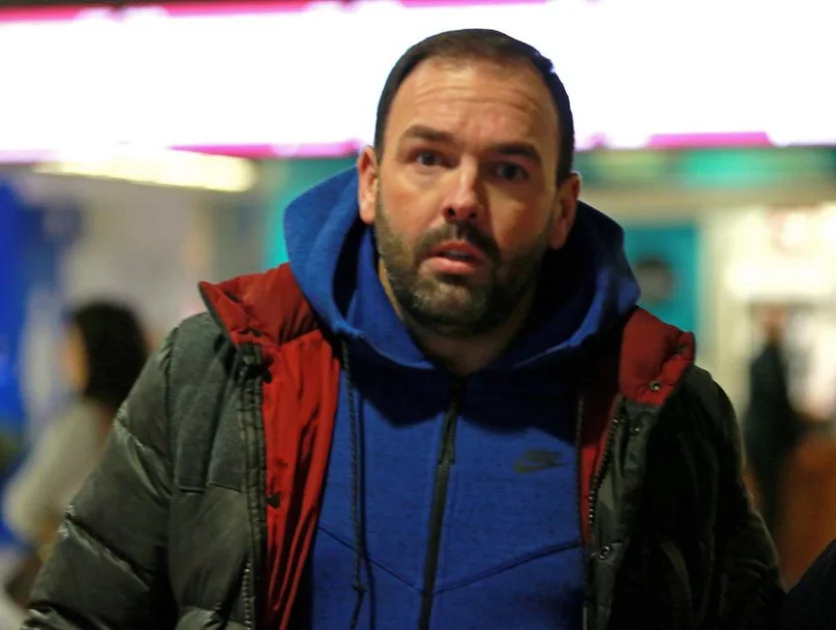
Cartel Leader Seized in Dubai After Covert Operation
Daniel Kinahan, the alleged leader of the Kinahan organised crime group and one of Ireland's most wanted men, was arrested in Dubai on Wednesday, April 15, 2026, as part of a secret joint operation between the Irish police force An Garda Síochána and authorities in the United Arab Emirates. The news of his capture only became public on Friday, April 17, when both the Garda and Dubai Police simultaneously confirmed the arrest.
Dubai Police, acting in collaboration with the UAE Ministry of Interior, confirmed that specialised teams had launched intensive search and surveillance operations after receiving a judicial file from Irish authorities. An arrest warrant was issued by Dubai Public Prosecution, and Kinahan was apprehended within 48 hours. In a statement, Dubai Police described the 48-year-old Dubliner as an "Irish fugitive" arrested for his "alleged role in an international organised crime network," praising the operation as a demonstration of their "rapid response and operational readiness in handling international cases."
Gardaí, while not officially naming Kinahan in their initial statement, confirmed the arrest of an Irish national in his late 40s in the UAE on foot of a warrant issued by the Irish Courts in relation to alleged serious organised crime offences. The arrest, they noted, was conducted in accordance with the bilateral extradition agreement between Ireland and the United Arab Emirates — a treaty formalised only in 2025.
A Decade in the Making: The Charges and the Manhunt
From Feud to File to Arrest
The arrest represents the culmination of years of painstaking investigative work. According to The Irish Times, the Garda had been building a case against Kinahan since at least 2023, when a file was formally sent to the Director of Public Prosecutions (DPP). The DPP has now directed that Kinahan face charges related to organised crime offences, believed to be connected to the notorious Kinahan-Hutch feud, a gangland conflict that tore through Dublin between 2015 and 2018 and was linked to 18 murders.
Gardaí have long maintained that Kinahan directed much of the violence during that period, even while residing openly in Dubai. The process of charging him and securing an extradition warrant was conducted in secret in Ireland in the days immediately preceding his arrest, underlining the sensitivity of the operation and the risk that any leak could have allowed him to flee.
Ireland and UAE: A Partnership Bearing Fruit
Irish Justice Minister Jim O'Callaghan confirmed on Friday that the arrest followed his personal extradition request to the UAE. "In recent years, the UAE and Ireland have worked closely together to advance criminal investigations into serious and organised crime, including the agreement of bilateral treaties on extradition and mutual legal assistance in 2025," he said, adding that he had spoken directly with UAE Minister of Justice Abdullah Sultan bin Awad Al Nuaimi to express his gratitude. The minister commended the Garda National Drugs and Organised Crime Bureau, the Office of the Director of Public Prosecutions, and both countries' diplomatic departments for their coordinated efforts.
Why This Arrest Matters: Stakes for European Organised Crime
The significance of Kinahan's arrest extends well beyond Ireland's borders. The Kinahan cartel is not merely a domestic criminal enterprise — it is considered a key node in what investigators have described as a "super cartel" that controls approximately one third of the European cocaine market. For years, Kinahan operated from Dubai with apparent impunity, a status that frustrated law enforcement agencies across Europe and beyond.
The United States had previously designated Kinahan and key associates under its Kingpin Act in 2022, offering a $5 million reward for information leading to his capture. Despite this international pressure, Kinahan remained free in the UAE, a jurisdiction not previously known for extraditing suspects to Western nations. The signing of the bilateral extradition treaty between Ireland and the UAE in 2025 was widely seen as a diplomatic breakthrough — and this week's arrest is its most dramatic practical application yet.
For the wider world of boxing, Kinahan's arrest also carries weight. He had long operated as a boxing promoter and manager, with connections to high-profile fighters worldwide. His influence over parts of the sport had drawn scrutiny from governing bodies and law enforcement alike. Those ties now face significant disruption. The intersection of organised crime and professional sport has been a recurring concern in recent years — a dynamic also observed in other combat sports contexts, such as the scrutiny surrounding Conor Benn's career and the figures around it.
Broader Implications: A New Era of Transnational Law Enforcement
The Kinahan arrest sends a clear message about the evolving architecture of international law enforcement cooperation. For much of the past decade, organised crime figures have exploited gaps between legal jurisdictions, establishing themselves in countries that lacked extradition frameworks with their home nations. The UAE, once considered a relative safe harbour, has increasingly signalled its willingness to engage in bilateral law enforcement partnerships.
An Garda Síochána called the operation "an extremely important demonstration of the need for international law enforcement co-operation in tackling transnational organised crime," and emphasised that its determination to pursue suspects "wherever they go" was no longer merely rhetorical. The speed of the UAE's response — from receipt of the Irish judicial file to arrest in under 48 hours — underscores how effective such partnerships can be when political will and legal frameworks align.
Extradition proceedings now formally begin. Once extradited to Ireland, Kinahan will face criminal charges in the Irish courts, a process that legal observers expect to be complex and protracted. But for Irish authorities, and for the many families affected by the Kinahan-Hutch feud's trail of violence, Friday, April 17, 2026, marks a watershed moment.
Comments