
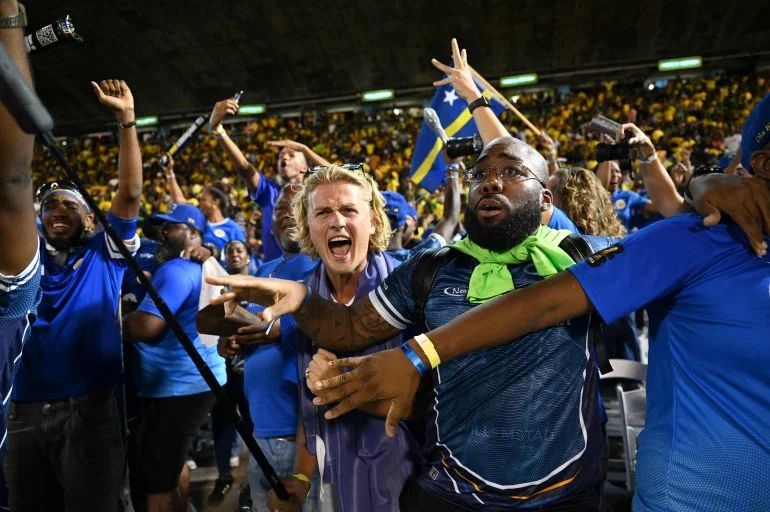
Curacao Names Historic World Cup Squad as Tiny Island Prepares for Debut
With a population of just 156,000, Curacao is set to become the smallest nation ever to compete at a FIFA World Cup this summer. On May 18, 2026, head coach Dick Advocaat officially confirmed the 26 players who will represent the Dutch Caribbean island in Group E, where they face Germany, Ecuador, and Ivory Coast.
The squad includes former Manchester United academy standout Tahith Chong, who switched international allegiance from the Netherlands to Curacao in August 2025. The 26-year-old Sheffield United winger scored two goals and added an assist in his first two World Cup qualifiers before a knee injury sidelined him for the final four matches. He returns to the fold just in time for the tournament.
Joining him are the Bacuna brothers: captain Leandro Bacuna, a former Aston Villa midfielder now playing in Turkey’s second tier, and his younger brother Juninho, who has previously featured for Huddersfield Town, Rangers, and Birmingham City.
The Oldest Manager in World Cup History
Advocaat, 78, will become the oldest manager to ever lead a team at a World Cup. The Dutch tactician has previously coached the Netherlands in 1994 and South Korea in 2006. He stepped down three months ago to care for his daughter but returned to the role after the family situation stabilized. His experience will be critical for a squad that is largely untested on the global stage.
The Road to the World Cup: A Story of Allegiance Changes
Curacao qualified for the expanded 48-team tournament after topping a Concacaf group that included Jamaica, Trinidad and Tobago, and Bermuda. A tense 0-0 draw against Jamaica in the final match secured their historic berth.
Since August 2025, five players have changed their international allegiance to represent Curacao, a strategy that has dramatically elevated the team’s talent level. Alongside Chong, the list includes Shurandy Sambo, Riechedly Bazoer, Sontje Hansen, and Armando Obispo. Obispo, a PSV Eindhoven defender, won his fourth Eredivisie title this season and played in six Champions League matches. His experience in Europe’s top club competition will be invaluable against Group E opponents.
Two players from USL Championship club Miami FC also made the cut: goalkeeper Eloy Room and forward Jurgen Locadia. The squad is a mix of players from European leagues, Turkish clubs, and the American second division, reflecting the diaspora’s willingness to represent the island.
Squad Breakdown
The roster features three goalkeepers, eight defenders, seven midfielders, and eight forwards. Notable names include midfielders Godfried Roemeratoe (RKC Waalwijk) and Kevin Felida (FC Den Bosch), as well as forwards Brandley Kuwas and Kenji Gorré, who plays for Maccabi Haifa.
Soul Beach Festival Adds Another Dimension to Curacao’s Summer
While the World Cup dominates headlines, Curacao is also preparing to host the Soul Beach Music Festival over Memorial Day weekend, starting May 20, 2026. The festival, founded by comedian Sinbad in 1995, has become a cornerstone of Black travel culture. This year’s lineup includes Babyface, Jodeci, Deon Cole, DJ Jazzy Jeff, and Spinderella.
The event will take place across multiple venues, including Mondi City Beach for the kick-off party and Que Tapa for daytime gatherings. The Pietermaai District, often dubbed the SoHo of Curacao, will serve as the cultural hub with its colorful 18th-century buildings, boutique hotels, and rooftop bars.
This dual spotlight—sports and music—positions Curacao as a destination for both athletic excellence and cultural celebration. For a nation that has never before appeared on such an international stage, the timing is serendipitous.
Broader Implications: What Curacao’s Debut Means for Football and Beyond
Curacao’s qualification represents a seismic shift in World Cup demographics. The tournament’s expansion to 48 teams has opened the door for smaller nations, and Curacao is the poster child for that change. With a population of 150,000, they are dwarfed by every other competitor, including San Marino (33,000) if it ever qualifies. The island’s success could inspire other small territories to invest in football infrastructure and player development.
For the Caribbean region, Curacao’s rise signals a growing competitiveness. Nations like Jamaica and Trinidad and Tobago have long been regional powers, but Curacao’s use of allegiance switches—leveraging Dutch-born players with Curaçaoan heritage—has been particularly effective. It mirrors trends seen in African and Asian football, where diaspora players strengthen national teams.
A Litmus Test for Global Football’s Inclusivity
The tournament will be a litmus test for whether smaller nations can compete at the highest level. Curacao opens against Germany on June 14, followed by Ecuador and Ivory Coast. While they are heavy underdogs, their squad features players who have tasted top-tier football in Europe. The experience of Dick Advocaat, coupled with the hunger of debutants, could produce surprises.
Off the pitch, Curacao’s government is banking on the World Cup to boost tourism and global recognition. The Soul Beach Festival adds a cultural layer, drawing visitors who might not otherwise consider the island. For a nation whose economy relies heavily on tourism and oil refining, the summer of 2026 could be transformative.
In a broader context, Curacao’s story echoes the path of other small nations that have punched above their weight in sports. For instance, Douglas Santos: From Zenit dominance to Brazil World Cup call-up illustrates how individual talent from smaller clubs can rise to the global stage. Similarly, Curacao’s collective effort shows that size is not a barrier to dreaming big.
As the world watches, Curacao is ready to write its own chapter in football history. Whether they win or lose, the island of 156,000 has already achieved something extraordinary: a place among the giants of the game.
Comments