
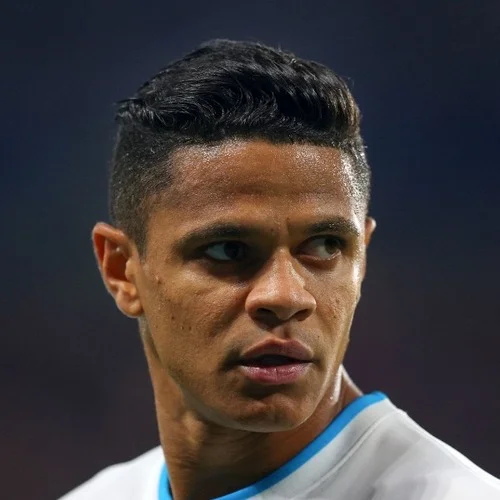
Douglas Santos Called Up to Brazil's 2026 World Cup Squad
Carlo Ancelotti has named Zenit Saint Petersburg left-back Douglas Santos among the 26 players who will represent Brazil at the 2026 FIFA World Cup. The announcement, made on Monday, May 18, at the Museu do Amanhã in Rio de Janeiro, came just one day after Santos helped Zenit secure a record sixth Russian Premier League title. The 32-year-old from João Pessoa, Paraíba, is one of two players from the state in the squad, alongside Manchester United forward Matheus Cunha.
Santos was an unexpected inclusion in the preliminary roster that faced Chile and Bolivia in last year's qualifiers and has since solidified his place through strong performances in friendlies against South Korea, Croatia, and France. While he has yet to score in five senior appearances, his consistency and leadership have convinced Ancelotti to bring him to the tournament.
A Late Bloomer on the International Stage
Douglas Santos's path to a World Cup has been anything but typical. He was first called up by Luiz Felipe Scolari in 2013 for a friendly against Bolivia that featured only domestic-based players. He later featured for Dunga's side during the 2016 Copa América Centenario and was a key figure in Brazil's gold medal run at the Rio 2016 Olympics, providing two assists in a 4-0 win over Denmark. However, after moving to Europe with Hamburger SV in 2016, he largely faded from national team consideration.
His return to the Seleção last September under Ancelotti marked a turning point. After seven seasons in Russia, Santos had become an almost forgotten figure in Brazilian football. Yet his consistent performances for Zenit—where he has made over 200 appearances and captained the side more times than any other player in club history—caught the Italian coach's attention.
Why This Call-Up Matters: Experience, Leadership, and a Changing Guard
Santos's selection is significant for several reasons. At 32, he brings a veteran presence to a position where Brazil has traditionally relied on stars like Marcelo and later Alex Sandro. Currently, Alex Sandro (Flamengo) is Santos's primary competition for the starting left-back role. Ancelotti has emphasized that playing time will be earned based on merit, but Santos's recent form and trophy-winning pedigree give him a strong argument.
He has been instrumental in Zenit's domestic dominance, winning six Russian titles, two Russian Cups, and five Russian Super Cups since joining from Hamburg in 2019. Only the 2024-25 season escaped him, when Krasnodar broke Zenit's streak. This season, despite modest personal numbers—one goal in 24 appearances—his leadership has been central to the team's recovery to claim the title.
A Career of Resilience
Santos's career began at CSP before moving to Náutico, where he played in the youth setup. After a brief, unsuccessful stint at Udinese in 2013, he returned to Brazil with Atlético Mineiro, where he won the Copa do Brasil in 2014 and the Campeonato Mineiro in 2015. His move to Hamburg in 2016 saw him spend three seasons in Germany before joining Zenit. The Russian club has since become his home, and he is now the longest-serving foreign player in the squad, alongside fellow Brazilians Nino, Wendel, Luiz Henrique, Pedrinho, and Gustavo Mantuam.
What This Means for Brazil's World Cup Ambitions
Ancelotti's decision to call up Santos reflects a broader trend of prioritizing experience and tactical reliability over flashy names. Brazil's full-back positions have been a point of discussion in recent cycles, with injuries and inconsistent form affecting players like Danilo and Alex Telles. Santos offers defensive solidity and the ability to contribute to build-up play, though he is not known for the attacking output that characterized Brazilian full-backs of the past.
The inclusion of two Paraíba-born players—Santos and Matheus Cunha—also highlights the growing diversity of Brazil's talent pool. For Santos personally, this is the culmination of a long journey that once seemed unlikely. "It is an enormous happiness to win another title with this shirt," he said after Zenit's latest league triumph. Now he will aim to bring that winning mentality to Brazil's quest for a sixth world title.
The Bigger Picture: Santos's Legacy
Should Santos see the field in the World Cup, he will become one of the few Brazilian players to have competed at the highest level while plying his trade in Russia—a league that has become more isolated since geopolitical tensions escalated. His journey also mirrors that of other late-blooming defenders who found consistency abroad. While Brazil has historically produced an abundance of attacking talent, the full-back position has often been an area of vulnerability. Santos's disciplined approach could provide the balance Ancelotti seeks as he looks to blend youthful flair with veteran steel.
As the World Cup approaches, all eyes will be on how Ancelotti deploys his squad. Among the familiar stars, Douglas Santos represents a quiet but potentially decisive piece of the puzzle—a player whose career has been defined by persistence, leadership, and an unbreakable bond with a distant club that made him its captain.
Comments