
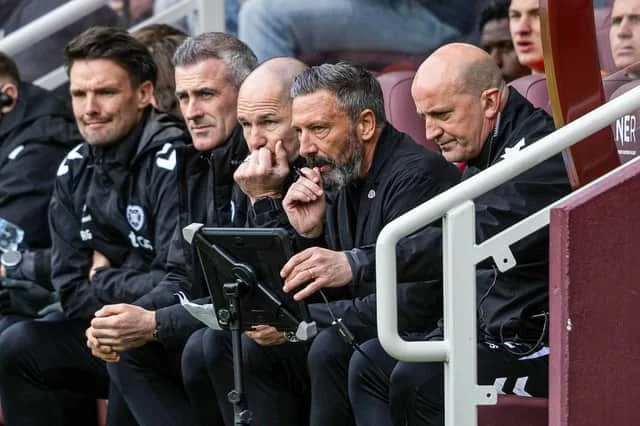
Celtic Raid Rivals Hearts for Set-Piece Specialist Ross Grant
Scottish Premiership champions Celtic have confirmed the appointment of Ross Grant as their new set-piece coach, luring the highly regarded analyst away from title rivals Hearts. The move, announced on Sunday evening, marks the latest addition to manager Martin O’Neill’s revamped backroom staff ahead of the 2026/27 campaign.
Grant, a lifelong Celtic supporter, joins from Heart of Midlothian, where he spent the past year as an integral part of Derek McInnes’ coaching team. He holds a UEFA ‘A’ Licence and previously worked for four years at Dundee United, including spells with their academy and first team. His primary focus at Celtic will be set-piece analysis and coaching, an area where Hearts excelled last season under his guidance.
“I am really pleased to welcome Ross to our backroom staff,” O’Neill told club media. “I know he is a highly rated coach and look forward to working with him.” The appointment comes as part of a broader restructuring of Celtic’s coaching setup, following the departure of first-team coach Gavin Strachan to West Bromwich Albion and the return of assistants Shaun Maloney and Mark Fotheringham on fresh contracts. Stephen McManus also remains on the staff.
Why This Move Matters: Dead-Ball Dominance Decided the Title
The significance of Grant’s arrival cannot be overstated given the razor-thin margin of Celtic’s title triumph. The Glasgow side pipped Hearts to the Premiership crown on the final day of the 2025/26 season, edging their Edinburgh rivals by a single point. Hearts proved to be formidable opponents, thanks in large part to their effectiveness from set pieces.
Under Grant’s tutelage, Hearts scored 23 goals from set plays in the league last season, a tally that tied them with Rangers for the highest in the division. That dead-ball efficiency kept Hearts competitive in the title race until the very end, highlighting how crucial set-piece coaching has become in modern football. Celtic, by contrast, often struggled to convert corners and free kicks into goals during key moments, a weakness that O’Neill is clearly determined to address.
“Hearts benefited hugely from Grant’s expertise,” noted a detailed analysis of his tenure at Tynecastle, where he worked alongside renowned set-piece specialist Austin MacPhee—who also serves as Portugal’s set-piece coach. Grant’s LinkedIn profile describes his role at Hearts as “designing structured training sessions, tactical planning and enhancing player performance,” indicating a methodical approach that Celtic hopes to replicate and improve upon.
The Coaching Carousel: O’Neill’s Revamped Backroom
Grant is the latest piece in a significant overhaul of Celtic’s coaching staff. The club confirmed earlier in June that Shaun Maloney, Mark Fotheringham, and Stephen McManus had all signed new contracts to remain as first-team assistants. Maloney and Fotheringham, both former Celtic players, bring attacking and tactical insight, while McManus provides defensive experience.
Gavin Strachan’s departure to West Brom, motivated by a desire to be closer to his family, left a void that Grant now fills. Strachan had been a key figure at Celtic Park for several seasons, and replacing him with a specialist in set pieces suggests O’Neill wants to add a sharper, data-driven dimension to his coaching team.
“Ross has valuable experience in set piece analysis, coaching and player development,” the club’s official statement read. “He holds a UEFA ‘A’ Licence and has worked with Dundee United for four years and spent the last year with Hearts.” The appointment also underscores Celtic’s intent to strengthen every competitive edge, especially after a season where the title was decided by fine margins.
From Tynecastle to Paradise: Grant’s Career Trajectory
Ross Grant’s rise through Scottish football has been steady. After starting his coaching journey at Dundee United, where he spent four years working across the academy and first team, he moved to Hearts last summer. During his single season at Tynecastle, he quickly established himself as a key member of McInnes’ backroom team.
His UEFA ‘A’ Licence—one step below the elite Pro Licence—indicates a high level of formal coaching education. Grant also benefited from working alongside Austin MacPhee, who has become one of Europe’s most respected set-piece coaches through his work at Aston Villa and with the Portuguese national team. MacPhee’s influence on Grant is evident in the structured training sessions and tactical planning that became hallmarks of Hearts’ set-piece routines.
Hearts acknowledged Grant’s departure with a brief statement: “We can confirm that Ross Grant has departed to take up a position at Celtic. The club thanks Ross for his contributions during his stint at Tynecastle.” The tone was professional but underlined the competitive nature of the move—Celtic directly weakening a rival by hiring a coach who played a key role in their success.
Broader Implications: The Growing Arms Race in Scottish Football
Grant’s appointment reflects a wider trend in football: the professionalisation of set-piece coaching. Once an afterthought, dead-ball situations are now viewed as critical battlegrounds that can decide titles. According to data from the Premier League and Scottish Premiership, around 30 to 40 percent of goals originate from set pieces, and top clubs increasingly employ dedicated coaches to maximise that percentage.
Celtic’s decision to poach Grant from a direct rival signals that O’Neill and the club’s hierarchy are unwilling to leave any stone unturned. The move also adds intrigue to next season’s title race. Hearts, having lost a key backroom figure, will need to find a replacement capable of maintaining their set-piece prowess. Meanwhile, Celtic hopes Grant can help them convert more corners and free kicks into goals—potentially turning narrow victories into comfortable wins.
This hiring spree is part of a broader strategic push by Celtic to modernise their coaching infrastructure. O’Neill, who took over in 2023, has steadily built a staff that blends experience (Maloney, Fotheringham) with specialist expertise (Grant). The combination could be crucial as Celtic aims to defend their title and make an impact in European competitions, where set-piece efficiency often separates the group stage from the knockout rounds.
What This Changes for the Upcoming Season
The immediate impact of Grant’s arrival will be seen in training and match preparation. He will likely introduce specific drills and video analysis sessions focused on attacking and defending set plays. For Celtic fans, the hope is that their team becomes more clinical from corners and free kicks, particularly in tight away games where winning margins are small.
Opponents should also expect more variety in Celtic’s dead-ball routines. Under Grant, Hearts deployed a range of clever short corners, near-post flick-ons, and rehearsed delivery patterns that defenders found hard to read. If he implements similar strategies at Celtic, the team could become significantly more dangerous from stoppages in play.
On the European stage, set-piece expertise is increasingly valuable. The 2026 Glasgow 2026 Commonwealth Games: Full Schedule, TV Coverage and Team News will bring attention to Scottish sport, but for Celtic, the focus remains on Champions League or Europa League qualification. Grant’s appointment could give them a tactical edge in group-stage matches against opponents who are unfamiliar with his methods.
The transfer of Grant from Hearts to Celtic also raises questions about the balance of power in Scottish football. Celtic and Rangers have historically dominated the transfer market for players, but now the arms race extends to coaching staff. Hearts, having built a competitive side under McInnes, will need to quickly rebuild their coaching ranks to avoid losing momentum.
Conclusion: A Calculated Bet on Specialisation
Celtic’s appointment of Ross Grant is a calculated move that acknowledges the growing importance of specialisation in football coaching. By hiring a set-piece expert with a proven track record—and doing so directly from a title rival—O’Neill has sent a clear message: the club is willing to invest in every detail to maintain its dominance.
For Grant, the move represents a homecoming of sorts. As a lifelong Celtic supporter, he now has the chance to contribute to the club he grew up supporting. The pressure will be high, but his experience at Hearts and Dundee United has prepared him for this step. If he can replicate—or improve upon—the set-piece efficiency that made Hearts so dangerous, Celtic fans may soon be thanking him for helping to swing the title race in their favour.
The new season is just weeks away, and all eyes will be on how quickly Grant’s methods translate to results. For now, Celtic Park has gained a coach who understands that in modern football, every corner kick is an opportunity—and every set piece can be a weapon.
Comments