
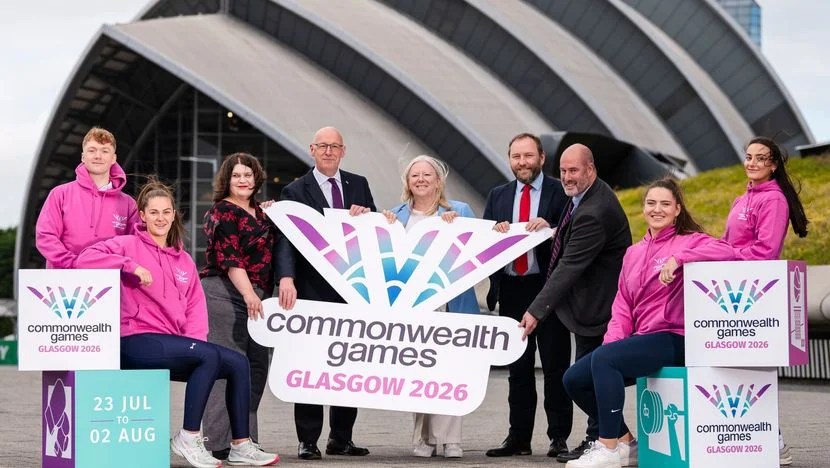
Glasgow 2026 Commonwealth Games: Full Schedule, TV Coverage and Team News
The 2026 Commonwealth Games are set to take place in Glasgow, Scotland, from July 23 to August 2, marking a swift return to the city after the Australian state of Victoria withdrew as host in 2023. With over 70 Commonwealth nations and territories competing across 10 sports and 6 integrated para sports, the Games promise a compact but highly competitive programme.
Key Facts At a Glance
- Dates: July 23 (Opening Ceremony) – August 2 (Closing Ceremony)
- Venue: OVO Hydro (ceremony); SEC Armadillo (weightlifting); other Glasgow venues
- Sports: athletics, swimming, artistic gymnastics, boxing, judo, netball, basketball (3x3), bowls, track cycling, weightlifting, plus integrated para powerlifting, para swimming, para athletics, para bowls, para track cycling and wheelchair basketball
- Athletes: Around 3,000 from 74 nations
- Mascot: Finnie the Unicorn, with a traffic cone horn, designed by Glasgow schoolchildren
TV Coverage: TNT Sports Takes Over from BBC
For the first time since 1954, the BBC will not be the primary broadcaster. TNT Sports has acquired the rights to the 2026 Commonwealth Games, meaning UK viewers will need a subscription to watch the bulk of live action via the HBO Max streaming service. However, free-to-air channel 5 has secured a deal to show extensive highlights packages throughout the Games.
Weightlifting: Mirabai Chanu Leads Strong Indian Squad
India has named a formidable weightlifting team for Glasgow, headlined by Olympic silver medallist and two-time Commonwealth Games gold medallist Mirabai Chanu. The 31-year-old will compete in the women's 48kg category, a division where she has dominated at previous Games. Chanu missed the Asian Weightlifting Championships earlier this year to recover from a shoulder injury but returned to win the national title in February.
Joining Chanu are fellow Birmingham 2022 silver medallists Bindyarani Devi (58kg) and Harjinder Kaur (69kg). In the men's section, Birmingham 2022 bronze medallist Lovepreet Singh leads the challenge in the +110kg category. Three debutants — Rishikanta Singh (60kg), Ajaya Babu (79kg) and Dilbag Singh (94kg) — will also represent India.
India's weightlifting squad enjoyed strong returns at both Gold Coast 2018 and Birmingham 2022, where they won nine medals including five golds. The weightlifting events at Glasgow 2026 will be held from July 26 to 30 at the SEC Armadillo.
India's Full Weightlifting Squad
Women: Mirabai Chanu (48kg), Gyaneshwari Yadav (53kg), Bindyarani Devi (58kg), Harjinder Kaur (69kg), Sanjana (77kg), Martina Devi (+86kg) Men: Rishikanta Singh (60kg), M Raja (65kg), Ajaya Babu (79kg), Dilbag Singh (94kg), Lovepreet Singh (+110kg)
Athletics: Tobi Amusan Leads Nigerian Contingent, Favour Ofili Missing
Nigeria's Athletics Federation (AFN) has invited 29 track and field athletes for a three-week training camp in Aberdeen, Scotland, ahead of the Games. The list is headlined by two-time Commonwealth gold medallist Tobi Amusan (100m hurdles) and men's 100m African record holder Kayinsola Ajayi. Other notable inclusions are long jumper Ese Brume, shot putter Chukwuebuka Enekwechi, and new national champion Favour Ashe.
However, conspicuously absent from the list is US-based sprinter Favour Ofili. Reports suggest Ofili's coach, Dennis Shaver, explicitly requested her name be removed from the trials after she attempted a nationality switch to represent Turkey — a bid rejected by World Athletics. Ofili remains eligible for Nigeria but will not be part of the team for Glasgow.
Nigeria Sports Commission officials expressed confidence that the selected athletes will deliver medals, with the camp set to open on July 2.
Context: A Leaner, More Sustainable Model
The 2026 Games represent a new format born out of necessity. After Victoria pulled out in 2023, citing projected costs of over AU$6 billion (approx. £3.2 billion), Glasgow stepped in with a radically downsized budget of £150 million — a fraction of the £778 million spent on Birmingham 2022 and the £543 million Glasgow itself spent in 2014. The organising company, Glasgow 2026 Limited, has stated that no direct public funding will be used and that the event pioneers "a significantly more sustainable and innovative model for major event delivery."
This is not the first time the Commonwealth Games have faced a hosting crisis. Durban pulled out of 2022, and Alberta, Canada, withdrew from the 2030 bid. Questions over relevance persist as the Games compete with a packed global sporting calendar — including major events like the Paris Diamond League 2026 and the World Cup 2026. Still, for athletes from smaller Commonwealth nations, the Games offer a rare global stage.
Historical Significance
This edition will be the first Commonwealth Games held since the death of Queen Elizabeth II, the former Head of the Commonwealth. The medals have been designed by Glasgow School of Art artist-in-residence Militsa Milenkova, inspired by the city's industrial heritage and landmarks.
Perspective: What This Means for the Future
The Glasgow model could become the template for future Commonwealth Games. By limiting the event to 10 sports (down from 20 in Birmingham 2022) and prioritising venues that already exist, organisers aim to prove that a major multi-sport event can be delivered without enormous public expenditure. If successful, this could revitalise interest from potential host cities — especially after Canada and Australia backed away from 2030.
However, the scaled-down programme also raises questions: does a Games with fewer sports and fewer athletes still carry the same prestige? For nations like India and Nigeria, where Commonwealth medals remain a significant benchmark, the answer is likely yes. For broadcasters and sponsors, the test will be whether a leaner event can still attract audiences in an era where streaming and niche competitions dominate attention.
Scotland's team, meanwhile, will be buoyed by the return of the iconic purple-haired Thistle mascot Clyde alongside new mascot Finnie. With 165 athletes — down from 310 in 2014 — the home team hopes to replicate its fourth-place finish of that year, when it won 53 medals.
Comments