
Burnham Unveils Sweeping Devolution Plan and 'No 10 North' in First Major Speech as PM-in-Waiting
Andy Burnham, the Labour leadership front-runner poised to become the next prime minister on July 20, delivered a landmark policy speech in Manchester on Monday, outlining an ambitious “10-year mission” to raise living standards through the biggest transfer of power from Whitehall to the regions in modern British history. Speaking to an audience of around 100 supporters, including regional mayors and local MPs, Burnham pledged to establish a “No 10 North” in Manchester, which he described as the “nerve centre of a re-wired Britain.”
The speech, which lasted approximately 30 minutes, was met with enthusiastic applause, particularly when Burnham defined what he called “Manchesterism”—a philosophy of decentralisation and local empowerment—and when he vowed to launch the largest council house building programme since the post-war period. He called for a “complete rethink” of how the country supports younger people, moving away from a school system “configured entirely around the university route” and toward broader vocational and technical education.
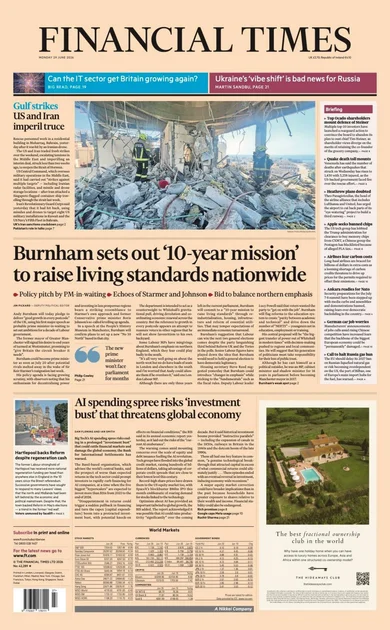
Burnham’s address comes exactly three weeks before he is expected to enter Downing Street, assuming no other Labour MP challenges his leadership bid. The speech was therefore highly anticipated, with national newspapers framing it as the unofficial launch of his premiership. The Daily Telegraph’s front page read: “Give me 10 years to fix Britain,” while the Financial Times described his plans as a “10-year mission” to raise living standards. The Guardian highlighted his message of “Growth in all postcodes,” and the Daily Mail warned of “Tax raids on middle classes in Burnham’s 10-year plan.”
Key Policy Pillars: Devolution, Housing, and Fiscal Responsibility
Burnham’s vision rests on three central pillars: radical devolution of power and resources, a massive expansion of social housing, and strict adherence to existing fiscal rules. He promised to push decision-making “out of Whitehall to regions and local communities,” giving mayors greater control over social housing, welfare, education, and business rates. He specifically vowed to reform business rates to support pubs and high street businesses, arguing that high streets should become “a symbol of Britain’s renaissance.”
On housing, Burnham announced what he called a “national housing-first philosophy” and pledged the biggest council house building programme since the post-war period, though he did not provide specific numerical targets or a timeline for construction. He insisted he would not take risks with public finances, vowing to stick to the fiscal rules set out by Chancellor Rachel Reeves, which require day-to-day government costs to be covered by tax revenue and debt to fall as a share of national income by 2029-30.
Burnham also addressed the loss of public trust in politics, suggesting that his generation of politicians—himself included—must take responsibility for the growing disconnect between Westminster and ordinary citizens. He proposed that the government must “give Britain the circuit-breaker it needs,” a phrase that resonated with his audience and was widely quoted in subsequent media coverage.
Why This Matters: The Stakes of Burnham’s Leadership and the Race for No. 10
The significance of Burnham’s speech extends far beyond the policy details. As the only declared candidate for the Labour leadership following Sir Keir Starmer’s anticipated departure, Burnham is effectively already the prime minister-in-waiting. His speech was therefore not merely a policy announcement but a declaration of intent—a preview of how he intends to govern if, as expected, he takes office on July 20.
The context of the speech is crucial. Burnham is stepping into a role that has been shaped by years of political turbulence, including the aftermath of the 2024 general election, ongoing economic pressures, and a public increasingly disillusioned with centralised governance. His promise to decentralise power echoes the rhetoric of both Boris Johnson’s “levelling up” agenda and Keir Starmer’s earlier commitments to regional empowerment, but Burnham’s plan goes further by proposing a physical relocation of the prime minister’s office to Manchester.
Reaction from the Conservative Party was swift and critical. Leader Kemi Badenoch urged Burnham to come to Parliament to face scrutiny, and dismissed his plans as “old hat.” She argued that Burnham’s proposals lacked specificity and that he should immediately confirm his cabinet appointments and explain whether he would deviate from Labour’s 2024 manifesto.
The Fiscal Tightrope: Balancing Ambition with Austerity
One of the most closely watched aspects of Burnham’s speech was his handling of fiscal policy. He explicitly committed to Rachel Reeves’ fiscal rules, which have been a source of tension within the Labour Party. Some on the left have called for increased borrowing to fund public investment, but Burnham’s insistence on fiscal discipline suggests he believes that credibility with markets and voters is paramount.
However, his promise to cut business rates—which currently raise around £27 billion annually, half of which goes to local authorities—raises questions about how the shortfall will be covered. Business editor Simon Jack noted that while Burnham’s speech implied local authorities would not bear the cost, the details of how the gap would be filled remain unclear. The Guardian also pointed to “alarm” over the “growing role of private equity firms” in UK government spending, a concern that Burnham did not directly address.
Perspective: A New Chapter for British Governance or a Risky Gamble?
Andy Burnham’s “10-year mission” represents the most ambitious attempt to reshape the British state since the devolution settlements of the late 1990s. If implemented, his plans would fundamentally alter the relationship between Whitehall and the regions, giving mayors unprecedented control over budgets and policy areas that have historically been centralised. This could lead to a more responsive, locally tailored approach to public services, but it also carries risks, including potential fragmentation of national standards and increased regional inequality if some areas are better equipped to use their new powers than others.
Burnham’s speech also signals a generational shift in Labour’s approach to power. Unlike previous leaders who sought to govern from Westminster, Burnham is positioning himself as a decentraliser, a leader who will govern from both London and Manchester. This “No 10 North” concept is not merely symbolic; it is intended to be a working office that will serve as a conduit for redistributing power and resources across the UK. The i Paper called it the “biggest ever power transfer,” and Burnham himself described it as the “nerve centre of a re-wired Britain.”
The broader implications are significant. Burnham’s success or failure could set a precedent for how future prime ministers approach governance. If his devolution experiment works, it could inspire similar movements in other countries and permanently change the way Britain is run. If it falters, it could reinforce the view that centralised control is inevitable.
The Road Ahead: From Speech to Premiership
With no other candidates having declared for the Labour leadership, Burnham is on course to become prime minister on July 20. His speech on Monday was therefore the first major test of his ability to lead and communicate a vision. The early media reaction was mixed: some outlets praised his ambition, while others questioned the feasibility of his plans and accused him of overpromising.
Burnham’s call for a “circuit-breaker” from the politics of the past may resonate with voters who are tired of broken promises and stagnant living standards. But as Conservative leader Kemi Badenoch pointed out, the devil is in the details. Burnham has yet to name his cabinet, confirm his full policy platform, or explain how he will manage the competing demands of fiscal discipline and public investment.
For now, the country is watching. Burnham’s “10-year mission” has begun, but whether it will end in triumph or disappointment remains to be seen. One thing is certain: the next decade of British politics will be shaped by the speech delivered in Manchester on this late June day.
For a deeper analysis of how Burnham’s devolution plans could reshape the economy, read our feature on Burnham’s Devolution Revolution: A Circuit-Breaker for Britain’s Economy. As the political landscape shifts, other major stories also demand attention, including the ongoing Trump- Rick Scott Meeting: SAVE America Act Standoff Threatens Shutdown and the deadly Europe Heatwave: 40°C Records Fall as Deadly Toll Rises Across the Continent.
Comments