
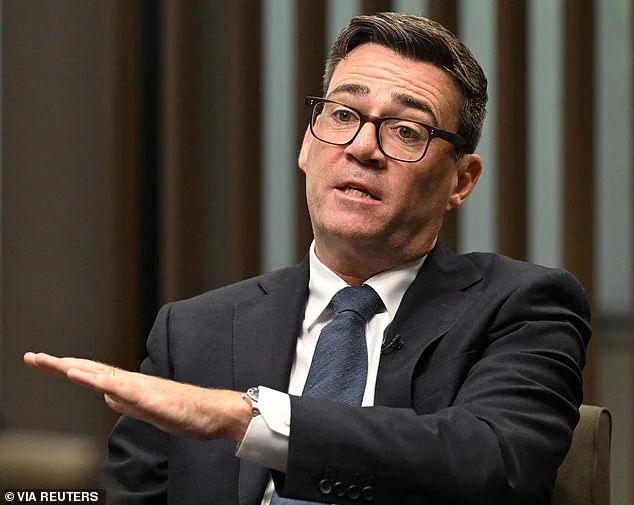
Burnham’s Social Care Plan Under Fire Over ‘Death Tax’ Accusations
Prime Minister Andy Burnham is facing a mounting political storm this week as he prepares to unveil long-awaited plans to fix Britain’s social care crisis, with critics accusing him of plotting a ‘death tax’ that would hammer grieving families. The controversy erupted after reports suggested that universal social care provision could cost upwards of £18 billion a year, raising urgent questions about how the government intends to fund the ambitious programme.
Conservative leader Kemi Badenoch and Reform UK chairman Lee Anderson have led the charge against the proposals, warning that introducing a so-called care levy would drag hundreds of thousands of ordinary families into inheritance tax for the first time. Currently, fewer than 5% of deaths result in an inheritance tax charge, but Burnham’s critics claim his plan would push that number dramatically higher, taxing estates that were previously exempt.
The row comes as new polling shows Labour ahead of Reform UK for the first time since Burnham became Prime Minister, although the PM himself cautioned against reading too much into the figures. Speaking on Monday, Burnham said he ‘wouldn’t get carried away’ by the poll but expressed satisfaction that he may have ‘connected with people’. The social care row, however, threatens to undermine that fragile goodwill.
The ‘Care Levy’ Debate: How Would It Work and Who Would Pay?
What Burnham Has Proposed
Burnham has long signalled his ambition to overhaul social care, a policy area that has confounded successive governments for decades. In May, he suggested that a ‘care levy’ could be introduced to fund universal provision, though he has so far offered few details on how such a tax would be structured. The lack of clarity has fuelled speculation and allowed opponents to frame the policy as a punitive levy on bereaved families.
Reform UK’s Robert Jenrick was among the first to sound the alarm, warning that the plan would drag ‘650,000 hard-working pensioners into paying a death tax each year’. He argued that families who have ‘saved up their entire lives should not be double-taxed on their hard-earned savings’ and called on Burnham to call a general election if he wanted to push through such a ‘mammoth tax assault’.
The Cost and the Funding Gap
The scale of the financial challenge is immense. Universal social care provision could cost more than £18 billion a year, according to estimates cited by critics. New Chancellor John Healey is already under pressure to ‘come clean’ on how these spending commitments will be paid for, with Conservative leader Kemi Badenoch warning that unfunded pledges risk repeating the turmoil that doomed Liz Truss’s premiership.
John O’Connell of the Taxpayers’ Alliance voiced similar concerns, accusing Burnham of ‘flirting with a vast new social care bureaucracy’ and lacking ‘any credible plan to pay for it beyond raiding taxpayers yet again’. He warned that a national care service funded by new death taxes would ‘punish families who have worked, saved and already paid tax all their lives’.
Political Fallout and Broader Implications
A Growing Attack Line for the Opposition
The ‘death tax’ row has become a potent political weapon for Burnham’s opponents, who argue that the Prime Minister has no mandate for such a sweeping change. Lee Anderson, writing for the Express, claimed that Burnham entered No 10 ‘with no plan for the country’ and accused him of making ‘one unfunded promise after another’. Anderson pointed to the PM’s earlier pledge to scrap VAT on electricity bills, which critics say was funded by scrapping digital ID plans that had no allocated budget.
Anderson resurrected memories of Burnham’s past support for a flat 10% tax on all inheritances, which he described as a ‘universal death tax, levied on the inheritance of every single person, regardless of how few assets, cash or savings they may have’. The claim has resonated with voters already feeling the pinch from a high tax burden, and has given Reform UK a powerful rallying cry against the new government.
What This Means for Burnham’s Premiership
The social care debate could prove a defining moment for Burnham’s young premiership. On one hand, fixing social care is a long-standing policy goal that commands widespread public sympathy. On the other, the government’s precarious fiscal position and the memory of recent economic turmoil leave little room for error.
The row also highlights deeper tensions in British politics. Burnham’s willingness to consider new taxes comes at a time when the public is already reeling from what critics call a ‘record tax burden’. At the same time, the need for social care reform is undeniable, with an ageing population putting growing strain on the system.
As the week progresses, all eyes will be on Burnham and Healey to see whether they can produce a plan that addresses the funding challenge without inflaming public anger. So far, the ‘death tax’ label has stuck, and it will take more than carefully worded press releases to shake it off.
For those watching the broader political landscape, the standoff echoes previous battles over inheritance tax and public spending. Just as recent global events have reshaped international priorities—such as the ongoing conflict in Iran, which has already claimed American lives—domestic welfare is once again testing the resilience of political leadership. Meanwhile, the government is also grappling with other pressing issues, from immigration enforcement to public sector reform. The outcome of this week’s social care announcement could well determine whether Burnham’s early poll lead is a sign of stable support or merely a temporary reprieve.
Comments