
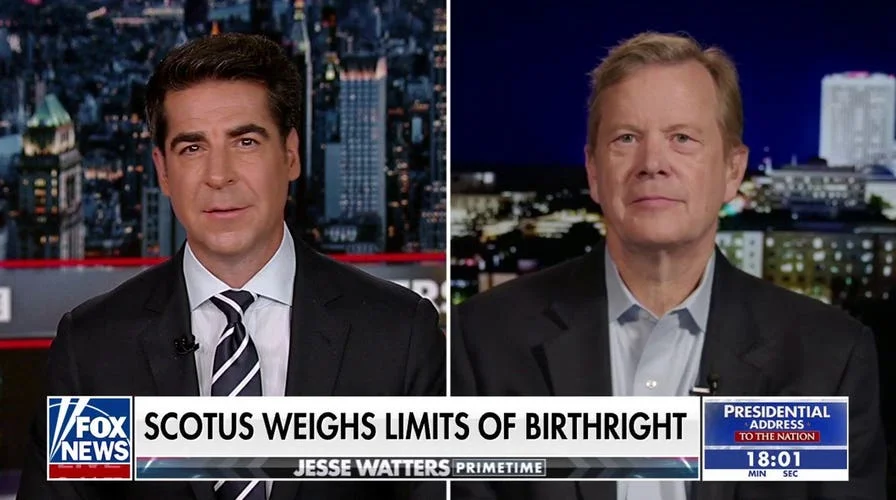
Federal Judge Blocks Trump's Newest Birthright Citizenship Order
A federal judge in Maryland has blocked the latest executive order targeting birthright citizenship, delivering another setback to President Donald Trump's ongoing efforts to restrict automatic citizenship for U.S.-born children. The ruling, issued Wednesday by U.S. District Judge Deborah Boardman, halts enforcement of the August 6 order until the courts can fully review its constitutionality.
The new order, which Trump signed as part of his broader immigration crackdown, aims to deny citizenship to children whose parents are in the U.S. on certain temporary visas, work for foreign governments, engage in what the administration calls "birth tourism" or "commercial transactions" to obtain citizenship, or are classified as "alien enemies." It also seeks to exclude babies born in U.S. territories.
Judge Boardman, an appointee of former President Joe Biden, wrote that the order is "almost certainly unconstitutional" as applied to the Supreme Court's earlier ruling in Trump v. Barbara, which struck down Trump's first attempt to limit birthright citizenship in June 2026. Boardman emphasized that the Supreme Court "has already decided" that children born in the U.S. to non-citizen parents are citizens at birth under the Fourteenth Amendment.
The judge also noted that the new order lacks a clear effective date. Unlike the 2025 executive order, which applied only to births occurring 30 days after its February 19 start date, the August 6 order "says nothing like that," leaving thousands of already-born children in legal limbo.
"This Court must, once again, preliminarily enjoin enforcement of the President's most recent attempt to strip the right to citizenship from them," Boardman wrote in her order.
The Immediate Legal Landscape
Friday's injunction comes just days after Boardman denied a temporary restraining order against the same executive order, saying the plaintiffs needed to refile their complaint to directly address the new provisions. The plaintiffs—a coalition of immigrant families and advocacy groups—quickly amended their lawsuit, leading to Wednesday's preliminary injunction.
The ruling is the latest chapter in a legal saga that began on January 20, 2025, when Trump signed his first executive order on birthright citizenship on the day of his second inauguration. That order stipulated that only children with at least one biological parent who was a U.S. citizen or a green-card holder could be considered American citizens. Within days, multiple federal courts blocked the policy, and the case eventually reached the Supreme Court.
In June 2026, the Court ruled 6-3 in Trump v. Barbara that the executive order violated the Fourteenth Amendment's Citizenship Clause. The majority found that the Constitution guarantees citizenship to nearly all children born on U.S. soil, regardless of their parents' immigration status. However, the narrow margin—with four conservative justices supporting at least some restrictions—left the door open for further challenges.
Until the issuance of Wednesday's injunction, the legal and administrative battle had largely moved to enforcement details. On September 2, Reuters reported that the State Department had drafted new guidance requiring parents to provide proof of their own citizenship or immigration status when applying for passports for their children. The draft guidance, which would implement the August 6 executive order, directs passport adjudicators to demand documents such as a U.S. passport, birth certificate, or I-94 immigration form from all parents and legal guardians.
The Fight Over the Fourteenth Amendment
Birthright citizenship is enshrined in the Fourteenth Amendment, ratified in 1868 after the Civil War to ensure that formerly enslaved people and their descendants could not be denied citizenship. The Citizenship Clause states: "All persons born or naturalized in the United States, and subject to the jurisdiction thereof, are citizens of the United States and of the State wherein they reside."
Over the decades, the Supreme Court has interpreted this clause expansively. The landmark 1898 case United States v. Wong Kim Ark affirmed that a child born in the U.S. to Chinese immigrant parents—who were legally present but not citizens—was a citizen. That precedent has been the cornerstone of American birthright citizenship, making the U.S. one of about 30 countries worldwide that grant automatic citizenship based on birthplace alone.
Trump and his allies argue that the phrase "subject to the jurisdiction thereof" excludes children of parents who are in the country illegally or on temporary visas. They contend that such parents owe allegiance to another sovereign and therefore do not fall under U.S. jurisdiction. The administration has also alleged that birthright citizenship encourages "birth tourism," where pregnant women travel to the U.S. specifically to give birth and secure citizenship for their children.
The Supreme Court, however, rejected that interpretation. In Trump v. Barbara, the majority held that "jurisdiction" under the Fourteenth Amendment refers to legal jurisdiction, not political allegiance, and that all persons present in the U.S.—except foreign diplomats and maybe enemy occupiers—are subject to U.S. laws and courts.
The Emotional Toll on Families
The legal battles have created immense anxiety for families like that of Liza, a Russian citizen who is legally in the U.S. on temporary status while her husband seeks asylum. She and four other expectant mothers joined one of the first lawsuits against Trump's initial order in January 2025. Their baby, born after the order's February 19 effective date, would have been stateless if the policy had taken effect.
"I was really, really anxious," she told The Atlantic. "I was even blaming myself, like, Why didn't I have the baby sooner?"
Although the Supreme Court ultimately struck down the order, the uncertainty has not ended. The new executive order and the State Department's proposed passport rules could again deny citizenship to children in similar situations. For families with precarious immigration status, the stakes are existential: Without citizenship, their children could face deportation, lack legal protection, or become stateless if their home country refuses to recognize them.
The judge's latest injunction offers temporary relief, but the litigation is far from over. The administration is likely to appeal to the conservative-leaning Fourth Circuit Court of Appeals, and the case could eventually return to the Supreme Court.
The Broader Battle Over American Citizenship
The repeated attempts to limit birthright citizenship are part of a broader political and legal campaign to redefine who belongs in America. The Trump administration has called the policy "a magnet for illegal immigration" and has made restricting it a central pillar of its immigration agenda. Supporters say the current system is exploited by "birth tourists" and encourages undocumented immigration, while opponents argue that the policy is a constitutional cornerstone that should not be changed by executive fiat.
Legal scholars have noted that even if the Supreme Court upholds the latest restrictions—a possibility given the narrow 6-3 majority in the first case—the administration's tactics represent a fundamental challenge to the separation of powers.
"The danger has passed," one news anchor told Anna O. Law, a political scientist at CUNY, after the Supreme Court's June ruling. But the four dissenting justices in that case signaled openness to at least some restrictions, and the administration has shown it will continue to test the limits of executive authority.
The re-election of Trump and his appointment of additional conservative judges have intensified the focus on the courts as the final arbiter of citizenship policy. Some legal observers argue that the administration's newest order is deliberately crafted to narrow the previous ruling by targeting specific categories of parents—such as foreign government employees or those engaging in "commercial transactions"—rather than imposing a blanket ban.
What Lies Ahead
For now, the injunction means that children born in the U.S. to parents who would be affected by the August 6 order will continue to be treated as citizens, at least until the courts rule on the merits. The case will likely proceed through expedited briefing and hearings, and a final resolution could come within months.
The State Department's passport guidance—though still in draft form—is also facing legal scrutiny. If implemented, it would impose a significant new burden on all parents, including U.S. citizens, who must prove their own status when applying for their child's passport. The department has defended the proposal as necessary to "protect the meaning and value of American citizenship." Critics, however, see it as an unlawful barrier to a constitutional right.
The legal turbulence has broader implications not just for immigrant families, but for all Americans. If the government can restrict birthright citizenship through executive orders and administrative regulations, it could fundamentally alter the meaning of the Fourteenth Amendment. Conversely, if the courts continue to uphold the Constitution's clear language, the executive branch may be forced to accept that citizenship is a right, not a privilege that can be revoked by presidential decree.
As the legal battles continue, families like Liza's remain in a state of uncertainty, waiting to see whether their children will be recognized as American citizens.
"I just want my child to have a future," she said. "I never thought that would be a radical idea."
The issue is likely to remain at the forefront of U.S. politics and legal discourse through the 2026 midterm elections and beyond. While the courts have so far sided with the defenders of birthright citizenship, the fight is far from over. With each new executive order, the administration is testing the boundaries of its power, and the outcome of these legal challenges could shape the meaning of American citizenship for generations to come.
Comments