
Badenoch Issues Apology as Bloody Sunday Footage Sparks Backlash
Conservative Party leader Kemi Badenoch has apologised after footage from the Bloody Sunday massacre was used in a social media video defending British veterans of the Troubles. The video, posted on her official social media channels on Tuesday, was intended to criticise Labour’s proposed changes to Northern Ireland legacy legislation but instead ignited a firestorm of controversy.
Speaking to reporters during a visit to a hairdresser in south-east London on Saturday, Badenoch acknowledged the error and said she did not sign off on the video. “I have apologised,” she said. “The video was done by very young people who did not recognise the footage as being from Bloody Sunday. So I apologise as well that that video went out in error. It was removed as soon as the party understood that that was what had been put out.”
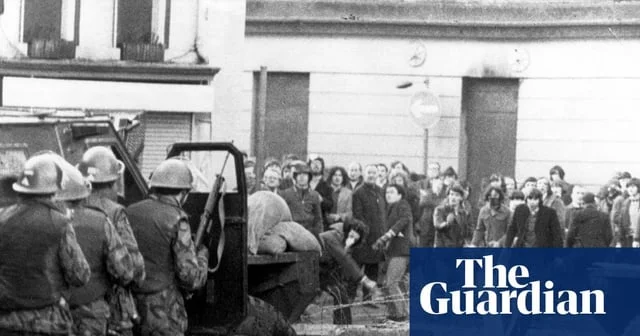
The video, which was posted on Badenoch’s X account and other Conservative Party social platforms, claimed Labour’s proposed reforms would “drag” British Troubles veterans back to court. However, the clip showed soldiers from the Parachute Regiment entering the Bogside area of Derry on 30 January 1972 — the day British troops shot 26 unarmed civil rights demonstrators, killing 13 outright. A 14th man died weeks later.
Colum Eastwood, the SDLP MP for the Foyle constituency covering Derry, condemned the use of the footage. “It was disgusting and disgraceful,” he said. While he welcomed the apology, Eastwood called on Badenoch to personally apologise to the survivors and families of the victims.
The incident underscores the fragile political landscape surrounding Northern Ireland’s legacy issues and has placed Badenoch under renewed scrutiny as she seeks to steady her leadership.
The Video and Its Fallout
The video was initially posted on Tuesday, 28 April, and remained live on multiple platforms until Friday, when the Conservative Party issued a formal apology and removed it. The party said the footage had been taken down “as soon as we were made aware of the footage.”
Badenoch’s explanation that the video was produced by “very young people” who did not recognise the Bloody Sunday footage has been met with scepticism by critics. Bloody Sunday is one of the most widely documented and traumatic events in Northern Ireland’s history. Images of paratroopers advancing through the Bogside have been broadcast repeatedly for decades, and the event remains a touchstone for nationalist and republican communities.
The Conservative leader defended the intent behind the video, saying it was about a parliamentary vote on Labour’s Northern Ireland Troubles bill, which she claimed would “hound the very elderly veterans for things that happened decades ago, often under the instruction of political leaders who are no longer around.”
Labour’s bill seeks to replace the previous Conservative government’s Legacy Act, which included a controversial clause allowing veterans to avoid prosecution for Troubles-era crimes if they provided information about unresolved cases. Victims’ groups had widely opposed that clause, arguing it amounted to an amnesty.
But for many observers, the use of Bloody Sunday footage to defend veterans was a grave misjudgment. Bloody Sunday is widely regarded as the worst mass shooting in Northern Ireland’s history and a pivotal moment in the Troubles. In 2024, a former paratrooper was found not guilty of murder and attempted murder for his role that day.
A Week of Missteps for Badenoch
The Bloody Sunday video controversy follows a broader pattern of difficult media interactions for Badenoch. In a series of five-minute local radio interviews on Thursday, the Conservative leader struggled to steer conversations toward her chosen themes of economic recovery and border security.
According to reports, the interviews — which included stops on BBC Radio Leeds and BBC Radio Newcastle — saw Badenoch repeatedly cut off and challenged by presenters. Gayle Lofthouse on Radio Leeds pressed her on the cost of living, dismissing attempts to pivot to the Peter Mandelson affair. Anna Foster on Radio Newcastle was less forgiving, questioning why Reform UK and the Greens were contesting more seats in the north-east.
The performance drew comparisons to Liz Truss’s disastrous local radio round in 2022, which became emblematic of her short-lived premiership. Badenoch was also criticised for her handling of an antisemitism crisis in north London earlier that week, after a series of attacks on Jewish communities. She insisted that the party had “changed” and had “junked all the rubbish policies which caused us problems,” but many commentators noted that the apology over the video came only after days of pressure.
Battling Braverman and Farage
In a separate development, Badenoch launched a personal attack on former Home Secretary Suella Braverman, who defected to Reform UK earlier this year. Speaking on GB News, Badenoch accused Braverman of “underperforming” in her Cabinet role prior to her defection.
“I sat in meetings where she could have said stuff that she didn’t. She spent a lot more time writing articles in The Telegraph than she did actually doing the job,” Badenoch said, responding to a question about antisemitism. She also accused Reform UK leader Nigel Farage of taking voters for granted, saying he “just tells people what they want to hear.”
The exchanges highlight the ongoing fragmentation of the right-of-centre vote in British politics. Reform UK has been eating into Conservative polling numbers, and Badenoch has repeatedly ruled out any electoral pact with the party. “Just because they are saying some things that we might agree with on immigration doesn’t mean that they will be good,” she said. “We need to stop talking about deals all the time. It’s just people planning stitch-ups.”
The Conservative leader’s tough talk on Reform is a calculated risk. While it may shore up her base among loyalists, it risks alienating voters who are drifting to the right and who see Reform as a viable alternative.
Broader Implications and the Political Landscape
The Bloody Sunday video incident is the latest in a series of gaffes that have undermined Badenoch’s attempts to project competence and unity. As the first Black woman to lead the Conservative Party, she was seen by some as a fresh start after the chaotic premierships of Boris Johnson, Liz Truss, and Rishi Sunak. But events such as this — along with the local radio missteps and ongoing party infighting — have raised questions about her judgment and the quality of her team.
The controversy also threatens to complicate the Northern Ireland legacy debate, which remains deeply sensitive. Victims’ groups on both sides of the community have expressed frustration with the political wrangling over legacy laws, arguing that the focus should be on truth and justice rather than partisan point-scoring.
Badenoch’s apology, while accepted by some, has not fully quelled the anger. Colum Eastwood’s call for a personal apology to the families of Bloody Sunday victims underscores the depth of feeling. The SDLP MP is likely to keep pressure on the Conservative leader, and the issue could resurface at Prime Minister’s Questions or during committee hearings.
For now, Badenoch’s team is hoping that the story will fade as other news cycles emerge. But in an era of hyper-partisan media and social media echo chambers, missteps like this can have a long tail. The video may have been removed, but its screenshots — and the political damage — will linger.
What This Means for the Tories and Beyond
The broader trend is clear: Conservative infighting and strategic blunders are giving Labour and Reform ammunition. Labour’s bill on Troubles legacy, which Badenoch’s video was meant to attack, may now gain additional public sympathy as the controversy unfolds. Meanwhile, Reform UK will be watching closely, ready to capitalise on any Conservative missteps.
Badenoch’s immediate priority will be to regain control of the narrative. She has promised to continue changing the party, but the Bloody Sunday video has shown that her operation is still prone to errors. Whether she can recover will depend on her ability to avoid further unforced errors and to focus on the issues that matter to voters, such as the cost of living and housing, as seen in the recent UK Housing Market Shows Tentative Signs of Recovery as Affordability Crisis Deepens in Spring 2026.
The incident also highlights the enduring power of historical trauma in British politics. Bloody Sunday is not a forgotten event; it is a living memory for many families in Northern Ireland. Any political figure who treats it as merely a clip in a campaign video risks inflaming old wounds and undermining their own credibility.
As the Conservative Party grapples with its identity in opposition, Badenoch’s leadership will be tested by her ability to navigate these minefields. The next few weeks will be critical as parliament debates the legacy bill and as the public forms a more settled view of her tenure.
For now, the headline is clear: Badenoch is sorry — but for many, the video was a reminder that some mistakes are harder to unmake than to apologise for.
Comments