
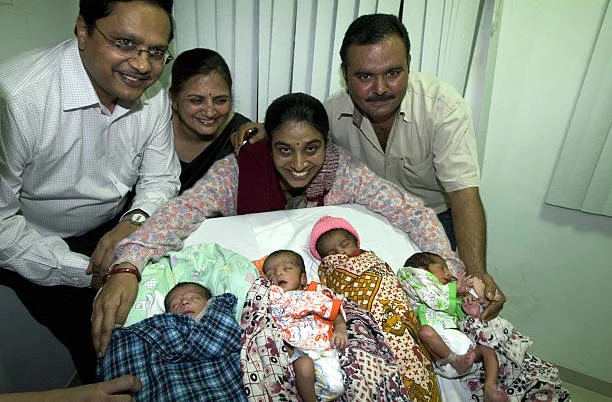
A Surprise Arrival: WA's First Quadruplets in Six Years
Belinda Lotsu, a 45-year-old mother from Kalgoorlie, Western Australia, delivered the state's first set of quadruplets in six years on Tuesday, April 28, 2026, at King Edward Memorial Hospital in Perth. The babies—three girls and one boy—were born via cesarean section at 32 weeks and three days gestation, weighing between 1.5 and 2 kilograms each. They are named Amy, Amana, Amber, and Amon.
The birth marks the fifteenth recorded set of quadruplets in Western Australia and the first since 2020, according to state health records. The delivery was not only a personal milestone for the Lotsu family but also a significant medical event requiring extensive coordination among obstetrics, midwifery, neonatology, anaesthetics, and support services.
Nurse and Midwifery Coordinator Jourdin Ross praised the mother's resilience: “She’s done absolutely amazing getting them to 33 weeks for four babies, growing at the rate that they did. They’re all doing exceptionally well. They were all born with really good weights.”
All four newborns are currently in specialist neonatal care at King Edward Memorial Hospital, where they are expected to remain for four to six weeks before being discharged to their family home in Kalgoorlie.
The Shock Discovery: From Triplets to Quadruplets
Belinda and her husband Emmanuel Lotsu, who migrated from Ghana two years ago and already have a three-year-old son named Carl, underwent IVF treatment to expand their family. Initially, doctors told them they were expecting triplets. But more than halfway through the pregnancy, a routine scan revealed a fourth baby.
“You could see the surprise on her face,” Emmanuel recalled. “She was so surprised and stunned.”
Belinda, who had experienced a previous miscarriage, said she had been hoping for just one healthy daughter. Instead, she received four newborns—three girls and one boy. “I’m still surprised that I was able to have four babies at one time,” she told reporters.
The couple's journey highlights the often-unpredictable outcomes of assisted reproductive technologies. While multiple births are more common with IVF due to the transfer of multiple embryos, quadruplets remain a rarity, accounting for only a tiny fraction of all pregnancies.
Hospital Preparedness and Team Effort
The pending birth of the quadruplets triggered weeks of meticulous planning at King Edward Memorial Hospital. Teams coordinated emergency scenarios, ensured adequate neonatal care capacity, and prioritised mother and baby safety at every step.
Jourdin Ross explained: “Beyond clinical care, the hospital wrapped comprehensive support around the family. Ensuring compassion, dignity and continuity of care during an extraordinary and stressful experience.”
The multidisciplinary team included obstetricians, midwives, anaesthetists, neonatologists, nurses, theatre staff, and support services, all working under significant time pressure. The babies were delivered in just four minutes, a testament to the team's precision.
A Family Far From Home: Community Support in Kalgoorlie
The Lotsu family has lived in Kalgoorlie for two years, far from their extended family in Ghana. With no direct relatives nearby, they have relied on their church community and local Ghanaian network for support.
“We don’t have any family, like direct family in Kalgoorlie,” Belinda said. “But we belong to a church … and then there’s a Ghanaian community in Kalgoorlie. So they are the ones probably we call family over here.”
Emmanuel added that while they face the challenges of raising four newborns plus a toddler in a regional town, the community has rallied around them. “They are the ones we call family over here,” he said.
The couple will remain in Perth while the babies receive neonatal care, temporarily staying near the hospital. After discharge, they plan to return to Kalgoorlie, where they will need to adjust to a dramatically expanded household.
Older Brother Carl Already Smitten
Three-year-old Carl, the couple’s eldest child, is already embracing his role as big brother. According to Emmanuel, Carl loves looking at photos of his new siblings on his father’s phone. “He’s very interested and excited,” Emmanuel said.
The Broader Context: IVF and Multiple Births in Australia
The birth of quadruplets is a stark reminder of the complexities associated with IVF. While multiple births have become more common with assisted reproductive technology, quadruplets remain exceptionally rare—especially in a state like Western Australia, which averages only five triplet births per year.
Since 2020, there have been no quadruplet births in WA until now. The state's health records show only 14 previous sets of quads, and just two quintuplet births—one in 1989 and one in 1999. The last quadruplet set, also born at King Edward Memorial Hospital, was three girls and one boy, a coincidence hospital staff noted with amazement.
Ross remarked: “It’s just a coincidence but it’s amazing really. No matter how long you’re in obstetrics you just never get over how amazing pregnancy and birth can be.”
However, multiple births carry higher risks for both mother and babies, including preterm labour, low birth weight, and developmental challenges. The Lotsu babies were born at 32 weeks—a relatively good outcome for quadruplets, thanks to Belinda’s diligent prenatal care and the hospital’s readiness.
A Surge in Demand for Fertility Treatment
Australia has seen a steady increase in IVF cycles over the past decade, driven by delayed childbearing and rising infertility rates. According to recent data, more than one in 20 babies born in Australia are conceived through assisted reproductive technology. While most IVF pregnancies result in singletons, the incidence of twins and triplets has declined due to better embryo transfer practices, but quadruplets remain an outlier.
Experts caution that the emotional, financial, and logistical challenges of raising quadruplets are immense. The Lotsus will need to manage feeding schedules, medical appointments, and childcare for four premature infants alongside their toddler—all without immediate family nearby.
Broader Implications: What This Birth Means for Preterm Care and Family Policy
The successful delivery and ongoing care of quadruplets at King Edward Memorial Hospital underscores the capacity of Australian public hospitals to manage rare, high-risk births. The hospital’s integrated neonatal care pathways and seamless coordination between departments serve as a model for other facilities.
Ross highlighted the importance of preparedness: “Care for the family involved many services working seamlessly together, including obstetrics, midwifery, anaesthetics, neonatology, nursing, theatre teams and support services often under significant time pressure and clinical complexity.”
The Cost of Raising Quadruplets
Raising quadruplets comes with substantial financial implications. From nappies and formula to larger vehicles and housing, families often require significant support. The Australian government provides the Newborn Supplement and Paid Parental Leave, but these may not fully cover the needs of a family with four newborns at once.
Emmanuel Lotsu acknowledged the challenges ahead but remained optimistic: “We’ve been married for 16 years and waiting for a kid for many, many years. God has blessed us.”
When asked about future children, Belinda laughed and said, “God will give them to other people who need a baby. We are OK.”
A Story of Resilience and Community
The Lotsu family’s story resonates beyond Western Australia. It highlights the power of community for migrants, the dedication of healthcare professionals, and the unexpected twists of fertility treatment. In a year where Mitch Marner's Free Agency Future Dominates NHL Headlines and the UK Housing Market Shows Tentative Signs of Recovery, this human-interest story offers a counterpoint—a personal triumph against the odds.
As the Australian housing market sees increased pressure on families, and as political figures like Angela Rayner face renewed scrutiny, the Lotsus remind us that some of the most profound news comes from the delivery room, not the corridors of power.
Looking Ahead: The First Weeks Home
For now, Belinda and Emmanuel visit their newborns daily in the neonatal unit, watching them grow stronger. The hospital expects the babies to be ready for discharge within four to six weeks. Once home in Kalgoorlie, the couple will face the daunting task of caring for four infants simultaneously—a challenge that will require round-the-clock effort.
The family has set up a support network through their church and local community groups. Friends have offered meal deliveries, childcare for Carl, and moral support. With no immediate family in Australia, this grassroots community will be essential.
Emmanuel summed up the family’s feelings: “We are so grateful to the hospital staff and to everyone who has helped us. It’s a miracle, and we are so happy.”
Belinda added: “God has given us these four beautiful babies, and we will do everything we can to give them a good life.”
Comments