
No Hurricane Yet: Atlantic Season Breaks 60-Year Record
The 2026 Atlantic hurricane season is on the verge of making history—for its remarkable lack of activity. As of September 16, no hurricanes have formed in the Atlantic basin since the season began on June 1, marking the longest stretch without a hurricane since at least 1966, according to data from the National Oceanic and Atmospheric Administration (NOAA).
This milestone comes just days after the traditional peak of the season on September 10, when forecasters typically expect to see the most intense tropical activity. Instead, the Atlantic is unusually quiet, with only five named tropical storms so far: Arthur, Bertha, Cristobal, Dolly, and Edouard. None have reached hurricane strength, defined as sustained winds of 74 mph or higher.
The National Hurricane Center (NHC) is currently monitoring a single disturbance in the middle of the Atlantic, but it gives the system a “near zero” percent chance of becoming a tropical depression or storm over the next two days. Forecasters note that the system could encounter more favorable conditions later this week, but even then, it is unlikely to become a hurricane.
“I’m here to tell you that the Atlantic will not produce a hurricane by the end of Thursday,” wrote Eric Berger of Ars Technica on September 15. If that holds, it will be the first time since 1944—when aircraft reconnaissance began—that no hurricane has formed by September 11. The latest first hurricane on record occurred in 1941, when the first storm didn’t form until September 17.
Why This Season Is So Quiet
The primary driver behind this anomalous calm is a strong El Niño event in the Pacific Ocean. El Niño, a phase of the El Niño-Southern Oscillation (ENSO) cycle, involves above-average sea surface temperatures in the central and eastern Pacific. This warmth fuels thunderstorm activity in the Pacific, which in turn increases upper-level wind shear over the Atlantic—a killer for developing tropical cyclones.
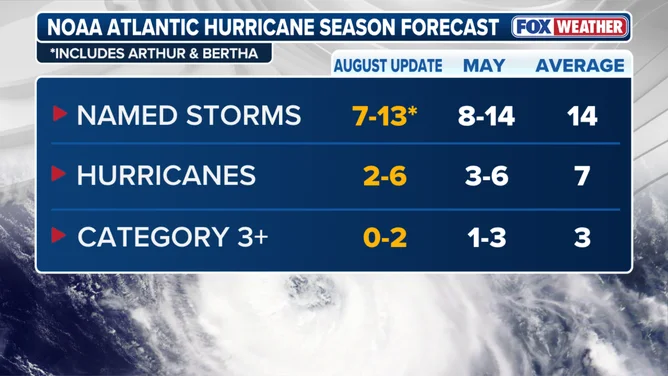
According to CBS News, NOAA’s Climate Prediction Center had forecast a below-normal season, expecting between seven and 13 named storms, including two to six hurricanes and zero to two major hurricanes. So far, that forecast is panning out.
The current El Niño is particularly strong. Real-time tracking of the Relative Oceanic Niño Index (RONI) shows values around +2.5°C, near record levels for this time of year and well above the +1.5°C threshold for a strong event, as noted by meteorologist Michael Lowry on his Substack.
In addition to El Niño, another factor suppressing storm development is the presence of Saharan dust and dry air across the Main Development Region (MDR) east of the Caribbean. NOAA’s wind shear tracker shows that shear in the MDR has been relatively normal, but atmospheric instability has been below average, largely due to repeated intrusions of stable, dusty Saharan air. This combination has created a hostile environment for tropical systems.
A Record-Breaking Stretch
The absence of hurricanes this late in the season is unprecedented in the modern era. Since 1944, a hurricane had formed every year by September 11. The previous latest first hurricane dates were September 11 in both 2002 (Gustav) and 2013 (Humberto). Before that, records going back to 1851 show that every year had at least one Atlantic hurricane, though older data is less reliable due to limited observations.
The quiet season is also reflected in another key metric: Accumulated Cyclone Energy (ACE). ACE combines the intensity and duration of tropical cyclones to estimate total seasonal activity. According to Colorado State University data cited by Yahoo, the 2026 season has the lowest ACE on record for this point in the year, going back to 1950.
Stakes: Quiet Season Brings Relief, But Also Risks
While a quiet hurricane season might seem like good news, it has significant implications. Coastal communities and energy markets are breathing a sigh of relief. Landfalling hurricanes can cause billions of dollars in damage and loss of life, and even storms that stay at sea can disrupt oil and gas production in the Gulf of Mexico, sending energy prices soaring.
“No one is complaining,” wrote Berger. “Landfalling hurricanes are incredibly destructive for coastal areas and have the potential for considerable inland rainfall. Even storms at sea, in the Gulf of Mexico, can send energy prices skyrocketing—the last thing needed this year.”
However, the lack of activity doesn’t mean the season is over. The Atlantic hurricane season officially runs until November 30, and October can still produce powerful storms. In 2005, for example, Hurricane Wilma formed in late October and became the most intense Atlantic hurricane on record. So while the odds of a hurricane-free season are rising, it’s too early to say for sure.
Historical Perspective: The 1926 Hurricane That Caught Miami Off Guard
As forecasters marvel at the current quiet, it’s worth remembering that a lack of early-season activity doesn’t guarantee safety. On September 15, 1926, a powerful hurricane was churning north of the Caribbean, heading toward Miami. But without satellites and modern communication, residents had little warning. The storm would come ashore three days later and become one of the defining disasters of the era, as recounted by Fox Weather meteorologist Bryan Norcross.
Today, advanced forecasting and satellite monitoring provide ample notice, but the 1926 storm serves as a reminder that hurricanes can strike even in years that start quietly. “When storms haven’t even begun to develop, forecasts can and do jump around,” Norcross wrote.
Broader Implications: A Sign of Climate Variability, Not Climate Change
While climate change is expected to make strong hurricanes more intense and wetter, the quiet 2026 season is primarily linked to natural variability—specifically, El Niño. The strong El Niño is part of the ENSO cycle, which alternates between warm (El Niño) and cool (La Niña) phases every few years. El Niño years tend to have below-average Atlantic hurricane activity, while La Niña years tend to be above average.
That said, the season is not over, and forecasters urge coastal residents to remain prepared. “The Atlantic season still has some runway left,” Berger noted. “It often produces hurricanes in October and officially runs to the end of November, so it remains too early to predict the possibility of an Atlantic season without a hurricane. But the odds are rising, and that would be historic.”
As the world watches, the 2026 Atlantic hurricane season is poised to enter the record books—for its calm, not its fury. Whether it remains hurricane-free will depend on conditions in the coming weeks, but for now, the basin is experiencing an unprecedented reprieve.
Comments