
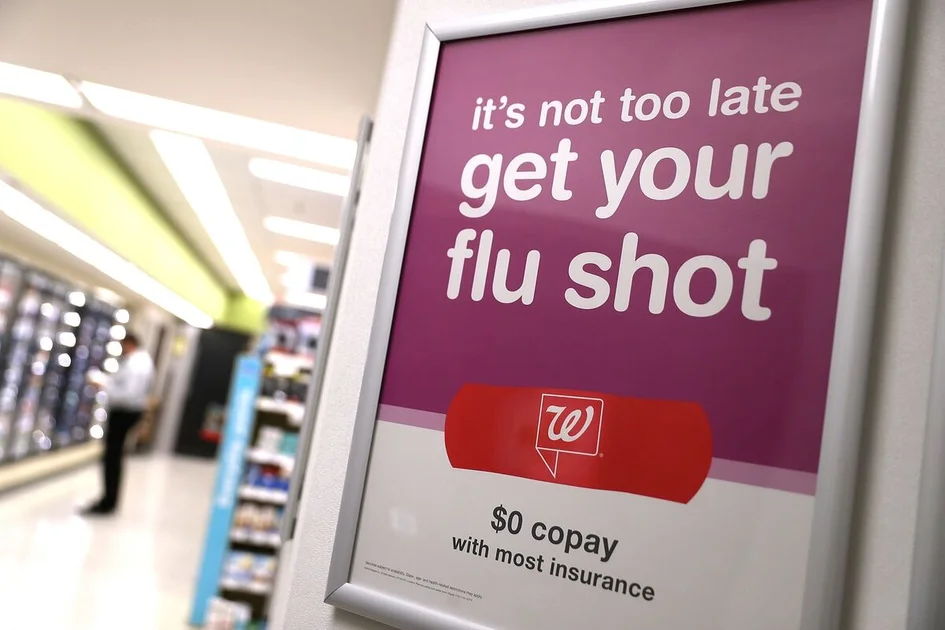
Flu Season Off to an Early Start
Influenza activity is rising earlier than usual across parts of the United States, prompting health experts to encourage early vaccination—especially for adults over 50, who face a higher risk of severe illness and hospitalization. According to the Centers for Disease Control and Prevention (CDC), seasonal influenza activity remains low nationally but has been increasing since late August and early September. The agency noted that early-season activity is higher than typically observed at this time of year.
The surge is most pronounced on the West Coast. California’s influenza test positivity rate stood at 9.65% as of October 10, far above the roughly 1% rate seen during the previous two flu seasons in early October, according to state health department data. Utah recorded 242 influenza A cases as of October 11, up from just 10 cases at the same time last year, per Intermountain Health’s Germ Watch database. Parts of central Oregon have also reported an influenza A surge.
A New H1N1 Mutation Takes Center Stage
Much of the early activity is driven by a mutation of the influenza A(H1N1)pdm09 strain—the virus behind the 2009 swine flu pandemic. CDC surveillance data for the week ending October 17 show that of 241 influenza A viruses subtyped, 239 (99.2%) were A(H1N1)pdm09. Since late May, 81.5% of reported influenza A viruses have been A(H1N1)pdm09, with the majority belonging to the D.3.1.1 HA subclade. While these viruses remain antigenically similar to the 2009 pandemic strain, they are dividing into different genetic groups—a sign of ongoing viral evolution.
Scott Hensley, a microbiologist at the University of Pennsylvania, told The Guardian that two of the three components of this year’s vaccine appear to be well matched to circulating strains. However, he noted that the H1N1 mutation might affect antibodies in younger people, and with flu season picking up steam, “it is probably a good idea to get vaccinated early.”
Why This Matters for Adults Over 50
Adults aged 50 and older are among the groups most vulnerable to influenza-related complications, including pneumonia, hospitalization, and death. The American Medical Association recommends flu shots for all people six months and older, and the CDC advises that people 50 and older receive annual vaccination to reduce the risk of severe illness. This season’s early start leaves less time for individuals to build immunity before activity peaks.
The 2026–2027 flu vaccines, approved by the FDA in August, are trivalent and target H1N1, H3N2, and one influenza B virus. All three components were updated compared to last season, including a change to protect against the H3N2 subclade K virus that spread widely during 2025–2026. Manufacturers project they will produce as many as 135 million doses for the U.S. market, and 100% of the supply will be trivalent. Most doses (99%) are thimerosal-free.
Vaccination Rates and Public Health Messaging
Despite the availability of vaccines, public health messaging has faced headwinds. The Guardian reported that promotion of flu shots has been reduced under U.S. Health Secretary Robert F. Kennedy Jr., a longtime anti-vaccine activist who has overseen an overhaul of childhood vaccine schedules. That shift in messaging could complicate efforts to reach older adults, who may need extra encouragement to seek vaccination.
For those over 50, the practical takeaway is clear: get vaccinated soon. The CDC’s interim clinical considerations for the 2026–2027 season provide guidance for healthcare professionals, but the core recommendation remains unchanged—annual flu vaccination is the best defense against severe outcomes.
Moderna Advances mRNA Bird Flu Vaccine
While seasonal flu vaccines are being distributed, pharmaceutical company Moderna has moved its mRNA-based bird flu vaccine into a late-stage trial, involving roughly 4,000 participants and targeting highly pathogenic avian influenza. The company said the study is the first of its kind in pandemic influenza, and its next data readout will be important for any future regulatory filing. Moderna has committed to reserving 20% of its manufacturing capacity for low- and middle-income countries if the product is approved.
The trial is a reminder that influenza preparedness extends beyond seasonal strains. The CDC reported one confirmed human case of avian influenza A(H5N1) in the week ending October 17, though no human-to-human transmission of H5 bird flu has been identified in the United States. For older adults, who are often prioritized in pandemic planning, the development of new vaccine platforms could eventually offer additional protection.
What to Watch
As the season progresses, several factors will shape its trajectory. The H1N1 mutation’s impact on vaccine effectiveness—particularly in younger populations—remains a subject of study, but current vaccines are still expected to provide meaningful protection against severe disease. Influenza viruses are constantly changing, requiring frequent updates to vaccine composition, and this season’s early activity may or may not predict a severe peak.
For now, health experts are unanimous in their advice: vaccination is the most effective way to reduce the risk of flu-related complications. Adults over 50, along with their families and caregivers, should consider getting vaccinated promptly—especially as the virus circulates earlier than usual.
As Hensley put it, “it is probably a good idea to get vaccinated early.” With flu season already underway, that advice may be more relevant than ever.
This article was informed by reporting from The Guardian, the CDC, and other sources. For more health news, see our coverage of Hunter's Moon 2026: Orange Supermoon Peaks Tonight as Taurus Full Moon Sparks Astrological Buzz and Xbox Shocktober 2026: Up to 90% Off Horror Games Until November 4.
Comments