
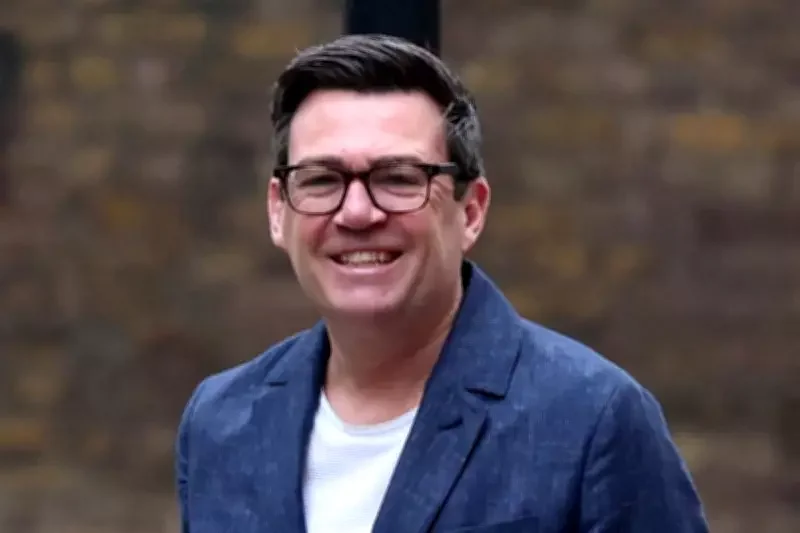
Andy Burnham Poised for Westminster Comeback as Labour Leadership Crisis Deepens
Greater Manchester Mayor Andy Burnham has signalled he is preparing to return to Westminster, creating a by-election in the seat of Makerfield after Labour MP Josh Simons stepped down on Thursday to make way for him. The move comes as Prime Minister Keir Starmer fights for his political survival following the resignation of Health Secretary Wes Streeting and a wave of rebellion from Labour MPs.
Burnham, who has served as Mayor of Greater Manchester since 2017, pulled out of his regular BBC Radio Manchester phone-in slot on May 14 to "prioritise discussions arising from last week's elections," according to his spokesman. The timing has fuelled speculation that he is laying the groundwork for a full-scale challenge to Starmer’s leadership, potentially positioning himself as a unity candidate capable of bridging the party’s warring factions.
Simons, the outgoing MP for Makerfield, stated that “urgent and radical reform is necessary” and that Burnham is “the leader to drive this change.” Burnham has requested permission from Labour’s National Executive Committee (NEC) to stand in the by-election, though the NEC barred him from standing in an earlier contest in Gorton and Denton in January by an 8-1 vote. A spokesman for Burnham said he aims to return to Parliament “to address the cost-of-living crisis and make life more affordable across the UK.”
Why a Burnham Return Matters Now
The stakes could not be higher for Labour. Starmer is battling to hold onto his position after a disastrous set of local and regional elections last week, on top of a series of scandals that forced him to sack key allies. Streeting resigned on Thursday, declaring that Starmer “will not lead the Labour Party into the next general election” because the country needs “a bold vision and bigger solutions than we are offering.” Starmer responded by warning against the “chaos” of changing leaders, vowing to “bring people together where they want division.”
Burnham is widely seen as one of the few figures who could challenge from the left of the party while maintaining broad appeal among the electorate. Unlike Streeting, who is viewed as a centrist “Blairite” and has faced resistance from Labour’s left wing over his admiration for Tony Blair and his friendship with the disgraced former ambassador Peter Mandelson, Burnham has retained strong support from trade unions and grassroots members. He was a prominent figure in Jeremy Corbyn’s shadow cabinet and has since carved out a reputation as an effective regional leader who speaks the language of working-class communities.
However, a path to the leadership is not straightforward. Burnham is not currently an MP, and a by-election victory — while likely in the Labour stronghold of Makerfield — would still be several weeks away. Rule changes or NEC approvals could delay his candidacy further. Meanwhile, Angela Rayner, the former deputy prime minister, has also emerged as a potential challenger after being cleared by HMRC over her tax affairs, adding another layer of complexity to the race.
Pivotal Moment for Labour’s Future
Burnham’s return to Westminster could fundamentally reshape the Labour leadership contest and the party’s strategic direction. If he enters the race, he would be the most formidable candidate from the left, contrasting sharply with Streeting’s centrist pitch and potentially drawing support from MPs who are wavering between factions. The combination of a by-election win and a subsequent leadership campaign could allow Burnham to frame himself as the candidate of renewal — a leader who can reclaim the "Red Wall" seats lost in 2019 while appealing to young voters and public-sector workers.
Yet the risks are significant. A prolonged leadership contest could deepen divisions within Labour, handing the governing Conservatives an opportunity to exploit internal chaos. The last time Labour engaged in such a public battle for the top job, in 2020, the party spent months in infighting before eventually uniting behind Starmer. If Burnham challenges and fails, he may damage his reputation as a potential future leader for years to come.
For voters watching from outside Westminster, the spectacle raises broader questions about whether Labour is capable of presenting a coherent alternative to the current government. With the cost-of-living crisis still biting and public services under severe strain, the party’s internal drama risks alienating the very constituents it needs to win back.
Burnham’s decision to pull out of his weekly phone-in, a move his spokesman described as reluctant but necessary, signals that he understands the gravity of the moment. For many Labour supporters, he represents a bridge between the party’s radical past and its pragmatic future — a figure who can articulate anger at inequality without sounding like a career politician. Whether that is enough to topple a sitting prime minister remains to be seen.
As the leadership contest unfolds, all eyes are on the NEC’s decision and the date of the Makerfield by-election. If Burnham clears those hurdles, the battle for the soul of the Labour Party will truly begin. Meanwhile, Starmer is expected to address Labour MPs on Monday in an attempt to shore up support, but with ministers resigning and backbenchers openly calling for change, his grip on power appears increasingly fragile.
This story is developing. Check back for updates on the NEC decision and the by-election timeline.
Comments