
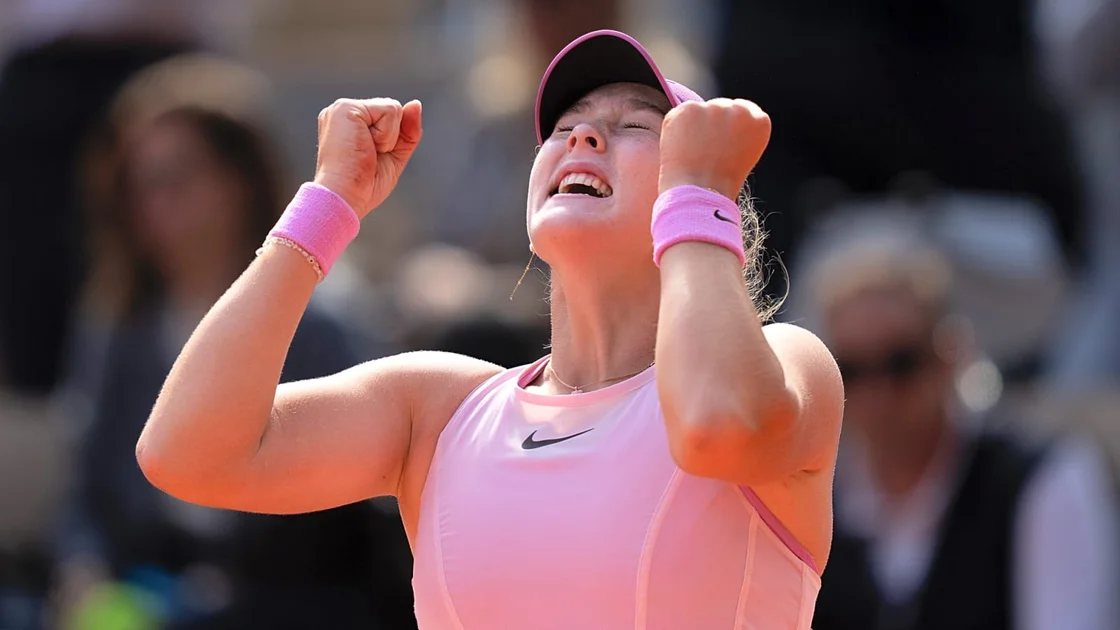
Andreeva's Emotional Meltdown After Second-Round Defeat
Mirra Andreeva, the 19-year-old French Open champion, suffered a dramatic and tearful second-round exit at Wimbledon on Wednesday, losing 4-6, 7-5, 6-4 to two-time Grand Slam winner Barbora Krejcikova in a match punctuated by outbursts, a shattered racquet, and a post-match press conference where she broke down sobbing.
Seeded No. 5 and among the frontrunners for the title after her Roland Garros triumph, Andreeva led by a set but was undone by Krejcikova's guile on grass. The 2024 Wimbledon champion saved six match points in a gripping ninth game of the decider before sealing victory after nearly three hours. As the final point ended, Andreeva hurled her racquet toward her chair, smashing it into her bag. Annabel Croft, commentating for the BBC, described the scene: "If that was a wooden box, it would've been smashed to smithereens – but it was smashed into her racquet bag. She is absolutely seething."
As she walked off Centre Court, Andreeva mouthed "I quit" to her team. Around 30 minutes later, facing reporters, her composure collapsed. Asked how she would move on, she paused, wiped tears, and said: "Sorry. Yeah, it's going to take some time, maybe a couple of days, and then I'm going to be back to practice for hard courts. I don't know what my next tournaments are going to be."
A Chaotic Contest Marked by Incident
The match was defined by more than just the scoreline. After winning the first set, Andreeva grew increasingly agitated. She complained to the umpire about Krejcikova's medical time-out during the second set, seeking a hindrance call. At one point, she shouted toward her coaching box, which includes Conchita Martinez: "I don't need it, I don't want to hear it." During the final set, a bracelet broke, scattering beads across the baseline, forcing ball kids to collect them before play could resume. Andreeva also appeared distracted when the crowd erupted at the same moment Harry Kane scored for England in the World Cup, leaving her looking dumbfounded as she sent a backhand long.
Martina Navratilova, watching from the Royal Box, noted the teenager's unusual behavior. "It was really strange," Navratilova told the Tennis Channel. "She never looked at Conchita or her box the whole match. She kept her back to them. She was playing really fast between points." The 18-time Grand Slam champion suggested the pressure of following a maiden major title had taken its toll.
The Difficult Transition from Clay to Grass
Andreeva arrived at the All England Club with history on her mind. Only four women in the Open era — Maureen Connolly, Evonne Goolagong, Chris Evert, and Steffi Graf — have won both the French Open and Wimbledon before turning 20. The teenager had the chance to join that elite list, having reached the quarter-finals at SW19 last year and shown comfort on grass.
But the surface switch is notoriously challenging. The low, skidding slices and drop shots used by Krejcikova — a player who knows exactly how to win on these courts — disrupted Andreeva's rhythm throughout. "She changes the rhythm a lot. The slices and drop shots, here they stay low, they don't bounce. I've had some trouble with that," Andreeva admitted in the press conference.
Her preparation had also been shaky. Last week, she suffered a first-round loss in Bad Homburg. Despite that, she resisted using the quick turnaround from clay as an excuse. "Well, yeah, it's not easy. But, I mean, I'm not the only one that does that, so... I think more or less we're in even conditions," she said.
The defeat comes on the same day that other top contenders navigated their own hurdles. Gauff digs deep and Sabalenka channels Nadal in dramatic second-round wins, showing the depth of competition Andreeva faces. Meanwhile, Serena Williams crashed out in the first round in her own emotional return, underscoring the unforgiving nature of the tournament.
The Weight of Being a Grand Slam Champion
Andreeva's eruption is not isolated. The pressure of defending a major title — even as a teenager — can be immense. At the French Open, she played with freedom and joy. At Wimbledon, that lightness disappeared. Navratilova identified the psychological load as a key factor. "The first match, feeling the pressure, I think. And today it was the other way around," she observed.
The incident also raises questions about the support system around young stars. Conchita Martinez, a former Wimbledon champion herself, is one of the most respected coaches in the game. But Andreeva's decision to shut out her box mid-match suggests a breakdown in communication under duress. Whether this is a one-off reaction or a pattern to monitor will be watched closely by pundits.
Other rising talents have faced similar struggles. Rafael Jodar made his Wimbledon debut at 19, inspired by the Nadal legacy, and has spoken about managing expectations. Andreeva will need to find her own methods to cope with the spotlight.
What This Means for Andreeva's Season and the Women's Draw
Andreeva's early exit reshapes the women's singles bracket. As the No. 5 seed, she was a projected quarter-finalist. Her section now opens up, potentially benefiting players like Svitolina vs Snigur, who headline the Ukrainian derby on the second day of play.
For Andreeva personally, the path forward involves a reset. "I still need to talk to my team to see where I'm going to play next," she said, her voice wavering. The hard-court season is next up, with tournaments in North America leading to the US Open. Given her talent — she has already won a Grand Slam at 19 — a bounce-back is likely. But the manner of this defeat may linger.
Broader Implications for Tennis
The episode adds to a growing conversation about the emotional health of young athletes in tennis. The sport has seen a wave of teenage success — Andreeva, Jodar, and others — but also high-profile struggles. When players crack under the weight of expectation, it sparks debate about the role of coaching, media obligations, and the WTA's mental health resources.
Andreeva's tears were raw and genuine. In an era of polished soundbites, her vulnerability humanized her. Yet the sight of a Grand Slam champion smashing a racquet and crying in a press conference also invites scrutiny. Naomi Osaka and Emma Raducanu have spoken openly about the pressures of early success; Andreeva may soon join that conversation.
For now, the tennis world will watch how she recovers. As she said, "It's going to take some time, maybe a couple of days." The hard courts await, and with them, a chance to prove that her French Open triumph was no fluke, but the beginning of a sustained career.
Champion's Resilience: Krejcikova's Path Forward
Barbora Krejcikova, meanwhile, advances with the calm of a player who has been here before. The 2024 champion absorbed Andreeva's best shots, saved six match points in the deciding set, and never wavered. Her ability to change pace and use the low bounces of Centre Court frustrated the teenager into errors. Krejcikova will face a third-round opponent likely to be less volatile, but her experience makes her a dangerous floater in the draw.
Andreeva's exit is a reminder that in tennis, the gap between triumph and despair is thin. One month ago, she was on top of the world. Today, she left Centre Court in tears. The sport waits to see which version of Mirra Andreeva will appear next.
Comments