
Jacobs' European 100m Final Ends in Heartbreak as Injury Strikes Again
BIRMINGHAM – Marcell Jacobs' dream of a historic third consecutive European 100m title turned into a nightmare on Tuesday night, as the Italian sprinter pulled up in the final after feeling a sharp pain in his adductor during the last warm-up on the blocks. The race, which had promised to be the crowning moment of Jacobs' remarkable comeback season, instead ended in anguish, with Britain's Romell Glave seizing the gold medal in 10.09 seconds.
Jacobs, who had dominated his semifinal hours earlier with a relaxed 10.08, was visibly distressed as he slowed to a jog after just 60 meters, crossing the line in 12.26. The 32-year-old had been chasing a third consecutive European title, a feat achieved only by sprint legends Valery Borzov and Linford Christie. His withdrawal leaves more questions than answers about the fragility of a body that has repeatedly betrayed him at critical moments.
"During the last warm-up on the block, I felt a huge pain in my adductor, the same one that stopped me in Monte-Carlo in June," Jacobs told reporters, his voice heavy with disappointment. "I tried anyway, I was ready to break myself to finish this race because I knew I could win it, but that's part of the game. I won't give up—I'll get back to work and continue on my path."
The race itself delivered a dramatic conclusion. Glave, who finished third behind Jacobs at the 2024 European Championships in Rome, improved his medal color to gold, while his compatriot Jeremiah Azu took silver (10.16) and Germany's Owen Ansah clinched bronze (10.19). Italy's Chituru Ali finished sixth (10.34), a result that underscored the team's mixed fortunes on a night when the spotlight was firmly on its star.
A Season of Redemption Derailed by a Single Step
The injury is a cruel twist for Jacobs, who had meticulously rebuilt his career under the guidance of coach Paolo Camossi after a forgettable 2025. His season began modestly at Savona in May, but by June he was back to sub-10-second form, clocking 9.99 at the Golden Gala in Rome and 9.96 in Paris. Then came the electrifying performances at Eisenstadt in early July, where wind-assisted times of 9.84 and 9.67 raised tantalizing questions about his ceiling—even if they didn't count for records.
Medical staff will conduct further assessments on Wednesday, with the 4x100m relay scheduled for Saturday still a potential target. However, a significant tear could jeopardize not only the relay but also any remaining Diamond League appearances and even the 2027 World Championships. The recurrence of the same adductor issue that forced him to skip the Monte-Carlo Diamond League in early July suggests a chronic underlying problem that may require careful management.
Jacobs' history with injuries is well-documented. After his stunning Olympic triumph in Tokyo 2021, his career has been a rollercoaster of brilliant victories and frustrating withdrawals, often at the worst moments. This latest setback, coming just minutes before the final of a major championship, underscores how thin the margin is between glory and despair at the highest level of sprinting.
The Race That Was: Glave's Resilience and Italy's Mixed Night
While Jacobs' withdrawal overshadowed the final, Glave's victory was nonetheless a career-defining moment. The British sprinter, who had trained specifically for these championships, ran a composed race in difficult conditions—wind reading -0.4 m/s—to become the first British man to win the European 100m title since 2006. "I knew I had it in me," Glave said post-race. "I've been building all season, and this is the payoff. It's incredible to have my name alongside guys like Borzov and Christie."
For Italy, the night was bittersweet. Andy Diaz had earlier delivered a stunning triple jump gold, and Larissa Iapichino was in contention in the long jump, but the 100m result left a void. Chituru Ali, the 2024 European bronze medalist, could only manage sixth, a performance that highlighted the team's over-reliance on Jacobs' star power. "We knew Marcell was the favorite, but we also had to be ready for our own races," Ali admitted. "It's hard to see him like this."
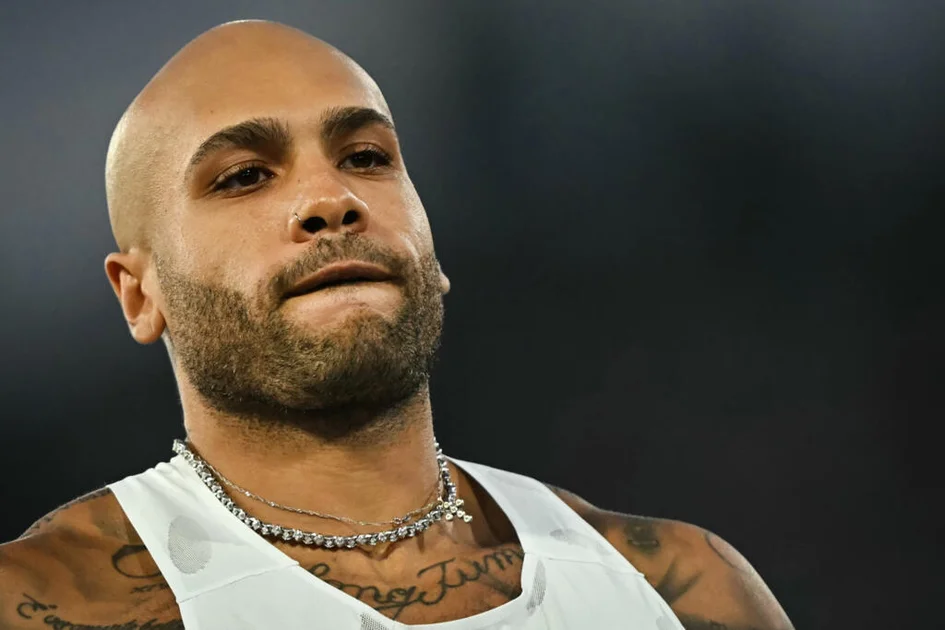
The sight of Jacobs hobbling off the track, head bowed, will linger. It was a stark reminder that even the most gifted athletes are at the mercy of their bodies. The seconds before the gun, a close-up captured Jacobs touching his left thigh—a silent admission that the pain was already there. He pushed through the start, but the body betrayed him by the halfway point.
What Now for Jacobs? The Broader Battle Against Time and Muscle
At 32, Jacobs faces the most challenging physical and psychological test of his career. The injury is not new—it's the same adductor that has plagued him intermittently. This time, however, the stakes are higher. The 2024 European title in Rome and the 4x100 relay gold now feel like a distant past. The next major championship is the 2027 World Championships in Beijing, but a long recovery could mean years of rehabilitation rather than weeks.
Sports scientists point out that sprinters in their 30s experience a significant increase in injury risk due to changes in muscle elasticity and recovery capacity. "Jacobs' style is extremely explosive, and that puts enormous stress on the adductors," explains Dr. Elena Ricci, a sports medicine specialist. "Without a properly structured training program that addresses these imbalances, these issues will keep recurring. It's not just about healing; it's about preventing."
Jacobs' renewed partnership with Camossi had initially sparked hope, with the coach emphasizing a more holistic approach to training. But the event in Birmingham shows that even the best-laid plans can unravel in a split second. "I believed in myself again," Jacobs said last week. "But now I have to rediscover that belief once more."
The Unforgiving Nature of Sprinting: A Broader Perspective
Jacobs' nightmare is not an isolated incident in the sprinting world. Injuries have robbed the sport of some of its greatest matchups. The 2026 season has already seen several top sprinters withdraw from key races due to muscular issues, raising questions about the demands of the international circuit. The Diamond League, European Championships, and World Championships within a short window place immense physical strain on athletes who are already pushing the human body to its limits.
The physiological reality is stark: sprinting at speeds of nearly 40 kilometers per hour generates forces several times body weight, placing tremendous stress on the muscles, tendons, and joints. A single misstep or a tiny imbalance can trigger a tear. For someone like Jacobs, whose technique is renowned for its efficiency, the recurrence of adductor issues suggests a deeper biomechanical vulnerability that may require a complete overhaul of his movement patterns.
Moreover, the psychological toll cannot be overstated. An athlete who has tasted Olympic gold must now grapple with repeated setbacks that erode confidence and motivation. "The mental aspect is as important as the physical," says sports psychologist Marco Ferri. "Injuries like this can either break an athlete or forge a new level of resilience. It's a test of character as much as of the body."
Italy's Silver Lining: Depth, Youth, and the Road Ahead
Despite the gloom, the Italian sprint program has reasons for optimism. Chituru Ali, at 25, continues to improve, while the emergence of younger talents like Marco Brancati in the 200m and the strong relay squad offers a foundation for the future. The 4x100 relay, even without a fully fit Jacobs, remains a medal contender, and the team's spirit was evident as they rallied around their captain after the final.
National coach Bernardo Severi emphasized the need for patience. "Marcell is a champion, and champions find a way. But we must also build a system that supports him and the next generation. We can't rely on one athlete alone," he said. The Italian federation has already invested in biomechanics labs and strength-training programs designed to reduce injury risks.
Jacobs' own words echoed that determination: "I don't quit. I'll heal, and I'll be back. This isn't the end of my story." Whether that story includes a fourth European title attempt in 2028—when he'll be 34—remains to be seen. But if his career has taught anything, it's that counting him out is a risky proposition.
For now, the sprinting world turns its attention to the relays and the next chapter. Birmingham 2026 will be remembered as the night Romell Glave finally stood atop the podium, and the night Marcell Jacobs' comeback was brutally interrupted. The images of Jacobs limping off the track are a powerful reminder of the sport's unforgiving nature—and of its enduring drama.
As Jacobs begins his recovery, the broader conversation about sprinting's physical demands and athlete welfare is likely to intensify. With the 2027 World Championships in Beijing on the horizon, making the most of a sometimes-unforgiving season is a challenge every elite sprinter faces. But as Jacobs himself proved in Tokyo, the greatest comebacks often start at the lowest points.
Comments