
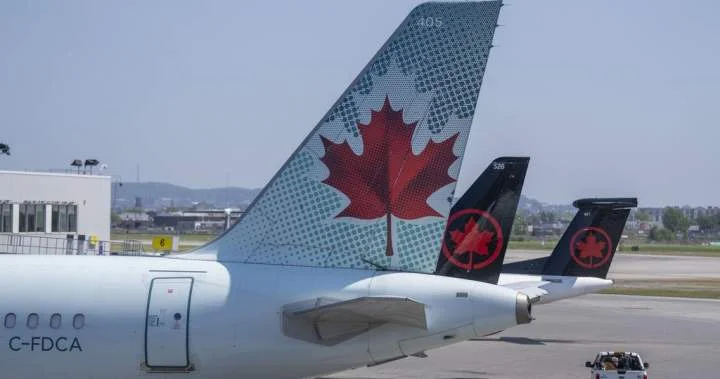
Air Canada Plane Veers Off Runway at Montreal Airport, TSB Launches Investigation
An Air Canada Boeing 737 MAX carrying 162 people veered off a taxiway at Montreal-Trudeau International Airport on Thursday afternoon, prompting an investigation by the Transportation Safety Board of Canada (TSB) and temporarily disrupting operations at one of the country's busiest air hubs.
Flight AC774, which had just completed a four-and-a-half-hour journey from Los Angeles International Airport (LAX), ran into the grass after exiting the main runway at approximately 4:00 p.m. local time on July 9, 2026. The aircraft—a Boeing 737 MAX 8 registered as C-GEOJ—came to a rest on the soft ground adjacent to the taxiway, with no injuries reported among the 156 passengers and six crew members on board.
Air Canada confirmed the incident in a statement, noting that the flight "landed normally" before experiencing what it called a "taxiway excursion." The airline added that passengers were safely deplaned and taken by bus to the terminal, while plans were made to tow the aircraft to a hangar for a full inspection.
Runway Closure and Operational Disruption
The incident forced the closure of the airport's north runway (6L/24R) while emergency crews responded and the aircraft was secured. According to flight tracking data from FlightRadar24, the runway remained closed until approximately 9:45 p.m. before reopening. The disruption rippled through the airport's schedule, with Nav Canada issuing a temporary ground stop and flow restrictions to manage the backlog of arriving and departing flights.
Air Canada's next rotation for the affected aircraft—an evening flight to San Francisco and its return leg on Friday morning—had to be cancelled. The incident also contributed to Montreal being ranked among the most delayed airports in the world on July 9, according to industry metrics.
What Happened: Accounts from Passengers and Experts
Passengers described a sudden and alarming deviation after touchdown. Barbara Edelston Peterson, who was on the flight, posted a video on Facebook recounting the moment the plane left the pavement. "The second this flight hit the ground, I knew something wasn't right," she said. "We were skidding and next thing I knew, there was smoke and grass and dirt next to the window."
Peterson noted that the aircraft narrowly missed a red-and-white checkered equipment box on the grass, and she thanked the crew for their professionalism throughout the ordeal. Firefighters lined up on either side as passengers disembarked onto waiting buses.
Aviation expert John Gradek, a lecturer at McGill University, told CityNews that the available video footage showed what appeared to be a normal landing followed by a gradual veer to the right. "There was no indication of any skidding or any mechanical issues with the airplane," Gradek said. "So the question is going to be like what happened in the pocket of that aircraft that caused the pilots to allow that airplane to go off the runway?"
The Role of Weather
Weather conditions may have played a part. Peterson and other passengers reported heavy rain at the time of landing. While Air Canada described the landing as normal, investigators will examine whether wet runway conditions, braking action, or other environmental factors contributed to the excursion. The TSB's preliminary report, expected within 30 days, will include data from cockpit voice and flight data recorders.
TSB Investigation Underway
The Transportation Safety Board of Canada confirmed late Thursday that it had deployed investigators to the scene. "We have deployed investigators to the scene to gather information and assess the accident," a TSB spokesperson said in an email on Friday.
The investigation will focus on several key areas:
Cockpit Recorders and Pilot Actions
Gradek explained that investigators will analyze the cockpit voice recorder and flight data recorder to reconstruct the sequence of events. "They will look at all the actions taken by the pilots—voice as well as activity in the cockpit," he said. "They have all the data that they need in those two recorders to rebuild the scenario." This includes examining whether the crew misinterpreted taxiway markings, experienced a loss of directional control, or encountered a mechanical anomaly.
Aircraft Condition
The Boeing 737 MAX 8 involved (C-GEOJ) has been taken out of service and will undergo a "full inspection," according to Air Canada. While the aircraft appeared to have sustained no major structural damage from the grassy excursion, investigators will examine its tires, brakes, steering system, and landing gear for any signs of pre-existing faults.
In recent years, the 737 MAX has faced scrutiny over its automated flight control system, but Gradek cautioned that this incident—occurring after landing on a taxiway—likely involves different systems. The investigation will need to rule out any issues with nose-wheel steering, brake asymmetry, or thrust reverser deployment.
Runway and Taxiway Infrastructure
TSB teams will also assess the condition of the runway and taxiway surfaces at Montreal-Trudeau, including drainage, markings, and lighting. Heavy rain can reduce tire friction and obscure visual cues. The airport's taxiway geometry and signage will also be reviewed to determine if any design factors could have contributed to the excursion.
Broader Implications: Runway Excursions and Aviation Safety
Runway excursions—where an aircraft departs the paved surface—are among the most common safety incidents in aviation. According to the International Air Transport Association (IATA), they account for roughly one in four all commercial aviation accidents worldwide. While rarely fatal when they occur at low speed on the ground, they can result in aircraft damage, injuries, and significant operational disruption.
The 737 MAX Track Record
This incident places the Boeing 737 MAX back in the spotlight, though for reasons unrelated to the automated flight control issues that led to two fatal crashes in 2018 and 2019. The MAX fleet has returned to service worldwide after extensive recertification, and this is the first notable ground incident involving the type in Canada since its return. Boeing has expressed willingness to cooperate with investigators, though the focus remains on operational and human factors rather than aircraft design.
Airport and Airline Response
Montreal-Trudeau has seen steady growth in passenger traffic, and runway incursions or excursions at major hubs often lead to reviews of ground movement procedures. In this case, the quick evacuation and bus transfer of passengers—completed within about three hours of landing—demonstrated effective emergency protocols. Air Canada stated that all passengers and crew were safely in the terminal by 7:37 p.m.
The airline will also conduct its own internal investigation alongside the TSB, and the findings could influence training programs for taxiway operations, particularly in adverse weather.
Passenger Experience and Aftermath
Passengers on flight AC774 faced delays to their onward travel plans. One traveler told CBC that the plane was "going very fast" after landing, and that the jolt of leaving the pavement was sudden. Despite the scare, many praised the crew's calm handling of the situation.
"I don't know if I'll make my next flight. All I know is we're alive," Peterson said in her video, adding that the flight attendants were "nice and caring."
Air Canada has not yet disclosed compensation or rebooking policies for affected passengers, but standard practice includes offering hotel accommodations for those stranded overnight and rebooking on the next available flights.
What Happens Next
The TSB will release a preliminary report within 30 days, followed by a more comprehensive final report that could take several months. Investigators will aim to determine the probable cause and issue safety recommendations to prevent similar occurrences.
In the meantime, the 737 MAX involved will remain grounded in a hangar at Montreal-Trudeau for inspection. The airport has resumed normal operations, and Air Canada has substituted other aircraft to cover the cancelled rotations.
For aviation observers, the incident serves as a reminder that even routine landings can turn hazardous, and that the industry's safety net—from cockpit procedures to independent investigation—remains essential.
In other recent news, an incident involving a runway incursion in European airspace highlighted similar challenges: UK F-35s Intercept Russian Plane Shadowing HMS Prince of Wales in Arctic. Meanwhile, in the world of sports, Hollie Davidson to Referee Fiji vs England in Historic Nations Championship Clash marks a milestone for officiating diversity.
Comments