
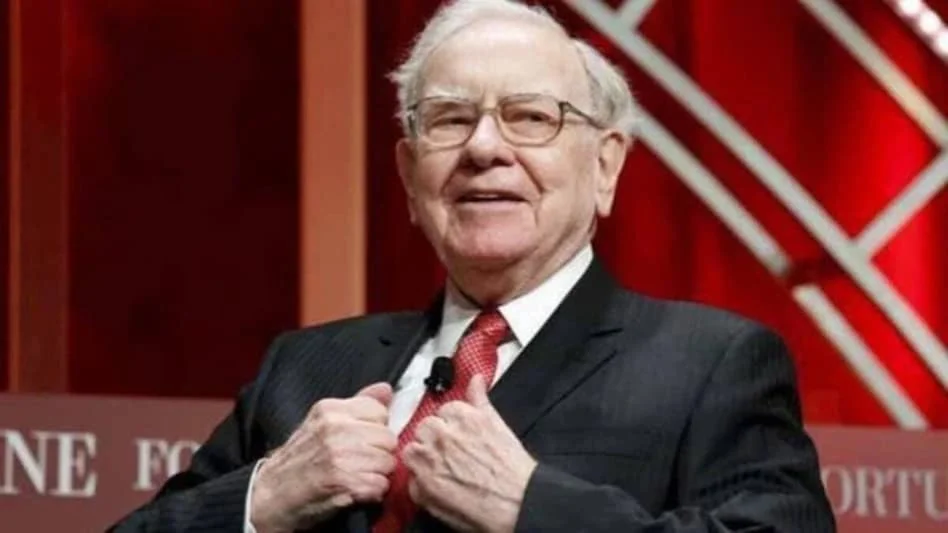
Warren Buffett may have stepped away from Berkshire Hathaway, but his investment legacy is more prominent than ever. In a farewell letter to shareholders dated September 18, 2026, Buffett officially said goodbye after relinquishing the CEO title earlier this year and stepping down as Chairman last month. The letter contained a simple yet powerful message: "Father Time always wins." Those four words, according to analysts, underscore the importance of time and compounding in building wealth, even as investors navigate elevated market levels and fears of a potential crash.
Buffett's Final Advice: Time in the Market
Buffett's farewell letter, his first public communication since leaving Berkshire, emphasized that patience and long-term holding are the keys to investment success. The letter referenced his long-standing belief that time in the market, not timing the market, generates wealth. According to data from Crestmont Research, all 107 rolling 20-year periods for the S&P 500 since 1900 have produced positive average annual returns. This track record, which includes periods spanning the Great Depression and the 2008 financial crisis, reinforces Buffett's advice to own a low-cost S&P 500 index fund and hold it for decades.
The Math Behind the Millions
A $20,000 initial investment in the S&P 500, combined with $1,000 monthly contributions and an average annual return of 11.5%, would grow to approximately $10 million over 40 years. Notably, 95% of that balance would come from investment gains, illustrating the power of compounding. Buffett himself recommended index funds at Berkshire's 2020 virtual shareholder meeting, stating, "In my view, for most people, the best thing to do is own the S&P 500 index fund." His latest letter serves as a final reinforcement of that philosophy.
Dividend Stocks in Focus
As investors digest Buffett's farewell, attention has turned to the stocks he championed, many of which offer substantial dividend income. A recent analysis highlighted five Berkshire holdings—Chevron, Kraft Heinz, Bank of America, Coca-Cola, and American Express—that could generate approximately $130 per month in passive income from a $50,000 investment. The strategy aligns with Buffett's preference for durable businesses that return capital to shareholders.
Passive Income Potential
According to the analysis, a portfolio allocating $10,000 to each of these five stocks would yield about $1,600 annually, or roughly $133 per month, based on current dividend rates. Kraft Heinz offers the highest yield at 5.5%, while American Express provides the lowest at 1.2%. Chevron and Bank of America benefit from cyclical cash flows, and Coca-Cola remains a dividend compounding machine with decades of increases. While the income may seem modest, it represents a truly passive stream that can grow over time.
Market Uncertainty and Buffett's Timeless Wisdom
With the stock market trading at elevated levels, many investors are worried about a potential crash. Buffett's classic advice—"Be fearful when others are greedy, and greedy when others are fearful"—resonates in this environment. Historically, Buffett has made some of his best investments during periods of extreme fear, such as buying Coca-Cola in 1988 and Bank of America in 2011. Investors are now urged to view market sell-offs as opportunities rather than threats, especially for long-term portfolios.
Putting Advice into Practice
For those looking to follow Buffett's playbook, dollar-cost averaging into an S&P 500 index fund or a basket of dividend-paying stocks can help mitigate risk and build wealth over time. The key takeaway from Buffett's farewell is that time is the most powerful force in investing. As market volatility continues, his words serve as a reminder that patience and discipline often triumph over short-term speculation.
As of October 6, 2026, Berkshire Hathaway's B shares are up 0.32%, reflecting steady investor confidence. Meanwhile, broader markets show mixed signals, with Nvidia gaining 2.12% while Chevron dipped 0.11%. Buffett's influence clearly endures, shaping strategies for both seasoned and novice investors alike.
Comments