
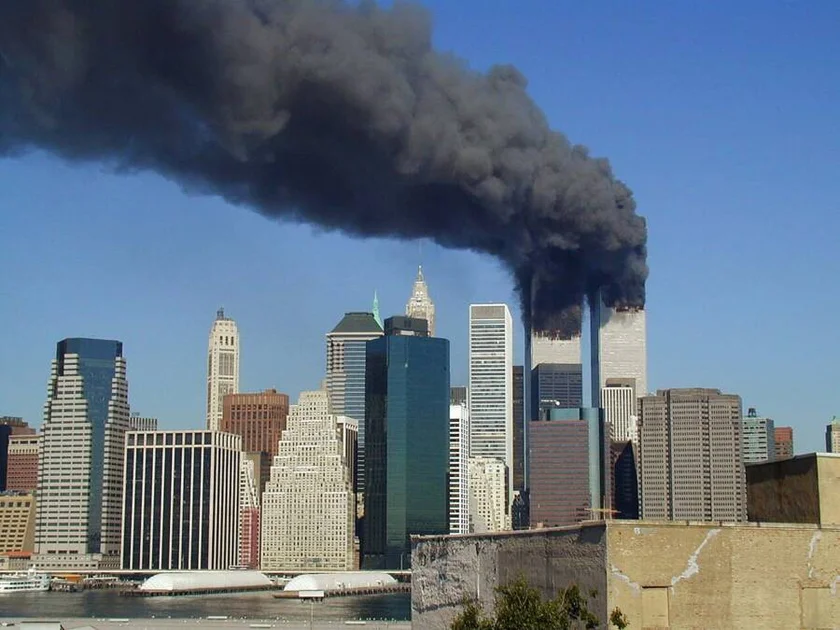
9/11's True Toll: 2,977 Lives Lost in 2001, and Thousands More in the 25 Years Since
As the United States marks the 25th anniversary of the September 11, 2001 terrorist attacks, the number 2,977 remains the official, solemn count of those killed at the World Trade Center, the Pentagon, and aboard United Airlines Flight 93. That figure—representing victims from more than 90 nations—is the one recited at memorial ceremonies and engraved in bronze around the reflecting pools in Lower Manhattan.
But the story of how many people died because of 9/11 is no longer a static number locked in the past. In the quarter-century since the attacks, the cumulative death toll has climbed dramatically. New data released by the New York City Fire Department (FDNY) on September 1, 2026, reveals that more than 600 additional firefighters have died from illnesses contracted during rescue and recovery operations at Ground Zero—nearly double the 343 members killed on the day of the attacks. Across all first responders, survivors, and Lower Manhattan residents, the number of deaths linked to 9/11-related toxins has surpassed the initial attack toll several times over, according to public health tracking.
This evolving statistic—from the 2,977 killed in 2001 to the tens of thousands estimated to have died since from related causes—is reshaping how the nation remembers the tragedy. It is a central theme in the observances planned for September 11, 2026, from the traveling steel beam memorial to museum fundraising drives aimed at educating a generation that has no living memory of that morning.
The FDNY's New Data: A 'One-Day Event' That Became a 25-Year Health Crisis
The FDNY's new health impact report, presented at a press conference on September 1, offers the most detailed picture yet of the long-term medical consequences faced by the department's 15,000 members who responded to the World Trade Center site.
Fire Commissioner Lillian Bonsignore was emphatic in her framing: “9/11 was not a one-day event for our department,” she said. “It is a day that continues to sicken our members, with many of them eventually succumbing to the disease related to the heroic work in the rescue and recovery efforts.”
The statistics are stark. The 343 firefighters and EMS workers killed on September 11, 2001, represented the greatest one-day loss of life in FDNY history. In the years since, the department has lost over 600 additional members to cancers, respiratory diseases, and other conditions linked to the toxic dust of the collapsed Twin Towers. That means more than 940 FDNY members have now died as a direct or indirect result of the attacks—almost three times the initial death count for the department.
Yet the report also contains a surprising silver lining. Thanks to aggressive monitoring through the federally funded World Trade Center Health Program, survival rates for firefighters diagnosed with 9/11-related cancers have improved significantly. The data shows that 86% of patients in the program are alive five years after their initial cancer diagnosis, compared to 63% for non-9/11-related cancer patients in the general population.
“That is a major improvement, and it’s because the World Trade Center Health Program believes in this holistic approach: monitoring, early diagnosis, early treatment, and then the support of the fire department,” Bonsignore explained, suggesting that the program's success could serve as a model for public health initiatives nationwide.
Context: The 2,977 Who Died on September 11, 2001
To understand the scale of the ongoing loss, it is essential to revisit the events of that day. The death toll of 2,977 excludes the 19 hijackers who perpetrated the attacks. The breakdown is as follows:
- World Trade Center (New York City): 2,606 victims, including those on American Airlines Flight 11 (87) and United Airlines Flight 175 (60) that struck the North and South Towers.
- The Pentagon (Arlington, Virginia): 125 victims, including 59 on American Airlines Flight 77.
- Shanksville, Pennsylvania: 40 victims and crew members on United Airlines Flight 93, which crashed after passengers attempted to regain control of the aircraft.
Among the 2,606 WTC victims were 343 FDNY firefighters, 23 NYPD officers, and 37 Port Authority police officers. At the Pentagon, 55 military personnel were killed. The victims came from all 50 U.S. states and more than 90 countries. One-quarter of those killed in New York were residents of New Jersey, as noted by recent analyses.
The attacks also triggered a global war on terror and fundamentally altered U.S. foreign and domestic policy, from the creation of the Department of Homeland Security to the passage of the USA PATRIOT Act. The economic impact was immediate, with New York City alone suffering an estimated $100 billion in damages and lost economic output.
The 'Second Wave' of Deaths: Statistics That Exceed the Original Toll
The term “second wave” was coined in the late 2010s to describe the growing number of deaths from 9/11-related illnesses. Unlike the immediate victims, these are people who survived the attacks or the recovery period and died years later—often without their names being added to the official memorial in a way that distinguishes them from the original victims.
The World Trade Center Health Program, run by the National Institute for Occupational Safety and Health (NIOSH), currently monitors over 130,000 enrollees. As of mid-2026, the program has certified more than 70,000 medical conditions as 9/11-related, with cancer being the most prevalent. The most common cancers include those of the lung, thyroid, prostate, and blood (leukemia and lymphoma).
Public health researchers estimate that over 10,000 first responders and survivors have died from 9/11-related illnesses—a number that is climbing annually. This broader death toll includes not only FDNY firefighters but also NYPD officers, EMS personnel, construction workers, office workers, and local residents who were exposed to the air quality hazards of Lower Manhattan.
This evolving understanding is why the 25th anniversary observances focus heavily on health monitoring and early detection. The FDNY report, while highlighting progress, serves as a stark reminder that the medical consequences of that day are still unfolding.
The 9/11 Museum and Memorial's Fundraising Challenge: Reaching the 'No-Memory Generation'
With the 25th anniversary approaching, the National September 11 Memorial & Museum is facing a unique existential challenge: how to remain relevant to the roughly 100 million Americans alive today who were not yet born on September 11, 2001.
According to the museum's board, more than 25% of the current U.S. population has no personal memory of the attacks. To address this, the institution is in the midst of a major fundraising drive announced in June 2026. The board, chaired by former New York City Mayor Michael Bloomberg, has already raised $25 million and has pledged a matching grant of another $25 million to double the impact. Bloomberg framed the effort in stark terms: “As our nation approaches the 25th anniversary of one of the darkest days in its 250-year history, we must redouble our efforts to ensure Americans never forget what happened on 9/11 and how we responded.”
The museum, located at the World Trade Center site in Lower Manhattan, is not just a repository of artifacts; it is an active educational institution. Exhibits like Todd Beamer's watch—frozen at 10:03 a.m., the moment Flight 93 crashed near Shanksville, Pennsylvania—offer visceral connections to the past. Beamer, a 42-year-old father of two from Cranbury, New Jersey, was among the passengers who stormed the cockpit after learning of the attacks on the World Trade Center.
The museum is also utilizing the 25th anniversary as a moment for commemoration. The memorial's sunken fountains, where the Twin Towers once stood, are surrounded by bronze parapets inscribed with 2,977 names—a traditional design that is now being supplemented with digital kiosks and augmented reality experiences to appeal to younger visitors.
For those too young to remember, these symbols matter. One such symbol—an 8.5-ton steel beam recovered from the World Trade Center rubble—has been traveling across America as part of the “Steel Across America” tour, organized by the Tunnel to Towers Foundation.
Perspective: Commemoration and the Power of Symbols 25 Years Later
The steel beam tour is the project of Stephen Siller Jr., whose father, New York City Firefighter Stephen Siller Sr., was killed on September 11, 2001. Siller Sr., 34, was off duty when he learned of the attacks. He ran from his home in Brooklyn, through the Brooklyn-Battery Tunnel, carrying 60 pounds of gear, to join the rescue effort at the South Tower, where he died. The younger Siller says the tour honors not just his father but the 400 first responders who died that day.
“My father gave his life in service of others, and today I feel a deep responsibility to make sure his story, and the stories of every person we lost that day, are never forgotten,” Siller Jr. said. “Every city we visit, every person who stands before this beam—that is my father’s legacy living on.”
The foundation has since built 1,500 homes for first responders and military veterans, acknowledging that the sacrifice of 9/11 extends beyond that single day.
The 25th anniversary is also a time for policy and public health reflection. The CDC's World Trade Center Health Program, which was reauthorized in 2025, will remain funded through 2090. But the FDNY and other monitoring agencies are lobbying for a more expansive definition of eligible conditions, as new research shows the peak of cancer diagnoses has not yet been reached.
As the FDNY's Bonsignore noted, the medical community recognizes “that the rescue and recovery work of 9/11 exposed members to a group of toxins that have a latency period of twenty, twenty-five, or even thirty years.” This means that the count of 9/11-related deaths will continue to rise for another decade or more.
What This Means for the Future: A Changing Narrative of Loss
The question of “how many people died in 9/11” now has a more complex answer than it did a decade ago. The official list of 2,977 names is fixed, but the living toll continues to expand. This has profound implications for memorial policy, federal compensation, and public health infrastructure.
For the families of victims who have died recently from World Trade Center-related cancers, the pain is a cruel echo of 2001. The Zadroga Act, which funds the health program and the September 11th Victim Compensation Fund, has paid out over $10 billion in claims as of 2026.
The 25th anniversary observances will last for a week, culminating in the reading of the names at Ground Zero. But just as the physical scars of the skyline have been rebuilt, the memory of the event is being reshaped. The narrative has shifted from a singular horror to a long-term national obligation. As Bloomberg put it, the mission is to ensure that the lessons of that day—about courage, civilian sacrifice, and the costs of emergency service—remain illuminated for future generations.
This is not merely a matter of historical record. It is a public health issue, a veterans' affairs issue, and a national security issue. The fact that the death toll continues to climb—even as survival rates improve—forces a painful but necessary re-calibration of what we mean when we ask, "how many died?" The answer is: far too many, and the count is not yet finished.
For those who lost loved ones, like Stephen Siller Jr., the memory is carried in physical objects and in purpose. He noted, "That is what keeps me going." For the rest of the nation, the challenge is to honor the growing list of the fallen by ensuring the living continue to receive the care they have earned. The statistics of 9/11 are no longer just about one day in 2001; they are about the promise to the first responders who ran toward danger, and the generation that inherits their story.
Comments