
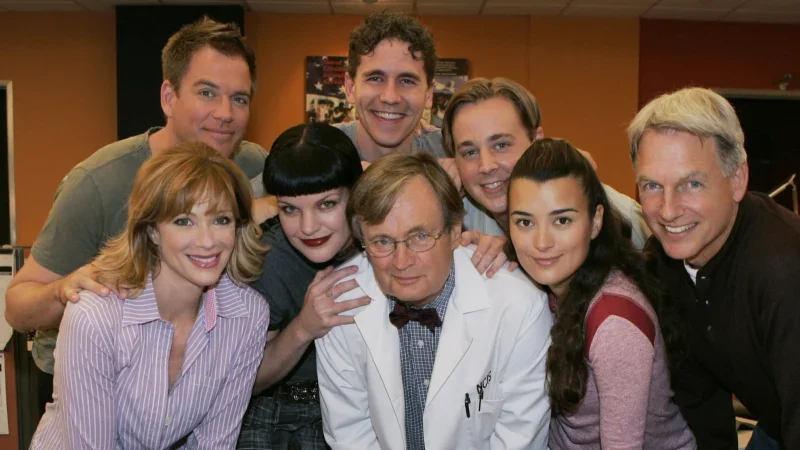
Ziva David's Departure Named NCIS's Most Impactful Character Exit
More than a decade after her abrupt departure, Cote de Pablo's Ziva David is still being cited as the character exit that hurt NCIS the most. In a new analysis published by TVLine on October 19, 2026, critic Sarah Druhan argues that Ziva's Season 11 write-off did more damage to the long-running CBS procedural than any other cast change—including the exits of Michael Weatherly's Tony DiNozzo and Mark Harmon's Leroy Jethro Gibbs.
Ziva, introduced in Season 3 as the replacement for Sasha Alexander's Caitlin Todd, spent eight years as a core member of the NCIS team. Her will-they-or-won't-they dynamic with Tony DiNozzo and her father-daughter bond with Gibbs became defining elements of what fans often call the show's "Golden Age." When her time on the series ended with a supposed offscreen death, the show was plunged into what Druhan describes as "a period of narrative uncertainty" that alienated viewers and clashed with the series' core values.
A Void That Lingered Through Season 11
According to the analysis, the manner of Ziva's exit—choosing to avenge her father and return to Israel rather than remain with her found family at NCIS—contradicted one of the show's defining principles: that the people you choose to love make you who you are. The decision, Druhan writes, "made the show feel at odds with itself" and left the ensemble struggling to overcome a cumbersome void for much of Season 11.
The departure also cut short one of NCIS's most compelling relationship arcs. Ziva's chemistry with Tony DiNozzo had been a central draw for years, and her final episode forced that storyline to an abrupt close. Although the writers eventually introduced Ellie Bishop (Emily Wickersham) as a replacement, many fans felt the quirky new agent was too different from Ziva to truly gel with the established team dynamic.
De Pablo's Standoff and the Spinoff Aftermath
The exit was not merely a creative decision but also a contractual and personal one. In a 2016 Q&A at Babson College, de Pablo explained that she felt the character was not being treated with the respect she deserved. "All the money in the world couldn't [bring me back]," she said. "They were going to send her back to Israel and make her an unfortunate, miserable woman. I said, 'What do I leave all the women [who] have watched and followed the show for so long?' And I didn't think it was fair."
That stance underscored how much Ziva had become part of the show's identity—and how her removal disrupted the rhythm of a series that had settled into a stable ensemble structure. The later greenlighting of NCIS: Tony & Ziva in 2024, which followed the pair's post-NCIS life with their daughter overseas before being canceled after one season, only reinforced how durable that connection remained. For observers tracing the franchise's turning points, the spinoff served as a reminder of how much the original show had depended on the Tony-Ziva pairing.
Why One Exit Can Reshape a Long-Running Series
The renewed focus on Ziva's departure comes as NCIS continues to evolve through its 23rd season and beyond. The series has weathered numerous cast changes over the years, but the loss of a character who had become central to both its emotional and structural balance stands out as a case study in how a single exit can reset a long-running drama. Unlike the departures of DiNozzo or Gibbs, which were woven into the show's mythology over time, Ziva's exit left an unresolved tension that the main series never fully addressed—a gap the short-lived spinoff attempted to close years later.
For a franchise built on the idea of found family, the lesson is clear: character exits are not just casting decisions but narrative events that can echo through a series long after the credits roll. As NCIS moves further into its third decade, the standard set by Ziva's departure remains the benchmark for how much one character can matter—and how much their absence can hurt.
Comments