
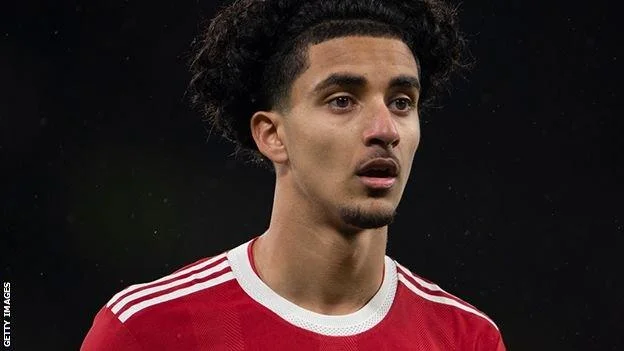
Zidane Iqbal Poised to Become First Pakistani-Heritage Player at a Men's World Cup
Iraq midfielder Zidane Iqbal is on the brink of making history. When the former Manchester United academy graduate steps onto the pitch for Iraq at the 2026 FIFA World Cup on Tuesday, he will become the first player of Pakistani heritage to ever appear in a men's edition of the tournament. The milestone has sent ripples of excitement through Pakistan, a cricket-obsessed nation of more than 240 million people whose football team has never qualified for a World Cup.
Iqbal, 23, was born and raised in Manchester, England. He qualifies for Iraq through his mother and for Pakistan through his father. He made his senior international debut for Iraq in January 2022 during World Cup qualifiers and has since become a key figure for the side. Currently playing for FC Utrecht in the Dutch Eredivisie, he scored his first international goal for Iraq in March 2024 against the Philippines during the qualification campaign that eventually saw Iraq book their ticket to the 2026 tournament for the first time in 40 years.
“To be honest, I didn’t even know it myself,” Iqbal told the BBC of the historic nature of his participation. “I followed the account that posted it and sent it to my dad straight away. I think we were both surprised. When I tried to qualify for the World Cup with Iraq, I didn’t think of anything like this.”
Iqbal’s father was born in Pakistan, and his grandfather was a first-generation Pakistani. The midfielder proudly wears both the Iraqi and Pakistani flags on his boots—the Iraqi flag on his left, the Pakistani flag on his right—as a symbol of his dual heritage.
Why This Moment Matters for South Asian Football
Pakistan sits 198th in the FIFA world rankings, among the 15 worst-performing nations in the sport. The country has won only one World Cup qualifying match in its entire history and has never come close to reaching the tournament’s final stage. With a population of over 240 million—the fifth largest in the world—the absence of any Pakistani representation at a men’s World Cup has long been a source of frustration for fans and analysts alike.
South Asia, home to roughly a quarter of the world’s population, has produced zero men’s World Cup players from its national teams: Pakistan, India, Bangladesh, Sri Lanka, and Nepal have never qualified. The closest any South Asian nation came was India’s qualification for the 1950 World Cup, which they famously withdrew from. Iqbal’s achievement therefore carries outsized symbolic weight for a region where football often struggles for attention against cricket.
Iraq’s qualification for the 2026 World Cup, co-hosted by the United States, Canada, and Mexico, is itself a major story. Iraqi football has endured decades of instability, conflict, and administrative dysfunction. The team’s last World Cup appearance was in 1986—long before Iqbal was born. The midfielder said the support from fans has been overwhelming: “The amount of messages, the support we have had is crazy.”
Iqbal’s journey has already broken barriers. As a Manchester United academy graduate, he became the first British-born South Asian to play for the club in European competition, featuring in the Champions League nearly two decades after the previous such player. He left United in search of regular playing time, joining Utrecht, and has used the move to develop his game and earn his place in Iraq’s World Cup squad.
Broader Implications for Representation and Identity
Iqbal’s story touches on themes of immigration, identity, and the ability of sport to bridge communities. He was eligible to represent England, Iraq, or Pakistan at international level. He chose Iraq, but he has made clear that his Pakistani heritage is equally important to him.
“When people ask me what I feel more connected to, I can’t answer,” he told the BBC. “For me, they’re both equal. It’s about respect and something I carry with a lot of pride.”
The midfielder hopes his path can inspire the next generation of players from diverse backgrounds. “I’m still young, but I’ll be the first Pakistani player to play in the World Cup,” he said. “Hopefully I inspire kids of any background.”
Iqbal’s presence on the world stage could also serve as a catalyst for football development in South Asia, a region where the sport’s growth has been hampered by lack of investment, infrastructure, and administrative issues. While it remains to be seen whether his achievement will spark lasting change, it has already given millions of fans a reason to cheer for a hero who looks like them—even if he wears a different nation’s shirt.
As Iraq prepares for their Group D opener against Argentina at the 2026 World Cup, Iqbal’s story is a reminder of how football can create unexpected connections across borders. The moment he steps onto the pitch, he will not only represent Iraq—he will carry the hopes of a cricket-loving nation that has long dreamed of seeing its own on football’s biggest stage.
Comments