Overview and Development History
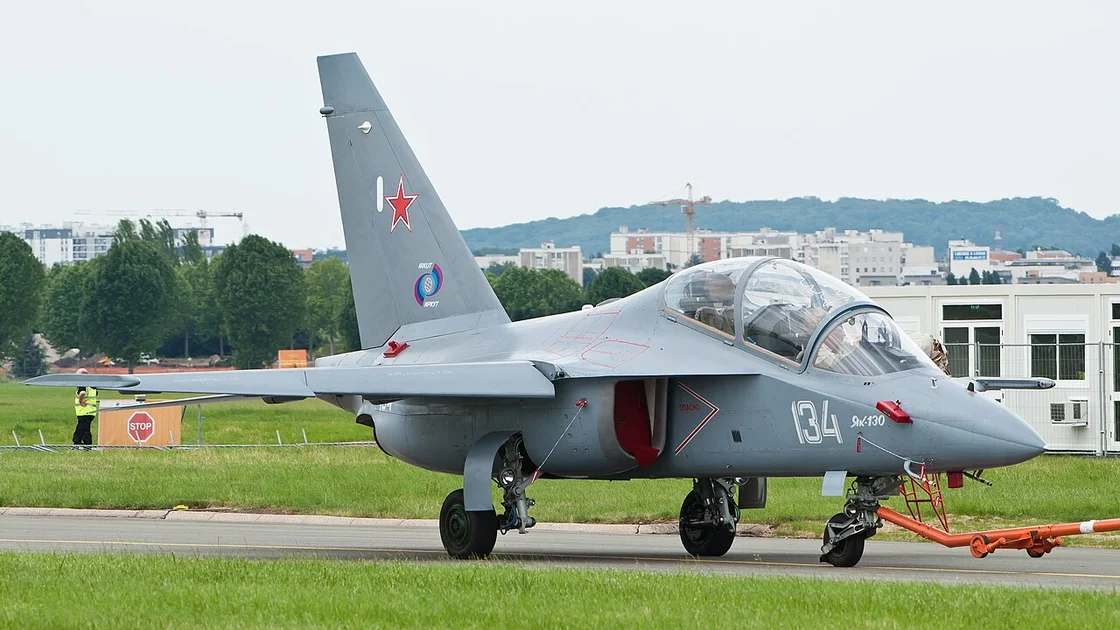
The Yak-130 is a subsonic advanced jet trainer and light combat aircraft developed by the Yakovlev Design Bureau in Russia. Conceived in the late Soviet era and refined through the 1990s and 2000s, it represents one of the most capable trainer platforms in current operational service. The aircraft was designed to bridge the gap between basic flight training and transition to high-performance frontline jets such as the Su-27 or MiG-29.
Origins and Design Competition
Development began in the early 1990s as part of a Russian Air Force requirement for a new generation trainer to replace aging Czech-built L-39 Albatros jets. Yakovlev initially collaborated with Italian manufacturer Aermacchi, though the partnership eventually dissolved. Aermacchi proceeded independently with the M-346 Master, while Yakovlev continued developing what became the Yak-130. The aircraft completed its maiden flight in April 1996, with a production-standard prototype flying in April 2004.
Key Design Features
The Yak-130 features a modern aerodynamic configuration with a shoulder-mounted swept wing, twin Ivchenko-Progress AI-222-25 turbofan engines, and a fly-by-wire flight control system. Its design intentionally replicates the handling characteristics of fourth-generation and fifth-generation combat aircraft, allowing pilots to train on realistic flight envelopes. The cockpit accommodates two crew members in tandem seating, equipped with modern glass cockpit displays and a hands-on-throttle-and-stick (HOTAS) system.
Performance and Combat Capabilities
While primarily a trainer, the Yak-130 possesses meaningful light attack capabilities that extend its operational utility beyond instruction roles.
Flight Performance
The aircraft has a maximum speed of approximately 1,060 km/h at altitude and a service ceiling of around 12,500 metres. Its range exceeds 2,100 kilometres with external fuel tanks, and it can sustain high angle-of-attack manoeuvres that simulate combat conditions. The fly-by-wire system includes variable stability modes, enabling instructors to simulate the behaviour of different aircraft types within a single platform.
Weapons and Combat Role
Configured for light attack missions, the Yak-130 features nine external hardpoints capable of carrying up to 3,000 kilograms of ordnance. Compatible stores include unguided bombs, rocket pods, air-to-air missiles such as the R-73, and precision-guided munitions. An optional built-in or podded cannon system can also be integrated. This combat payload capacity makes the aircraft suitable for counterinsurgency operations, close air support, and reconnaissance missions in low-threat environments.
Operational Service and Operators
The Yak-130 entered service with the Russian Air Force in 2010 and has since been exported to several countries, establishing a growing international user base.
Russian Air Force Use
Russia operates the largest fleet of Yak-130 aircraft, using them extensively at training establishments to prepare pilots for transition to aircraft such as the Su-30, Su-34, and Su-35. The Russian Ministry of Defence has contracted multiple production batches from the Irkut Corporation manufacturing plant, with fleet numbers estimated in the range of 130 to 150 aircraft as of the mid-2020s. The platform has proven reliable in Russian service and continues to serve as the primary advanced trainer for the Russian Aerospace Forces.
International Operators
Several nations have procured the Yak-130 for their air forces. Algeria received a significant batch and operates the aircraft as both a trainer and light attack platform. Belarus, Bangladesh, and Myanmar have also taken delivery of the type. Additionally, Nicaragua and Laos operate smaller numbers. Russia has continued marketing the aircraft through state arms exporter Rosoboronexport, positioning it as a cost-effective alternative to Western trainer jets in developing markets.
Production and Future Prospects
Manufacturing and Variants
The Yak-130 is manufactured at the Irkut Corporation facility in Irkutsk, Siberia. Production has been relatively steady, with output rates supporting both domestic orders and export deliveries. No major structural variants have entered service, though upgrades to avionics, engine management systems, and weapons integration have been incorporated in later production batches. Yakovlev has proposed a navalized version and an unmanned variant concept, though neither has advanced to operational status.
Strategic Significance
In the broader context of military aviation, the Yak-130 represents Russia's effort to modernise its pilot training pipeline using a domestically developed platform. Its dual trainer and light combat roles provide cost efficiency for operators who require both capabilities without procuring separate aircraft types. As fourth and fifth-generation aircraft become standard across major air forces, demand for capable and representative advanced trainers is expected to remain strong, sustaining interest in platforms like the Yak-130 in international procurement discussions.
Comments