
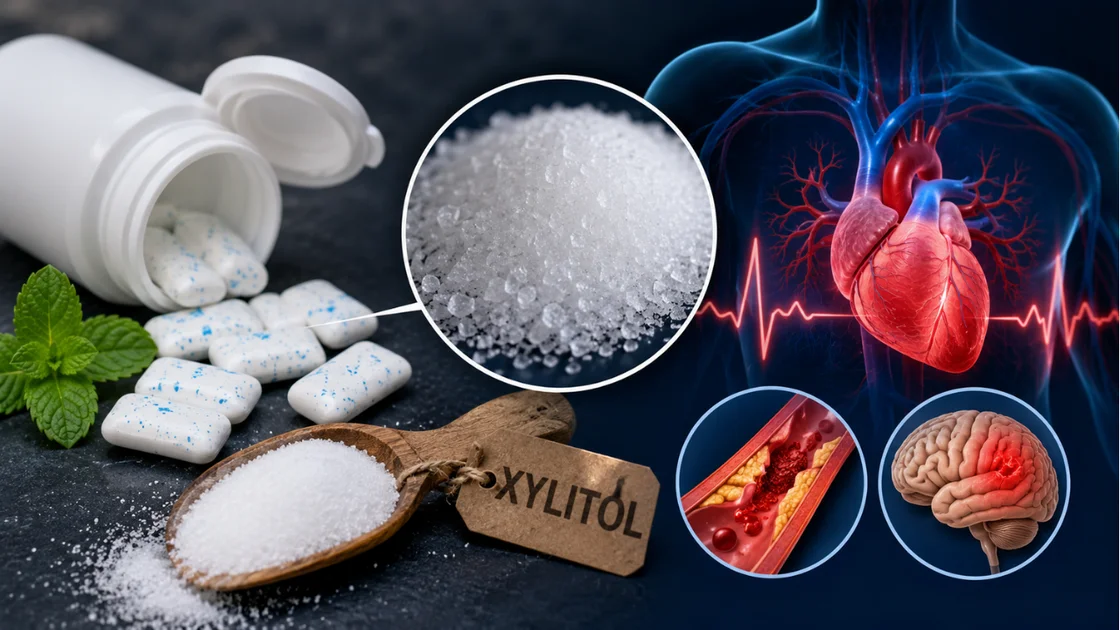
Xylitol Linked to Higher Heart Attack Risk in New Population Study
A sweeping new study presented at the European Society of Cardiology Congress 2026 has found that higher blood levels of xylitol—a common sweetener in chewing gum, toothpaste, and processed “sugar-free” foods—are associated with a greater risk of heart attack, stroke, and cardiovascular death in the general population. In one of the two large cohorts analyzed, participants with the highest xylitol levels had a 57% higher risk of major adverse cardiovascular events than those with the lowest levels.
The research, led by Dr. Marco Witkowski of Charité University Hospital in Berlin, pooled data from 17,710 participants (average age 61) in the Canadian Longitudinal Study on Aging and the UK’s EPIC-Norfolk study, with follow-up periods of 6 and 30 years, respectively. After adjusting for traditional risk factors such as age, smoking, diabetes, and high blood pressure, the findings held: elevated xylitol was linked to increased cardiovascular risk across a broad population—not just those already at high risk.
Higher Xylitol, Higher Risk: The Numbers
In the Canadian cohort, 2,950 major cardiovascular events (heart attacks, strokes, or cardiovascular deaths) occurred during six years of follow-up. The top quarter of participants by circulating xylitol saw a 57% increased risk compared to the lowest quarter. In the EPIC-Norfolk cohort, the top group had an 18% higher risk over up to 30 years.
The consistency of the association across two different populations and long follow-up periods adds weight to earlier findings from the same team, which had already shown that xylitol can make platelets more prone to clotting and linked high xylitol levels to cardiovascular events in high-risk individuals over three years.
Why This Matters: Xylitol Is Everywhere
Xylitol is a sugar alcohol—a carbohydrate that tastes sweet but does not raise blood sugar like sucrose or promote tooth decay. That makes it a favorite for "sugar-free" chewing gum, mints, candies, oral-care products, and increasingly for keto- and low-carb bakery items, frozen desserts, syrups, and tabletop sweeteners.
Its prevalence makes the new findings significant for millions of consumers who use xylitol daily, often without realizing it. “In previous studies, we showed that xylitol can enhance the ability of platelets to form clots,” Dr. Witkowski said in a press release. The new study extends that concern to the general public, not just heart patients.
The stakes are high. Cardiovascular disease remains the leading cause of death worldwide. If a widely used sweetener contributes even modestly to risk, the population impact could be substantial—comparable to other dietary factors that are now carefully regulated or advised against.
How Does Xylitol Affect the Heart?
Researchers hypothesize that xylitol may interact with platelets—the blood cells responsible for clotting—making them stickier and more likely to form dangerous clots that can trigger heart attacks or strokes. This is not the first time artificial sweeteners have been linked to cardiovascular issues; previous studies have raised questions about other sugar substitutes like erythritol.
A Word of Caution: What Experts Say
Not all experts are ready to call xylitol a clear danger. The European Food Information Council (EUFIC) has urged caution, noting that the studies are observational and cannot prove cause and effect. They emphasize that blood levels of xylitol may be influenced by many factors, including how much is consumed, and that more research is needed.
Lead author Dr. Witkowski acknowledges the limitation: "We can’t yet say that xylitol alone causes heart attacks—but the association is strong and consistent, and mechanistic data support the link." The study was presented at a major cardiology conference and has not yet been published in a peer-reviewed journal, though the findings align with earlier work by the same team.
Until more is known, experts advise consumers to be mindful of xylitol's presence in their diets—especially if they already have cardiovascular risk factors such as hypertension, diabetes, or a history of heart disease.
The Big Picture: Rethinking Artificial Sweeteners
The xylitol findings come amid growing scrutiny of non-sugar sweeteners. While they were long considered harmless alternatives to sugar, research over the past few years has pointed to potential risks—from metabolic effects to possible cardiovascular harm. As a result, health agencies and consumers are beginning to ask whether the benefits of these sweeteners truly outweigh unknown long-term risks.
For the food and beverage industry, the implications are wide-ranging. Many manufacturers have replaced sugar with xylitol to appeal to health-conscious consumers, particularly in products marketed as keto, diabetic-friendly, or natural. If subsequent studies confirm a cardiovascular risk, companies may need to reformulate products—just as they did when trans fats were linked to heart disease.
Public health experts suggest that until the evidence crystallizes, the prudent approach may be to limit xylitol intake from processed foods, just as sugar consumption is already limited. Simple measures like choosing gum with other sweeteners or reading ingredient labels more carefully could reduce exposure.
What Should You Do Now?
If you are concerned about your heart health, the new study is a reason to check how much xylitol you regularly consume. “Sugar-free” gums and mints often contain xylitol as the first ingredient. Toothpaste and mouthwash also contribute, though the amount swallowed is minimal.
For most people, occasional intake is unlikely to be harmful. But for those who chew multiple pieces of xylitol-sweetened gum daily or regularly consume keto snacks sweetened with xylitol, the risk may add up over time.
The research team behind the current study plans to further investigate dosing thresholds and whether short-term consumption acutely raises platelet activity. Until then, the best advice remains moderation and a focus on a heart-healthy diet rich in whole foods—while the scientific community continues to untangle the real-world impact of artificial sweeteners.
For ongoing updates on heart health research and sweetener science, follow our health section. And if you’re looking for heart-healthy snack ideas, you may also be interested in our coverage of the latest food trends.
Comments