
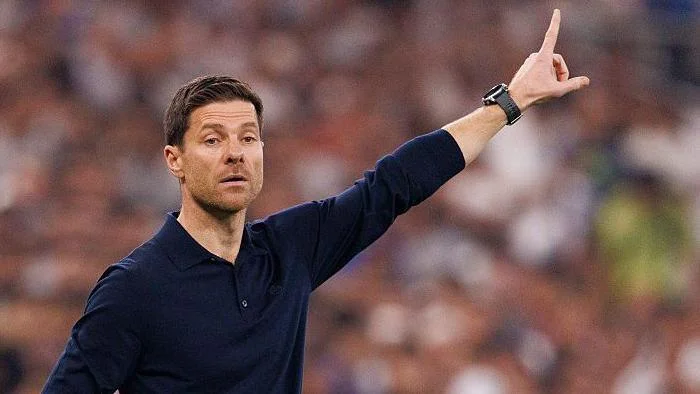
Xabi Alonso's Chelsea Tenure Begins Amid High Hopes and Tactical Doubts
New Chelsea manager Xabi Alonso has officially been confirmed as the club’s next permanent boss, signing a four-year deal that will begin on July 1, 2026. The 44-year-old Spaniard arrives at Stamford Bridge after a mixed tenure at Real Madrid—where he won an unbeaten Bundesliga title at Bayer Leverkusen before a difficult 34-game stint with Los Blancos—and is now tasked with reviving a Chelsea side that slumped to a tenth-place finish in the Premier League, missing out on European football entirely.
Alonso’s appointment comes just weeks after the dismissal of Liam Rosenior, whose brief reign was marked by a reported disconnect with the squad. The club’s new manager inherits a young, underperforming roster that has spent heavily in recent windows but lacks cohesion. Real Madrid midfielder Arda Güler recently praised Alonso’s man-management, telling TRT Spor: “When he calls you into his office and explains something about tactics, it’s very difficult not to be convinced.” That ability to command respect—bolstered by a playing career that includes World Cup and Champions League titles—is seen as crucial for a dressing room that, according to reports, struggled to buy into Rosenior’s lower-profile background.
The stakes could not be higher. Chelsea are entering a summer transfer window without European competition for the first time in years, meaning Alonso will have more training-ground time but also less financial leverage. Sources have told ESPN that the club expects to demand around £120 million if Enzo Fernández tries to force an exit, while attackers like Alejandro Garnacho and Pedro Neto could be shuffled out as the new boss reshapes the squad. Alonso’s first task? Convincing the squad—and the fanbase—that his tactical blueprint, often built around a back three, can work in the Premier League.
The Tactical Challenge: Back Three or Bust?
Ashley Cole’s Scepticism
Chelsea legend Ashley Cole has publicly questioned whether Alonso’s preferred back-three system will translate to success at Stamford Bridge. In an interview with The Good, The Bad and The Football Podcast on May 30, Cole said: “I don’t think so, playing five at the back personally, but if he is allowed to be himself, sign his own players, make the decisions and have the power, he will be great." The concern is rooted in history: Chelsea’s last foray into a consistent back three under Maurizio Sarri and Frank Lampard produced mixed results, though Thomas Tuchel used a similar shape to win the Champions League in 2021.
Alonso’s Leverkusen side thrived with a fluid 3-4-2-1 that allowed wing-backs to push high and creative midfielders to roam. But his Real Madrid spell stalled partly because the squad—built around veterans like Luka Modrić and Toni Kroos—struggled to adapt to the rigidity of his defensive structure. At Chelsea, where the squad is younger but often tactically naive, the risk is that a complex system could leave the defence exposed. Sources inside the club suggest that Alonso will need time—and specific signings—to implement his vision.
The Midfield Puzzle
The midfield is likely to be the battleground. Enzo Fernández, the club’s record signing at £107 million, is reportedly considering his future after the team’s tenth-place finish. ESPN reported on May 29 that Chelsea would demand £120 million for the Argentine if he seeks an exit, with Real Madrid and Manchester City circling. Alonso’s system demands a disciplined No. 6 who can recycle possession and break lines—qualities Fernández showed at Benfica but has inconsistently displayed in London. If he stays, Alonso will need to rebuild his confidence; if he leaves, the managerial reputation will hinge on reinvesting that fee wisely.
The Transfer Window: Selling, Buying, and Reshaping
Big Fees and Big Names
Chelsea are expected to be active in the summer window, though the absence of Champions League revenue could constrain spending. According to The Guardian, West Ham’s Jarrod Bowen is a target to bolster the attack. The 29-year-old scored nine goals and added 11 assists in a relegation-bound Hammers side and would offer experience on the right flank. Meanwhile, The Mirror reports that Alonso may offload Alejandro Garnacho after a frustrating debut season, with Pedro Neto sliding to the left and 19-year-old Estevao competing for minutes on the right.
Up front, Chelsea have already agreed deals for forwards Geovany Quenda and Emmanuel Emegha, both of whom will join after loan spells. But Alonso’s priority is likely a proven No. 9: the club has been linked with a £100 million-rated striker, though no name has been confirmed. The manager’s record at Leverkusen—where he turned Victor Boniface into a Bundesliga star—suggests he can develop talent, but Chelsea’s recent history of big-money flops (see: Romelu Lukaku, Mykhailo Mudryk) means every signing will be scrutinised.
Defensive Reinforcements
Marc Cucurella’s future is uncertain, with Manchester City, Barcelona, and Atlético Madrid all interested. The Spanish left-back has two years left on his deal and has admitted he would be open to a return to Spain. If he departs, Alonso will need a wing-back comfortable in a back three—someone who can combine defensive solidity with attacking width. The club’s goalkeeping situation is also messy: Robert Sánchez has made demands about his role, and the team may need to bring in a new No. 1.
The Mental Reset: Commanding a Fractured Dressing Room
Güler’s Endorsement
One of the most telling endorsements of Alonso came from Real Madrid’s Arda Güler, who described the manager’s ability to instil belief: “Before our first game, when I was in the starting XI, he told me in the morning: ‘I want you to touch the ball more than everyone next to you.’ When you hear that, it’s not hard to be convinced.” That psychological touch could be invaluable at Chelsea, where reports of a disconnect between Rosenior and players like Raheem Sterling and Thiago Silva (now departed) emerged in the spring. A World Cup winner and two-time Champions League victor, Alonso carries an authority that few of his predecessors—save for Tuchel and José Mourinho—have possessed.
The Learning Curve
Yet Alonso is still a relatively young manager. His unbeaten Bundesliga title was historic, but his Madrid tenure ended after just 34 games, with the club’s spectacular collapse in the second half of the 2025-26 season leaving many to question his decision-making under pressure. Former teammates like John Terry have backed him publicly, but the Premier League is a ruthless environment. Chelsea’s squad, while talented, lacks leaders: Reece James is injury-prone, Ben Chilwell has struggled for form, and the young core of Cole Palmer, Enzo Fernández, and Moisés Caicedo has yet to gel.
Broader Implications: A Harbinger for Chelsea’s American Ownership
The Clearlake Model Under Pressure
The Alonso appointment is the seventh permanent or interim manager since Todd Boehly and Clearlake Capital took over in 2022. The ownership’s strategy—long contracts, high spending, and a focus on young talent—has so far failed to produce consistent results. Missing European football for the 2026-27 season is a financial blow, but it also frees up time for Alonso to train the squad without midweek distractions. As one club source put it: “The next 12 months will define whether the project works or whether we need another reset.”
Alonso’s success or failure will also shape how other top managers view Chelsea. If he can restore the club to the top four, it could signal that the Clearlake model is viable—if not, the cycle of hiring and firing may continue. The broader trend in English football—where managers like Mikel Arteta at Arsenal and Unai Emery at Aston Villa have thrived with long-term backing—suggests patience is key. Whether Alonso gets that patience remains to be seen.
What This Changes: The Alonso Era Begins
A Season of Reckoning
Chelsea’s 2026-27 campaign will be one of the most anticipated in recent memory. The absence of European football means the Premier League and domestic cups are the only stages on which Alonso can judge his work. A top-four finish is the minimum expectation, but given the gap to Arsenal (Premier League champions in 2026), Manchester City, and Liverpool, even that may be a stretch. The manager’s reputation—built at Leverkusen, dented at Madrid—will be rebuilt or destroyed in London.
For fans, there is cautious optimism. Alonso’s playing career is legendary; his tactical mind is respected. But Chelsea have been here before: big-name managers (Tuchel, Potter, Mourinho 2.0) who arrived with fanfare and left quietly. The difference this time? The squad is younger, cheaper (in terms of amortised fees), and more malleable. If Alonso can mould them into a unit, he could be the long-term answer. If not, the club’s revolving door will spin once more.
A Note on Related News
In the broader landscape of managerial upheaval, the recent arrest and resignation of Giants manager Abe—after a chatbot told a teen to report his father—highlights how off-field controversies are reshaping sports leadership. Meanwhile, as Chelsea navigate Alonso’s early days, the chaos at UK airports on May 30, with 734 flights delayed, reminds us that disruption is everywhere—even if Chelsea hope their own turbulence is finally ending.
The coming weeks will bring clarity on transfers, training-ground dynamics, and whether Alonso’s back three can survive the Premier League. For now, Chelsea have their man. The rest is up to him.
Comments