
From Market Stalls to Stadiums: How World Cup Kits Are Evolving in 2026
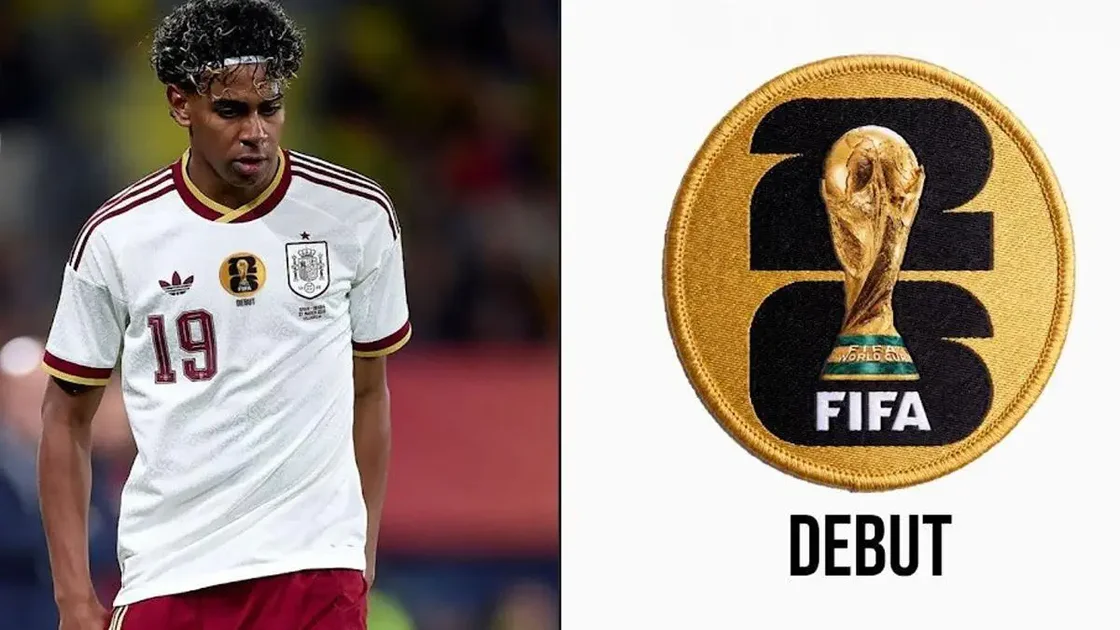
With just weeks until the opening whistle of the 2026 World Cup in North America, FIFA has confirmed a suite of kit innovations that promise to make this summer's tournament the most visually significant in the competition's history. The centerpiece of these changes is a new debutant badge — a patch worn exclusively by players stepping onto the World Cup stage for the first time.
According to reports from LARGOESPN, confirmed by Dailysports and kit analysts Footy Headlines, the debutant badge will appear on the sleeve or chest of players who have never before featured in a World Cup match. This means young stars like Lamine Yamal (Spain), Erling Haaland and Martin Ødegaard (Norway), and Endrick (Brazil) will carry a visible marker of their first appearance on football's biggest stage.
The Four Badge Tiers
FIFA has designed four distinct sleeve patches for the 2026 tournament, breaking with the tradition of a universal badge worn by all teams. The classification is based on historical tournament success:
- Standard Badge (Light & Dark): Teams that have never won the World Cup will wear the regular 2026 tournament logo in either a light or dark variant to contrast with their shirt color.
- Gold Champion Badge: The seven participating former champions — Argentina, Brazil, England, France, Germany, Spain, and Uruguay — will receive an exclusive gold-colored patch that signals their elite status.
- Debutant Badge: A new, as-yet-unrevealed design specifically for first-time participants, likely featuring a stylized 'first steps' motif.
- Left-Sleeve Campaign Patch: All teams will also wear a redesigned left-arm patch carrying a brand-new FIFA campaign message, expected to promote unity or youth development.
The debutant badge, in particular, is being framed as a way to"spotlight future superstars" and add a layer of storytelling to the tournament. As one FIFA insider told Dailysports: "This detail is designed to highlight the significance of a player's first steps on the world's biggest football stage."
Why Debutant Badges Matter for the 2026 Tournament
The 2026 World Cup is already shaping up as a historic edition. It will be the first tournament hosted across three nations — the United States, Canada, and Mexico — and the first with 48 teams rather than 32. This expansion has opened the door for debutant nations like Canada (as a co-host) and Norway, whose golden generation featuring Haaland and Ødegaard finally broke their qualifying drought.
A Changing of the Guard
While the 2022 tournament in Qatar served as a farewell to legends like Lionel Messi and Cristiano Ronaldo, 2026 represents a generational handover. Yamal, who debuted for Spain as a teenager in 2023, has already broken records in La Liga and European competition. Haaland, arguably the world's most prolific striker, has yet to play a single World Cup minute. Ødegaard, Norway's captain and creative hub, has waited his entire career for this moment.
For these players, the debutant badge isn't just a sticker — it's a symbol of arrival. It also creates a new dynamic for broadcasters and fans, who can instantly identify who is playing in their first World Cup. This mirrors trends in other sports, such as the NBA's "Rookie" patches introduced for first-year players.
The Gold Badge Debate
The decision to give exclusive gold badges to former champions has already sparked discussion. Critics argue that it creates an unnecessary hierarchy on the pitch, while supporters see it as a fitting tribute to football's royal families. Argentina, the reigning champions, will wear the gold patch with pride — a reminder that they are defending a title won in dramatic fashion in 2022.
Interestingly, this is not the first time Argentina has improvised its kits for a World Cup match against England. As AS USA reported, during the 1986 quarterfinal — the infamous "Hand of God" game — Argentina wore improvised shirts purchased from a Mexico City market because their away kit was too heavy for the heat. Those shirts had fake AFA badges sewn on and iron-on American football numbers. Maradona himself approved the shiny fabric. Forty years later, the badge system has gone from improvised stitching to a carefully planned tiered system.
Kit Innovation as a Marketing and Cultural Tool
FIFA's badge overhaul is part of a broader strategy to monetize and narrativize the World Cup. The patches are already available for pre-order on World Soccer Shop, applied to replica shirts. Fans can buy a standard Spain kit or a gold-badged Argentina jersey, with the debutant badge expected to become a collector's item for supporters of Norway, Canada, and other first-time teams.
The Left-Sleeve Campaign
The greatest iconography change, however, may be the left-sleeve patch. While details remain confidential, World Soccer Talk reports that the campaign message is "brand-new" and likely tied to FIFA's social responsibility initiatives. In previous tournaments, this patch has promoted messages like "No Discrimination" or "Football Unites the World." The 2026 version is expected to be unveiled in June, just before the tournament begins.
This move aligns with FIFA's desire to use the expanded 48-team format to showcase global diversity. The debutant badge, in particular, reinforces the idea that every tournament is a fresh start — even for veteran nations like Spain or Brazil, their youngest players will carry the mark of a newcomer.
Broader Implications: What This Changes for the Game
The introduction of tiered sleeve badges marks a significant shift in how FIFA approaches tournament branding. Traditionally, all teams wore identical patches, creating a sense of equality. Now, the visual identity of a team will tell a story before a ball is even kicked.
Pressure and Prestige
For debutant players, the badge adds both pressure and prestige. Yamal, who has already played in a European Championship final, will now wear a patch that signals he is still a World Cup rookie. Haaland, despite being a global superstar, will be visibly marked as a first-timer. This could become a motivational tool — or a psychological burden.
A Template for Future Tournaments
Should the badge system prove popular, it could be adopted for the 2030 World Cup, which will be hosted by Uruguay, Argentina, and Paraguay. That tournament will mark the centenary of the first World Cup, and FIFA may look for even more ways to honor history while celebrating new talent.
Financial Opportunities
The kits themselves are big business. With replica shirts already available, the debutant badge adds a layer of scarcity. Fans of Norway, for instance, may rush to buy Haaland's shirt before he becomes a multi-tournament veteran and the patch disappears. This creates a finite window for merchandising, similar to how rookie cards drive the sports collectibles market.
Conclusion: A Tournament of Firsts
The 2026 World Cup will be remembered for many firsts: three hosts, 48 teams, and now, badges that tell the story of each player's journey. Whether you're a fan of Spain looking at Yamal's debutant patch, an Argentina supporter proud of the gold champion badge, or a neutral admiring the new left-sleeve campaign, the kits have never carried more meaning.
As FIFA prepares for the June kickoff, with the countdown already underway and ticket fury dominating headlines, the debutant badge stands out as a small but powerful symbol. For players like Haaland and Yamal, it represents not just a first step, but the start of a legacy. And for fans, it's a reminder that every World Cup is, in its own way, a debut for someone.
For more on the tournament's build-up, check out our 2026 World Cup Countdown: Start Date, Groups, and Ticket Fury Ahead of June Kickoff. And for those wondering how the badge system might affect team dynamics, stay tuned for our analysis of how Norway's golden generation could make history.
Comments