
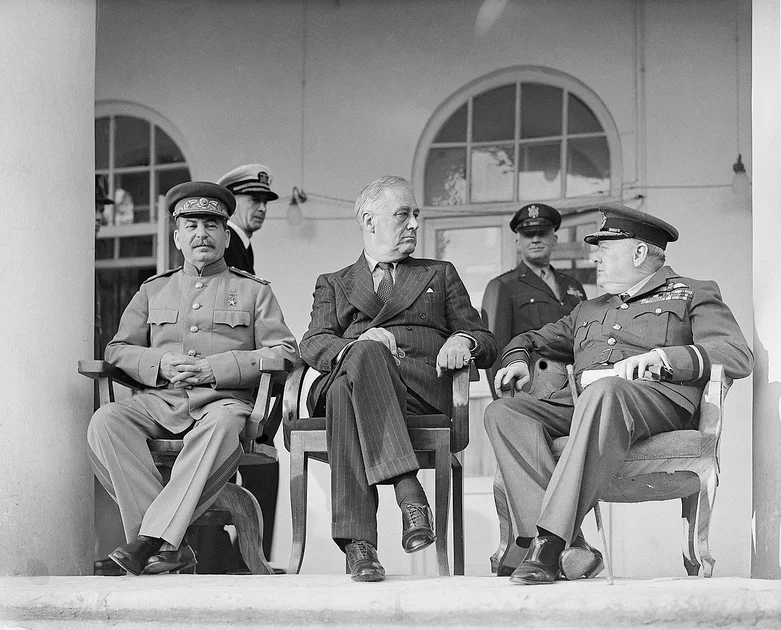
Winston Churchill remains one of the most studied and referenced political figures of the twentieth century. As a statesman, military strategist, author, and orator, his influence stretched far beyond the borders of Britain and continues to shape political discourse today.
Early Life and Political Beginnings
Birth and Education
Winston Leonard Spencer Churchill was born on November 30, 1874, at Blenheim Palace in Oxfordshire, England. The son of Lord Randolph Churchill, a prominent Conservative politician, and Jennie Jerome, an American socialite, Churchill grew up in an aristocratic yet emotionally distant household. He attended Harrow School before enrolling at the Royal Military College, Sandhurst, where he trained as a cavalry officer.
Military Service and Early Career
Churchill's early adult life was marked by active military service. He served in Cuba, India, Sudan, and South Africa, also working as a war correspondent during the Second Boer War. His daring escape from a Boer prisoner-of-war camp in 1899 brought him considerable public attention and helped launch his political career. He was elected to Parliament as a Conservative Member for Oldham in 1900 before crossing the floor to join the Liberal Party in 1904.
Rise to Power and World War II
The Road to Prime Minister
Churchill held several significant government roles in the early twentieth century, including President of the Board of Trade, Home Secretary, and First Lord of the Admiralty. His handling of the Gallipoli Campaign during World War I led to his temporary political downfall, but he gradually rebuilt his reputation through the 1930s. During this period, he was one of the few prominent British politicians to openly warn about the dangers of Nazi Germany and Adolf Hitler's expansionist ambitions, a stance that was largely ignored at the time.
Wartime Leadership
When Neville Chamberlain resigned as Prime Minister in May 1940, Churchill was appointed to the role. Britain stood largely alone against Nazi-occupied Europe, and Churchill's leadership during this critical period is widely regarded as decisive. His speeches — including the famous "We shall fight on the beaches" address delivered to the House of Commons on June 4, 1940 — became rallying calls for the Allied cause. He forged crucial alliances with U.S. President Franklin D. Roosevelt and Soviet leader Joseph Stalin, helping to shape the Grand Alliance that ultimately defeated the Axis powers. Churchill's leadership during the Blitz, the Battle of Britain, and key wartime conferences at Tehran, Yalta, and Potsdam cemented his historical reputation.
Post-War Years and Second Term
Electoral Defeat and Return
Despite leading Britain to victory, Churchill and the Conservative Party were defeated in the July 1945 general election by Clement Attlee's Labour Party. The British public, keen on social reform and the creation of a welfare state, chose a different direction. Churchill remained active as Leader of the Opposition, delivering his notable "Iron Curtain" speech in Fulton, Missouri in 1946, which helped define the early Cold War era.
He returned as Prime Minister following the Conservative election victory in 1951 and served until 1955. His second term was less dominant, overshadowed partly by health issues including a serious stroke in 1953, though he continued to engage with foreign policy matters, notably seeking dialogue with the Soviet Union after Stalin's death.
Recognition and Later Life
In 1953, Churchill was awarded the Nobel Prize in Literature for his extensive historical writings, including his six-volume work The Second World War. He was also knighted by Queen Elizabeth II in the same year. Churchill retired from Parliament in 1964 and died on January 24, 1965, at the age of ninety. He received a state funeral — a rare honour for a non-royal — attended by dignitaries from around the world.
Legacy and Historical Assessment
Enduring Influence
Winston Churchill consistently ranks among the greatest Britons in public and historical polls. His strategic thinking, rhetorical skill, and defiance during Britain's darkest hours of World War II continue to be studied in military academies, political science programmes, and leadership courses globally.
Complexity and Controversy
Historical assessment of Churchill is not without nuance. Scholars have examined his role in policies that led to the 1943 Bengal famine, his attitudes toward colonialism, and his handling of various imperial matters. These aspects of his record are increasingly scrutinised alongside his wartime achievements, providing a more complete picture of a complex historical figure.
Churchill's life represents a broad sweep of modern history, from the Victorian era through two world wars to the dawn of the Cold War. His writings, speeches, and decisions continue to be referenced in political, academic, and cultural contexts worldwide.
Comments