
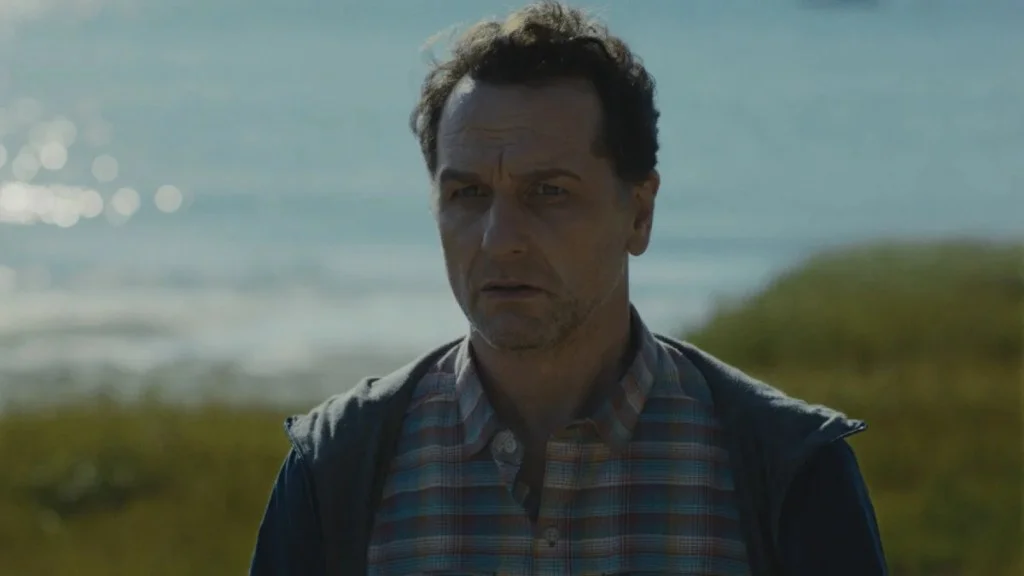
‘Widow’s Bay’ Shocks Fans With Finale Revelation: Tom’s Son Is the Last Cursed Descendant
Apple TV+’s breakout horror-comedy Widow’s Bay ended its first season on June 16 with a gut-wrenching twist that redefines the entire narrative going into the already-confirmed season 2. In the finale, titled “We Hope You Enjoyed Your Time!,” viewers learned that the last living descendant of the island’s cursed founder, Richard Warren, is not the elderly secretary Ruth Livingston — but rather Evan, the young son of Mayor Tom Loftis (Matthew Rhys).
The revelation lands just days after Apple TV+ renewed the series for a second season, a decision announced one week before the finale aired. The show, created by Katie Dippold (Parks and Recreation), has become a word-of-mouth hit, blending supernatural horror with sharp comedic writing and emotional character drama.
The Finale’s Central Moral Dilemma
Much of the finale focuses on Tom’s desperate attempt to break the curse that has plagued Widow’s Bay for over 400 years. The curse — stemming from a deal between the Devil and founding settler Richard Warren — condemns anyone born on the island to die if they leave. Tom, whose late wife Lauren died after trying to escape with their son, had traced the Warren bloodline to Ruth (K Callan), an 84-year-old widow with no known children.
In a darkly comic scene heavy with moral weight, Tom visits Ruth on a stormy night with the intention of poisoning her. He presents her with the classic “trolley problem” — would she pull a lever to kill one person in order to save many? Ruth refuses, saying she could never actively choose to kill anyone. But before Tom can follow through, Ruth drops a bombshell: she had a secret daughter, whom she gave up for adoption decades ago. That daughter was Tom’s wife, Lauren.
This means the Warren bloodline does not end with Ruth. It runs through Lauren — and directly into Evan (Kingston Rumi Southwick). Tom’s own son is now the final descendant whose death would break the curse.
Sheriff Bechir Clemmons (Kevin Carroll), desperate to save his own wife from the supernatural storm ravaging the island, arrives and shoots Ruth. The storm lifts. But Tom keeps the truth about Evan hidden, setting up a painful secret that will define season 2.
Context: Why the Twist Matters for the Show’s Future
The reveal reshapes the entire foundation of Widow’s Bay. What began as a story about a skeptical mayor fighting supernatural forces has become a deeply personal tragedy: the man who wanted to save his son may now be forced to consider sacrificing him.
Director Hiro Murai, who helmed five episodes of the first season (including the finale), explained that the ending works as both a cliffhanger and a thematic conclusion. “I’ve always thought about this show as a story about Tom’s relationship to the town,” Murai said in an exclusive interview. “The throughline for the whole season is Tom accepting that this place is what it is.”
Murai noted that the finale deliberately moves away from overt horror references — which had peppered earlier episodes — to focus on human-driven terror. In the final moments, the real monster is not a fog or a sea hag, but a father’s impossible choice.
The show’s creator, Katie Dippold, has long wanted to tell this story. Her Widow’s Bay pilot script years ago helped her land a job on Parks and Recreation. Now, with a multi-year overall deal at Apple TV+, she has the platform to explore the moral and emotional fallout of the finale’s twist.
Thematic Depth: Bloodlines, Guilt, and the Trolley Problem
The finale’s philosophical underpinnings give Widow’s Bay a weight rare in horror-comedy. The repeated invocation of the trolley problem — first by Tom, then by Ruth — frames the entire conflict as a meditation on agency and consequence. Tom wanted to believe he could be the hero who pulls the lever. Instead, he became the man who hides the truth.
Evan is now the key to the curse. If he dies, the island is free. If he lives, the curse continues — and anyone born on Widow’s Bay remains trapped. Tom’s secret creates a ticking clock for season 2, as other characters may eventually discover the truth.
Critics have praised Matthew Rhys’ performance in the finale, calling it a potential Emmy contender. His monologue with Ruth, in which he confesses his plan to kill her while trying to justify it, blends pathos and dark humor in a way that has become the show’s signature.
Perspective: What the Season 1 Finale Means for Horror-Comedy and Streaming
Widow’s Bay has proven that Apple TV+ can compete in the genre space with a show that refuses to be easily categorized. By weaving together homages to classic horror films, a complex mystery, and genuine character emotion, the series has carved out a unique niche.
The decision to resolve the season’s biggest mystery — the identity of the Warren descendant — while creating an even more painful dilemma for Tom is a bold structural choice. It rewards attentive viewers while setting up fresh conflicts for future episodes.
For streaming platforms, the show’s success demonstrates the value of giving creators room to develop their vision. Katie Dippold’s decade-long journey to bring Widow’s Bay to screen mirrors a broader trend in television: the willingness of streamers to take risks on original concepts that blend genres in unexpected ways.
If season 1 was about Tom learning to believe in the curse, season 2 will likely force him to decide whether he can live with it.
For more on the latest TV twists, check out our coverage of the Obama Presidential Center opening and other cultural stories.
As the fog lifts over Widow’s Bay — at least for now — one question remains: can a father save his son without losing himself? The answer will have to wait until season 2.
Comments