
Netflix's Remarkably Bright Creatures - Where Was the Feel-Good Hit Filmed?
Netflix's latest must-watch film, Remarkably Bright Creatures, landed on the streaming platform on Friday, May 8, 2026, and has quickly become one of the most talked-about releases of the month. Adapted from Shelby Van Pelt's bestselling novel, the movie stars Sally Field as Tova Sullivan, a widow who forms an unlikely friendship with a giant octopus named Marcellus (voiced by Alfred Molina) while working night shifts at a local aquarium. The story, set in the fictional coastal town of Sowell Bay on Washington's Puget Sound, has captivated audiences with its tender exploration of grief, family, and friendship. But while the narrative unfolds in a quaint Pacific Northwest seaside community, the actual filming locations are a world away in Canada.
Key Filming Locations: Vancouver's Deep Cove and the Vancouver Aquarium
Director Olivia Newman and the production team faced a creative challenge: Sowell Bay does not exist in reality. To bring Van Pelt's fictional town to life, they turned to Vancouver, British Columbia, a city renowned for its ability to double as American Pacific Northwest settings. The film's seaside exteriors were shot in the picturesque Deep Cove neighborhood, a small waterfront community within the city of North Vancouver. Deep Cove's charming downtown, complete with kayak shops, a pier, and a serene bay, perfectly matched the author's vision of Sowell Bay.
- Deep Cove Yacht Club on Gallant Avenue served as the exterior of the Sowell Bay Aquarium.
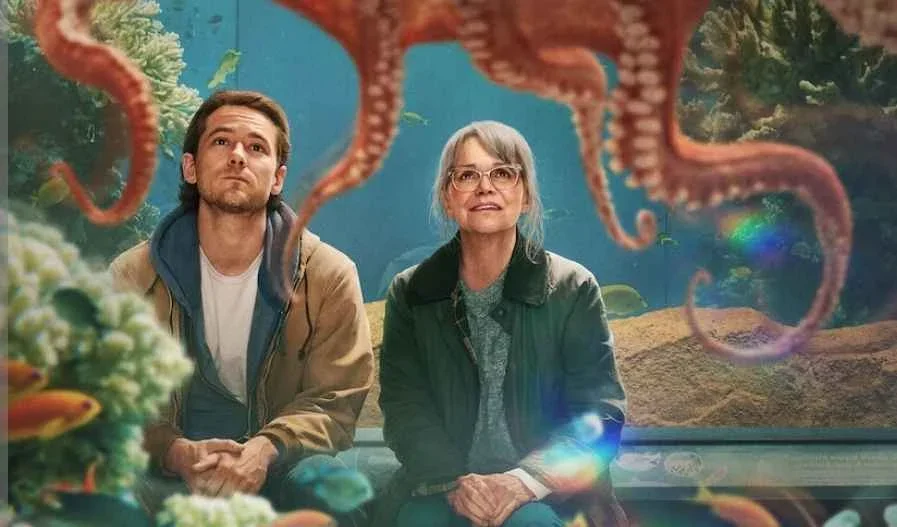
- Interior aquarium scenes were filmed at the real Vancouver Aquarium, located in Stanley Park at 845 Avison Way. The aquarium's thousands of aquatic exhibits appear in the background of several scenes.
- The pier and waterfront in Deep Cove became a key location for Tova’s reflective moments, as she contemplates the tragedies of her life by the water.
Shelby Van Pelt, who visited Vancouver during filming, expressed her amazement at how closely Deep Cove matched her mental image of Sowell Bay. "It’s incredible to me that Deep Cove exists, because it’s so similar to how I pictured this fictional town when I was writing it," she said in an interview. "The physical layout of it, where you have this cute, little, sweet downtown with little shops and things. It’s not a fancy place, you know, it’s just very cute."
Why This Matters: The Art of Location Scouting for Fictional Towns
The decision to film in Vancouver is no accident. The city and its surrounding areas have long been a go-to location for Hollywood productions seeking to replicate American settings, particularly in the Pacific Northwest. Vancouver offers a similar lush, coastal environment with mountains, forests, and ocean views, making it an ideal stand-in for Washington state. This practice, often referred to as "runaway production," has become a staple of the film industry, driven by favorable tax incentives, skilled crews, and diverse geography.
The Role of the Vancouver Aquarium and Real Octopus Footage
One of the film's most intriguing aspects is its use of real octopus footage. While Marcellus is primarily a CGI creation, the filmmakers shot footage of Agnetha, a Giant Pacific octopus residing at the Vancouver Aquarium, to model the digital character. Van Pelt confirmed that the CGI was carefully crafted to mimic the movements and behavior of the real octopus. "Obviously, a lot of the Marcellus footage that you see in the film is [CGI], but they really modelled that [CGI] after the actual footage of Agnetha," she said. "And so when you watch the film, what you’re seeing is both alongside each other, real footage and digital footage. And they did such a phenomenal job with it that even I cannot tell the difference."
This blending of real animal footage with animation adds an authentic touch to the story, which centers on the bond between a human and an octopus. It also highlights the growing trend in filmmaking of using live animals as references for CGI characters, rather than relying solely on computer-generated imagery.
Perspective: What This Means for Filmmaking and Tourism
The release of Remarkably Bright Creatures is part of a broader trend of literary adaptations finding new life on streaming platforms. The film has already earned a strong 76 percent score on Rotten Tomatoes from critics, with audiences rating it even higher at 89 percent. Its success underscores the appetite for heartwarming, character-driven stories in an era dominated by franchise blockbusters.
Vancouver's Role as a Filming Hub
Vancouver's use as a stand-in for the Pacific Northwest is nothing new. The city has doubled for Seattle, Portland, and various small towns in countless films and TV shows. However, Remarkably Bright Creatures stands out because of its intimate focus on a specific, fictional community. The production's choice of Deep Cove, a real but relatively quiet neighborhood, may spark a tourism boost for the area. Fans of the book and film may seek out the locations where Tova and Marcellus’s story unfolded, much like the recent phenomenon of Schitt’s Creek or The Last of Us driving tourism to their filming locations.
In an era where Rivals Season 2 Gets May 15 Release Date on Disney+ and Hulu With 12 Episodes, the competition for streaming viewership is fierce. Remarkably Bright Creatures capitalizes on the emotional resonance of its source material. The novel spent months on bestseller lists, and the film adaptation benefits from a built-in fan base. For Netflix, securing such a project helps solidify its reputation as a destination for literary adaptations.
The Future of Book-to-Film Adaptations
The film’s success also reflects the enduring appeal of stories about human-animal connections, especially those that explore grief and healing. Similar to the way Dominique Malonga Opens WNBA Season with Double-Double as Computer Science Pursuit Continues highlights the intersection of personal passion and professional achievement, Remarkably Bright Creatures deals with characters finding purpose and connection after loss.
For filmmakers, the use of Vancouver and its aquarium demonstrates how location scouting can make or break the authenticity of a fictional world. The city’s ability to provide both a realistic small-town atmosphere and a world-class aquarium facility made it an ideal choice. As streaming continues to dominate the entertainment landscape, the demand for such authentic settings will only grow.
Conclusion
Remarkably Bright Creatures is more than just a feel-good film—it’s a showcase for the talents of its cast, the vision of its director, and the beauty of Vancouver’s natural and built environments. While the story may be set in a fictional town, the real-world locations in Deep Cove and the Vancouver Aquarium provide a tangible backdrop that enhances the film’s emotional depth. For viewers looking to escape into a world of coastal charm and unlikely friendships, the film offers a perfect getaway.
As the film continues to stream on Netflix, audiences can now appreciate not only the story but also the careful craftsmanship behind its creation. Whether it’s the pier in Deep Cove or the glowing tanks of the aquarium, every location was chosen to immerse viewers in the world of Sowell Bay. And thanks to Vancouver’s versatile landscape, that world feels remarkably real.
Comments