
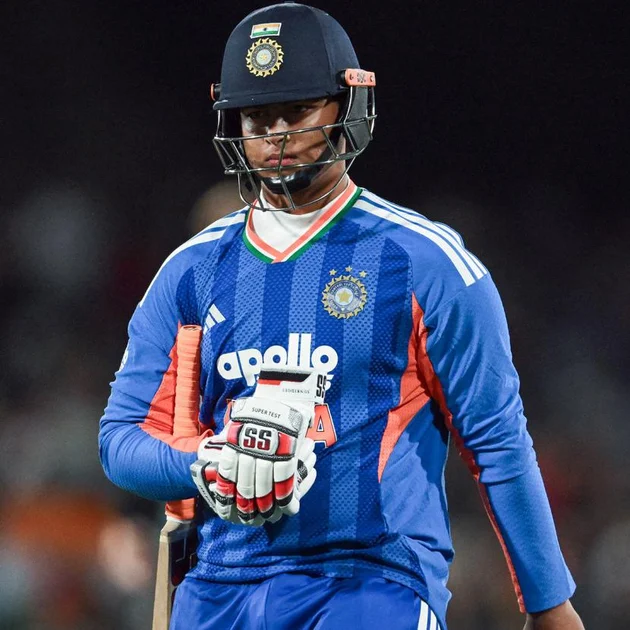
Latest: Sooryavanshi's Brief Stay as India A Battle Pakistan A
Vaibhav Sooryavanshi's second outing at the ACC Men's Asia Cup Rising Stars lasted just 13 balls on Sunday, as the young opener was dismissed for 11 runs in India A's Group B showdown against Pakistan A at the West End Park International Cricket Stadium in Doha. The 15-year-old, who opened alongside Abhishek Sharma, hit two fours before top-edging a full-length delivery from Mohammad Imran to mid-off, leaving India A at 22 for 1 in the third over.
The match, which started at 3:30 p.m. IST after a 3:00 p.m. toss, was billed as the decisive contest for control of Group B. Both sides entered with two points from their opening wins—India A demolished Nepal by a record 306 runs, while Pakistan A beat the UAE by 61 runs—and only net run rate separated them. The winner in Doha would take a significant step toward the semifinals.
A Quiet Tournament So Far for the Prodigy
Sooryavanshi's dismissal continued a modest start to the tournament. In India A's opener against Nepal on Friday, he made 26 from 32 balls with three fours and a six before being bowled through the gate by Pawan Sarraf while attempting to make room. India A hardly needed his contribution that day: Tilak Varma struck 107 and Kumar Kushagra 117 to lift the side to 332 for 9, before Nepal were skittled for 26—the largest margin in List A history—with Prince Yadav taking 5 for 6 and Harshit Rana 4 for 16.
His recent form across formats has been mixed. In his most recent T20I appearance, Sooryavanshi blazed 45 off just 19 balls against New Zealand in October. But around that knock, he posted scores of 4 (also against New Zealand), 15 against Pakistan, and 38 against Sri Lanka in T20Is, and his ODI returns in this tournament now read 26 and 11.
Context: Why This Match Matters
The India A vs Pakistan A fixture was always going to be the marquee clash of the group stage, and the stakes were heightened by the format. With both teams on two points, the Doha encounter was effectively a battle for top spot in Group B and a smoother path to the semifinals.
India A's predicted XI retained the core that thrashed Nepal, with Sooryavanshi and Abhishek Sharma at the top, followed by Ayush Badoni, captain Tilak Varma, and wicketkeeper Kumar Kushagra. Rinku Singh and Suryansh Shedge provided lower-order firepower, while Shahbaz Ahmed and Vipraj Nigam offered spin options. The pace attack, led by Harshit Rana and Prince Yadav, was expected to be the difference against a Pakistan A side reliant on its in-form batting unit.
For Sooryavanshi, the tournament represents another stage in a rapid rise. The teenager has already drawn attention for his explosive stroke play, and his fastest List A century—reached in just 28 balls—shattered records and underlined why he is considered one of India's most exciting young batting prospects. Performances in Doha are being watched closely as selectors assess the next generation ahead of a busy international calendar.
Perspective: A Learning Curve, Not a Setback
A score of 11 in a high-pressure game against Pakistan A will not define Sooryavanshi's tournament, but it does highlight the challenge of consistency that accompanies precocious talent. At 15, he is navigating the demands of senior-level bowling attacks, unfamiliar conditions, and the weight of expectation that comes with record-breaking feats.
India A's team management has shown faith in his opening role, and the presence of experienced heads like Tilak Varma and Abhishek Sharma around him should ease the burden. The broader trend in Indian cricket—blooding teenagers in A-team and emerging tournaments—means outings like Sunday's are as much about education as they are about results. Whether Sooryavanshi converts his evident potential into a match-defining score later in the competition remains the question, but the opportunity to learn against Pakistan A in a decisive group game is precisely the kind of exposure the pathway is designed to provide.
Comments