
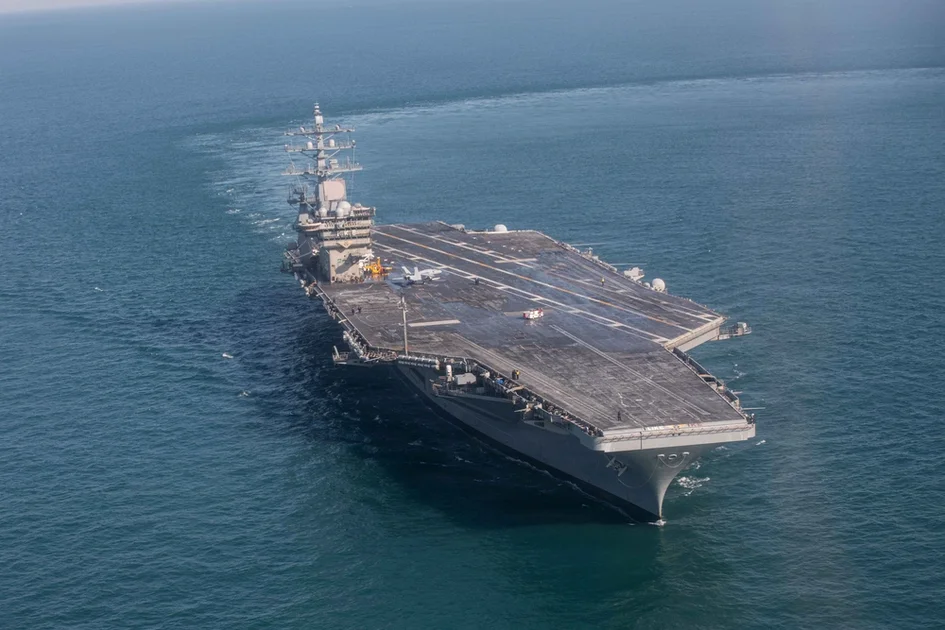
USS Eisenhower Mishap: Aviators Eject, Four Sailors Injured
Two U.S. Navy aviators ejected from their aircraft and four sailors were injured during a mishap on the USS Dwight D. Eisenhower (CVN 69) off the coast of Virginia on Monday evening, according to the Navy.
The incident occurred at approximately 6:18 p.m. EDT on Sept. 28 during aircraft recovery operations, the Navy said in a statement. The two aviators, assigned to Carrier Air Wing 3, successfully ejected and were promptly recovered by search-and-rescue personnel. Both were returned to the ship and are being evaluated by medical personnel.
Four shipboard sailors were also injured. One sailor was transported to a Norfolk-area hospital for treatment of non-life-threatening injuries, while the others received medical care aboard the carrier. The Navy did not specify the type of aircraft involved, what happened to the plane, or what may have caused the mishap.
“Our immediate priority is ensuring all personnel involved receive the care and support they need,” the Navy said. “Carrier crews regularly train for emergencies and unexpected situations during flight operations, and that training enabled the crew to respond quickly and safely.”
The cause of the mishap is under investigation, and the Navy said updates will be provided as more information becomes available.
Aircraft Recovery: A High-Risk Evolution
Aircraft recovery—the process of landing aircraft back on the carrier—is one of the most dangerous routine operations in naval aviation. Using arresting gear, tailhooks, and a meticulously choreographed deck crew, carriers land aircraft in a matter of seconds. A mishap can involve anything from a tailhook failure to an arresting cable snap, both of which have historically resulted in injuries and fatalities.
While the Navy has not confirmed the specific cause, at least one social media user claiming to have served aboard the Eisenhower noted that this was the second arresting gear failure on the ship in less than three years. The Navy has not verified that claim.
Context: A Workhorse Carrier on a Busy Schedule
The USS Dwight D. Eisenhower, commissioned in 1977, is among the oldest active aircraft carriers in the U.S. fleet. The nuclear-powered Nimitz-class carrier is homeported in Norfolk, Virginia, and typically carries about 5,000 personnel.
According to an analysis by the U.S. Naval Institute’s news service, the Eisenhower has been deployed more frequently than any other U.S. aircraft carrier over the past five years. The ship recently completed a repair period in July and departed Naval Station Norfolk on the afternoon of Sept. 28—the same day as the mishap—to begin early carrier qualification operations, according to USNI News.
The timing of the incident, just hours after departing port, underscores the relentless operational tempo of the U.S. carrier fleet. The Eisenhower returned earlier this year from a lengthy deployment to the Red Sea, where it led the U.S. response to Houthi attacks on commercial and military shipping.
A Ship Familiar with the Spotlight
In 2024, the Eisenhower made headlines when Houthi rebels falsely claimed to have sunk it. The ship’s commanding officer at the time, Capt. Christopher “Chowdah” Hill, used social media to counter the misinformation and boost morale among the crew.
The Navy has faced intense scrutiny over the pace of carrier operations, which can strain ships and crews. Earlier this year, the service disclosed that eight sailors assigned to the USS Abraham Lincoln attempted suicide during a lengthy deployment—a stark reminder of the human toll of sustained operations.
Perspective: Safety, Readiness, and the Cost of High Tempo
Monday’s mishap is the latest reminder of the inherent risks of carrier flight operations, even in training or qualification settings. While the Navy has not released details about the aircraft or the nature of the failure, the incident will likely prompt a thorough investigation into both the immediate cause and any underlying factors, such as maintenance pressures or crew fatigue.
The Eisenhower’s frequent deployments have made it a symbol of U.S. naval power—and a target of misinformation. The ship’s ability to quickly recover its aviators and treat the injured speaks to the effectiveness of its emergency response training. Yet the fact that four sailors were injured during a routine recovery evolution highlights the dangers that persist on the flight deck.
As the investigation unfolds, the Navy will face questions about whether the pace of operations is sustainable. For now, all injured personnel are reported to be in stable condition, and the ship remains operational. The service has not indicated whether flight operations will be paused.
The mishap also comes amid broader tensions in the Middle East, where U.S. carriers continue to play a central role. Any disruption to the Eisenhower’s readiness could have ripple effects on deployment schedules already stretched thin.
For the sailors and aviators involved, Monday’s events are a stark reminder of the risks they accept every time they step onto the flight deck. For the Navy, it is another data point in an ongoing debate over how much strain its ships and crews can bear.
Comments