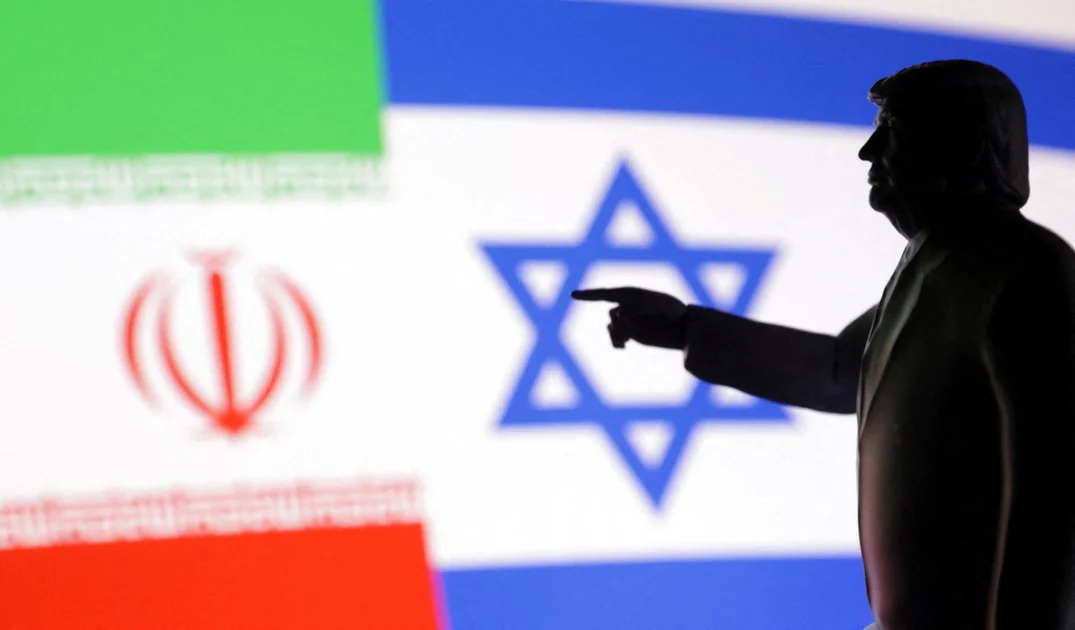
Background: The Road to Military Confrontation
Tensions between the United States, Israel, and Iran have been building for decades, rooted in deep geopolitical rivalries, proxy conflicts across the Middle East, and Iran's controversial nuclear program. The Islamic Republic has long been designated a state sponsor of terrorism by Washington, while Israel has consistently viewed a nuclear-armed Iran as an existential threat.
In the years leading up to any direct military confrontation, Israel conducted numerous covert operations against Iranian nuclear scientists, infrastructure, and military assets, while the United States maintained a complex web of sanctions designed to cripple Iran's economy. Iran, for its part, expanded its regional influence through proxy groups including Hezbollah in Lebanon, Hamas in Gaza, and various Shia militias in Iraq and Syria.
The Trigger Points
Several escalatory events set the stage for direct military action. Iranian-backed militia attacks on US forces stationed in the Middle East, repeated drone and missile exchanges between Israel and Iranian proxies, and Iran's accelerating uranium enrichment program — approaching weapons-grade levels — created a volatile environment in which a military strike became increasingly likely. Intelligence reports suggesting Iran was weeks away from nuclear breakout capacity added extreme urgency to decision-making in both Washington and Tel Aviv.
The Strike Unfolds: Hour by Hour
While the precise operational timeline of any US-Israeli joint military operation against Iran would be classified and subject to evolving reporting, military analysts and regional experts have outlined what such an operation would likely involve based on known capabilities and strategic objectives.
Initial Phase: Electronic Warfare and Air Defense Suppression
In the opening minutes of a coordinated strike, both US and Israeli forces would deploy advanced electronic warfare systems to blind Iranian radar networks and disrupt communications. Israel's F-35I Adir stealth aircraft, specifically modified for long-range deep penetration missions, would lead the first wave, supported by US assets including B-2 Spirit stealth bombers and carrier-based strike fighters operating from the Persian Gulf and the Mediterranean Sea.
Bunker-busting munitions — specifically the GBU-57 Massive Ordnance Penetrator, the most powerful non-nuclear bomb in the US arsenal — would be the weapons of choice against hardened underground facilities such as Fordow, buried deep beneath a mountain near Qom.
Mid-Phase: Targeting Nuclear and Military Infrastructure
Within the first hour, priority targets would include Iran's key nuclear sites: Natanz (the primary enrichment facility), Fordow, Isfahan's uranium conversion plant, and the Arak heavy-water reactor. Simultaneously, Iranian air defense batteries — including Russian-supplied S-300 systems — missile launch sites, and naval assets in the Strait of Hormuz would be neutralized to prevent retaliatory strikes and protect commercial shipping lanes.
Israeli submarine-launched cruise missiles and long-range ballistic missiles from surface vessels would add additional strike capacity, while US destroyers in the region would provide a defensive shield against any Iranian counterattack.
Immediate Iranian Response
Iran's initial military response would likely involve ballistic missile launches toward Israel and US bases in the region, drone swarms targeting Gulf state infrastructure, and activation of proxy forces across Lebanon, Gaza, Syria, Iraq, and Yemen. Iran has repeatedly warned that any strike on its soil would trigger a "regional earthquake," threatening to close the Strait of Hormuz — through which approximately 20% of the world's oil supply flows — and to retaliate against US allies across the Gulf.
Geopolitical Fallout and International Reactions
Global Powers Respond
A US-Israeli strike on Iran would instantly reshape global geopolitics. Russia and China, both of which maintain significant economic and strategic ties with Tehran, would likely condemn the action strongly at the United Nations Security Council. Moscow, already engaged in Ukraine, would face difficult choices about the depth of its response. Beijing, dependent on Iranian oil and deeply invested in regional stability for its Belt and Road Initiative, would face intense diplomatic pressure.
European allies would be caught between solidarity with Washington and fears of an uncontrollable regional war that could send millions of refugees toward European borders and trigger an energy crisis through disrupted Gulf oil exports.
Oil Markets and the Global Economy
Financial markets would react with immediate turbulence. Oil prices could spike dramatically — some analysts project a potential surge past $150 per barrel in a worst-case scenario — threatening global economic stability at a time of already fragile growth. Insurance rates for shipping in the Persian Gulf would skyrocket, and supply chain disruptions would ripple across industries worldwide.
Strategic Calculations: Did It Achieve Its Objectives?
The central question following any military operation of this magnitude is whether it achieved its strategic aim: permanently setting back Iran's nuclear program. Military experts are divided. While a comprehensive strike could destroy years of infrastructure investment and kill key technical personnel, Iran's nuclear knowledge — and its political motivation — cannot be bombed away.
History suggests that military strikes tend to harden a nation's resolve. Following an attack, Iran would face enormous domestic pressure to rebuild and accelerate its nuclear program, potentially driving it fully underground and further from international oversight. The window for diplomatic solutions would narrow dramatically, raising the long-term risk of a nuclear-armed Iran more determined than ever to achieve deterrence.
The coming days and weeks after such a strike would define not only the future of the Middle East but the architecture of global security for a generation.
Comments