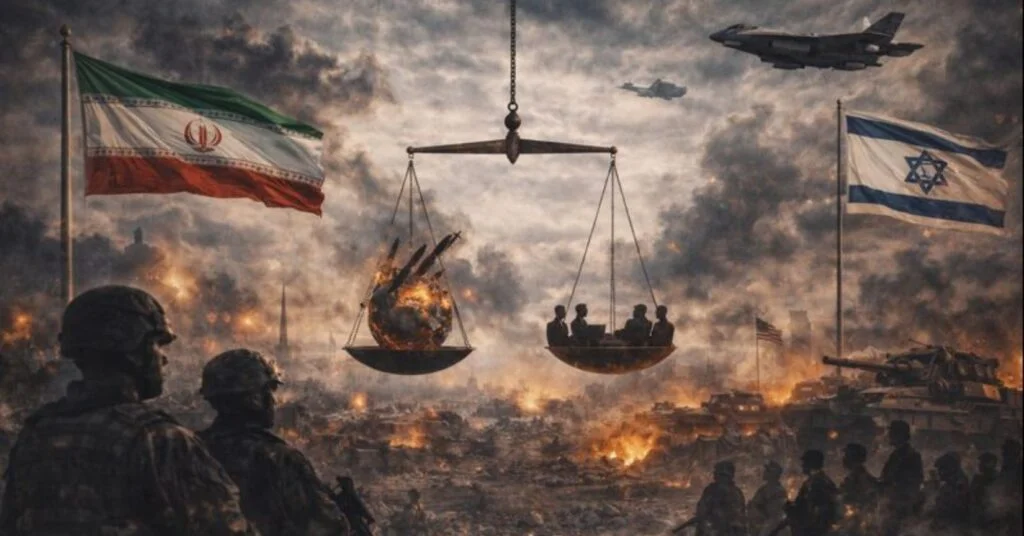
The conflict between the United States and Iran entered a dangerous new phase on March 6, 2026, as Secretary of Defense Pete Hegseth declared an end to what he called "politically correct wars" — conflicts characterized by vague objectives and minimal engagement rules. The announcement came alongside a series of dramatic developments on multiple fronts, from the complete shutdown of oil tanker traffic through the Strait of Hormuz to Israeli airstrikes on targets deep inside Tehran.
Hegseth Signals a Harder Military Posture
In a blunt public statement, Pete Hegseth declared that the era of restrained, politically cautious warfare was over. He framed the new American approach as one defined by clear objectives and unrestricted rules of engagement, signaling a significant shift in how the United States intends to prosecute military operations against Iran. The statement drew immediate international attention and added urgency to an already volatile situation.
The shift in posture raises serious questions about the potential for escalation, particularly as other actors in the region — most notably Israel — are simultaneously conducting their own offensive operations.
Strait of Hormuz: A Global Energy Chokepoint Goes Dark
In one of the most consequential developments reported on Friday, no oil tanker crossed the Strait of Hormuz in the preceding 24-hour period, according to Bloomberg, citing data from the Joint Maritime Information Center. The strait is one of the world's most critical energy corridors, through which a significant share of global oil supplies typically flows daily.
The shutdown sent immediate shockwaves through energy markets. Qatar's Energy Minister warned that crude oil prices could reach $150 per barrel within weeks if the disruption continues — a level that would have severe consequences for the global economy. For context on how such energy shocks can reverberate through financial markets, the dynamics bear resemblance to other macro-driven market pressures currently unsettling investors.
Israel Strikes Underground Bunker in Tehran
The Israeli military announced it had conducted a major strike against a subterranean complex beneath central Tehran, which it described as a bunker associated with former Supreme Leader Ali Khamenei. According to the Israeli Defense Forces, approximately fifty fighter jets participated in the operation. The alleged facility was said to extend under multiple city streets and include dedicated meeting rooms.
Israel also ordered the evacuation of several villages in Lebanon's Bekaa Valley, naming localities including Nabi Chit, Khader, Sarain al-Fawqa, and Sarain al-Tahta. A separate Israeli strike on the southern Lebanese city of Sidon killed at least five people and wounded seven others, according to Lebanon's Health Ministry.
For a broader understanding of how the conflict between Iran and Israel has developed over recent months, see our comprehensive overview of the escalating Iran-Israel conflict.
UN Demands Accountability Over School Strike
One of the most disturbing elements of the ongoing conflict involves a strike that killed 175 children at a girls' primary school in Iran. UN High Commissioner for Human Rights Volker Türk, speaking to journalists in Geneva, called on the United States to conduct its announced investigation "very quickly." He stressed that any inquiry must be "rapid, transparent, and impartial," and insisted that victims must receive reparations.
"Any mediation efforts should be directed at those who underestimated the Iranian people and triggered this conflict." — Iranian President Massoud Pezechkian
The statement from Iran's president came as he rejected suggestions that Tehran bore responsibility for the escalation, instead pointing directly at Washington and Tel Aviv. Pezechkian affirmed Iran's commitment to lasting regional peace while making clear the country would defend its sovereignty.
Iran's Position: Defiance and a Call for Mediation
President Pezechkian struck a dual tone — signaling openness to a peaceful resolution while firmly rejecting the framing that Iran had provoked the crisis. He argued that any third-party mediators should focus their diplomatic pressure on the United States and Israel, which he described as the initiators of the current escalation.
For the latest developments in Iranian politics and the country's broader strategic position, our ongoing Iran latest news coverage provides continuous updates.
A Conflict With Global Consequences
The closure of the Strait of Hormuz alone underscores how rapidly this regional conflict is acquiring global dimensions. Energy markets, international shipping, and diplomatic channels are all under severe strain. With the United States explicitly loosening its rules of engagement, Israel conducting deep-strike operations inside Iran, and Tehran vowing to protect its sovereignty, the conditions for a prolonged and widening confrontation are firmly in place.
The coming days will be critical in determining whether any mediation track — whether through Qatar, the UN, or other channels — can gain traction before the military escalation becomes irreversible.
Comments