
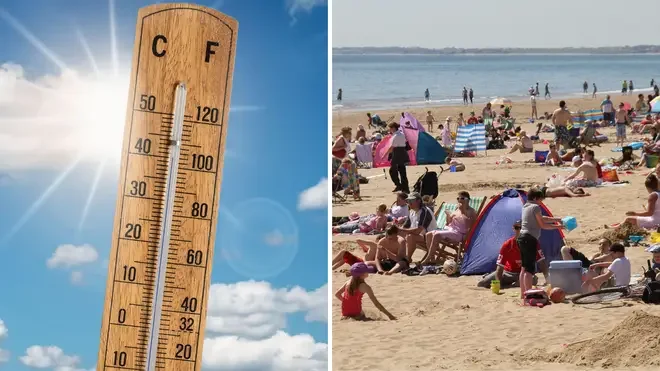
UK weather maps show 41C potential as fourth heatwave looms
Britain is bracing for its fourth heatwave of a record-shattering summer, with long-range weather models indicating that temperatures could reach 41°C on August 1 — potentially surpassing the UK's all-time high of 40.3°C set in July 2022. The latest GFS model data, analysed by forecasters, shows a concentrated band of extreme heat sweeping across eastern England, with 10 counties including London, Lincolnshire, Cambridgeshire, and Sussex projected to hit 40°C or more.
The Met Office has confirmed that conditions could turn “very warm again by the start of August,” while the BBC's long-range forecast, published on July 18, notes that “further hot spells or heatwaves are possible into early August.” The convergence of these outlooks has prompted widespread media coverage and public concern, especially after a summer that has already seen three official heatwaves, multiple record-breaking days, and the driest four-week stretch in parts of southern England since 1976.
Fourth heatwave in sight after brief respite
This weekend offered a brief respite from the heat, with temperatures dropping closer to seasonal norms across much of the UK. But weather models indicate that the cooler interlude will be short-lived. According to GB News, Thursday marked the 12th consecutive day that 30°C was exceeded somewhere in the country, and the next surge is expected to begin around July 29. Southern England could see 31°C on July 29, rising to 31°C in the south-west by July 31, and then spiking dramatically on August 1.
The projected 41°C would not only break the current UK record but also mark the first time the country has breached 41°C since reliable records began. The heat would be most intense from Sussex northward to Lincolnshire, with the Midlands expecting 38°C, Yorkshire 37°C, and parts of Wales near the English border reaching 31–32°C. Scotland and Northern Ireland are expected to remain cooler, with highs below 30°C and 25°C respectively.
A summer of extremes: drought, wildfires, and hosepipe bans
The prospect of a fourth heatwave comes against a backdrop of severe environmental strain. The BBC reports that “a lack of rain has also been a big part of summer with some places in southern England seeing no measurable rain for more than four weeks.” Hosepipe bans are now in force for millions of households across southern and eastern England, and dry vegetation has provided fuel for wildfires in several areas. The summer has already been compared to the infamous 1976 drought, with multiple temperature records falling — including some that had stood since that historically hot year.
A study published earlier this month estimated that more than 2,700 people may have died during the exceptional May and June heatwaves in England and Wales, underlining the deadly potential of prolonged extreme heat. The UK Health Security Agency has issued repeated alerts, urging people to stay hydrated, check on vulnerable neighbours, and avoid strenuous activity during peak heat hours.
Europe also faces unprecedented heat
The UK is not alone in facing extreme temperatures. The Mirror reports that weather models show parts of Portugal, Spain, and France could see their hottest days ever recorded toward the end of July. GFS data suggests southern Portugal may hit 50°C on July 28 — which would be the highest temperature ever recorded in Europe, surpassing the current record of 48.8°C in Sicily from August 2021. South-western Spain, including the tourist hotspot of Seville, could reach 49°C, while south-western France may see 47°C on July 31.
These continental heatwaves are fuelled by a persistent area of high pressure — the Azores High — which is positioned to block cooler Atlantic weather fronts from moving across western Europe. This same pattern is keeping the UK's south and east drier and hotter, while low-pressure systems bring rain only to Scotland and Northern Ireland. The BBC notes that “the Azores high... is likely to be close by” in the coming weeks, “keeping things drier further south.”
Forecast uncertainty and what the models say
Long-range forecasting, especially beyond seven days, carries significant uncertainty. The BBC's lead weather presenter Ben Rich cautioned that “the signals from computer weather models are rather mixed meaning there is a lot of uncertainty.” The Met Office's own August outlook suggests “the influence of high pressure may wane somewhat” during the final part of July, leading to increased shower and thunderstorm activity in northern areas before rain spreads south.
Despite the mixed signals, the overall trend points to above-normal temperatures continuing through August. The Met Office's forecast for August 2–16 states: “Temperatures will very likely remain above normal, with potential for further hot spells.” The GFS model, while not yet confirmed by official forecasts, is widely used by meteorologists and indicates a sharp temperature spike on August 1.
Counties on alert
The counties expected to face 40°C or more, according to GFS data, include:
- Lincolnshire
- Cambridgeshire
- Northamptonshire
- Norfolk
- Suffolk
- Hertfordshire
- Middlesex
- Surrey
- Kent
- Sussex
London sits in the heart of the affected zone, and major transport operators have already begun planning for potential speed restrictions and service disruptions if the heatwave materialises. Network Rail has warned that tracks could buckle in extreme heat, while hospital trusts are reviewing their capacity to handle heat-related admissions.
Broader implications: what this changes
The repeated extreme heat events of summer 2026 are reshaping public discourse around climate adaptation and infrastructure resilience. The fact that the UK is on course for a fourth heatwave, after three already confirmed, suggests that what was once considered a rare event is becoming a seasonal norm. The summer has already surpassed 1976 in terms of temperature records, and the drought conditions are prompting urgent discussions about water security, hosepipe bans, and agricultural support.
In a related development, the UK government has faced scrutiny over its preparedness for extreme weather events. As the energy secretary remains in place amid a broader Chris Wright Stays as Energy Secretary Amid UK Leadership Shake-Up and Iran War, questions have been raised about whether the national grid can handle surging demand for air conditioning and cooling systems during prolonged heatwaves.
Meanwhile, the health impact is becoming harder to ignore. The estimated 2,700 excess deaths from the May and June heatwaves have prompted calls for a mandatory heat-alert system and better housing insulation standards. The UK's predominantly residential buildings were designed for cooler climates, and many lack effective shading or cooling systems.
The psychological toll of a summer in crisis
Beyond the immediate physical dangers, the unrelenting heat is taking a psychological toll. Farmers are watching crops wither, families are confined indoors during peak heat hours, and the constant news cycle of record-breaking temperatures, wildfires, and water restrictions is causing widespread anxiety. Social media is filled with warnings about heatstroke, power outages, and the best ways to keep pets cool.
Yet, forecasters also note that the chaotic nature of the atmosphere means the models could still shift. A sudden change in the position of the Azores High could bring cooler, rainier conditions. As Ben Rich noted, “the behaviour of our chaotic atmosphere generally becomes harder to predict the further into the future you gaze.”
What happens next?
For now, the message from the Met Office and the BBC is clear: the UK should prepare for more heat. Whether the August 1 spike reaches the full 41°C predicted by the GFS model remains uncertain, but the pattern of above-average temperatures and isolated very hot days is likely to persist through mid-August.
Residents in affected counties are advised to stay updated via the BBC Weather app and local health alerts. Those with vulnerable relatives should check in regularly, and anyone planning outdoor activities in late July and early August should be ready to adjust plans if a heatwave is declared.
The summer of 2026 is already historic. Whether it ends with a new all-time temperature record may become clear within the next two weeks.
How to stay safe during a heatwave
- Drink plenty of water, even if you do not feel thirsty
- Avoid alcohol, caffeine, and sugary drinks
- Close curtains and blinds during the hottest part of the day
- Never leave children or pets in parked cars
- Check on elderly or medically vulnerable neighbours
- Seek shade and avoid strenuous outdoor activity between 11am and 3pm
- Know the signs of heat exhaustion: headache, dizziness, nausea, confusion
For the latest Met Office forecasts and heat-health alerts, visit the official government website or the BBC Weather page.
Comments