
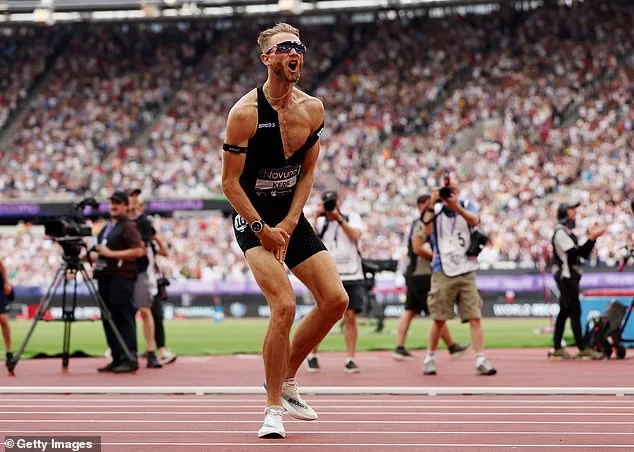
Josh Kerr Shatters 27-Year-Old Mile World Record in London
British middle-distance runner Josh Kerr etched his name into track and field history on July 18, 2026, by breaking the men's mile world record at a Diamond League meet in London. Kerr clocked 3 minutes, 42.66 seconds, shaving 0.47 seconds off the legendary mark set by Morocco's Hicham El Guerrouj in Rome in 1999. The record had stood for 27 years and was widely considered one of the most durable in the sport.
Running at London Stadium in front of a roaring home crowd, Kerr finished more than three seconds ahead of American Yared Nuguse, who took second in 3:45.69. After crossing the line, Kerr embarked on an emotional lap of honor, soaking in the moment he had targeted for months. "It was just me, my shoes and the track," Kerr told the BBC. "I was absolutely deaf in that last 110 meters."
Kerr's performance came during a year without an Olympics or world championships, allowing him to dedicate his season entirely to the mile—a distance that holds iconic status in track lore, especially since Roger Bannister broke the four-minute barrier in 1954.
From Paris Silver to Global Record Holder
The 28-year-old Edinburgh native's victory in London is the latest chapter in a career that soared at the Paris Olympics in 2024. There, Kerr earned a silver medal in the 1,500 meters, finishing behind American Cole Hocker in a stunning upset that saw Norwegian rival Jakob Ingebrigtsen fade to fourth. That race became a defining moment for Kerr, who had spent the preceding months in a heated back-and-forth with Ingebrigtsen over pacing tactics and championship credentials.
Kerr's rivalry with Ingebrigtsen reinvigorated middle-distance running, drawing new fans and media attention to the 1,500-meter events. At the 2023 world championships, Kerr had outkicked Ingebrigtsen to win gold; at the Paris Olympics, he proved his mettle again under the brightest lights. Now, with the mile record, he has elevated his legacy beyond Olympic medals.
Kerr's rise also reflects a broader trend in British middle-distance running, which has produced a string of champions—from Sebastian Coe and Steve Ovett to Mo Farah—and continues to thrive on the world stage.
What the Record Means for Track and Field
Kerr's achievement is more than a single time. It reshapes the conversation around the mile, a distance that is rarely run in major championships but retains a mythical grip on the sport's imagination. The record-breaking run in London signals that elite athletes are willing to prioritize non-championship events when they see an opportunity to challenge history.
The timing is notable: two years after the Paris Olympics, the track world is in a rebuilding phase. With no Olympic or world championship meet in 2026, athletes like Kerr have had the freedom to target specific records and head-to-head matchups. That flexibility could encourage more athletes to chase historic marks rather than pacing themselves strictly for medal events.
Kerr's win also underscores the importance of crowd energy and home-field advantage. The London crowd's roar in the final 110 meters, Kerr said, made him "deaf" and propelled him through the last stretch. It was a reminder that track and field, for all its individual focus, thrives on the atmosphere of live competition.
Looking ahead, Kerr's record could inspire a new generation of milers, much as Bannister's four-minute mile did seven decades ago. And with the Los Angeles Olympics looming in 2028—preparations are already underway, as LA28 Opens 60,000 Volunteer Spots as MLB Labor Talks and Vonn Recovery Complicate Olympics—Kerr will be a central figure in the sport's narrative.
Meanwhile, Victor Wembanyama, who starred for France in basketball at the Paris Olympics, is preparing for his return to the national team in FIBA World Cup qualifying, demonstrating that the Paris Games continue to shape careers across multiple sports. Kerr, too, carries that Olympic legacy forward—but now with a world record that no one can take away.
Comments