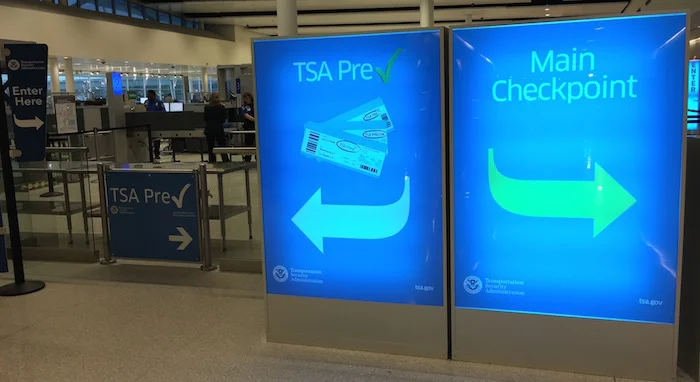
TSA PreCheck Enrollment Surges Even as Program Faces Structural Pressures
More than 15 million Americans are currently enrolled in TSA PreCheck, the Transportation Security Administration's expedited airport screening program — and that number continues to grow. Yet even as demand reaches record levels, the program finds itself at the center of a broader federal debate over funding, privatization, and the long-term sustainability of trusted traveler initiatives.
In recent weeks, discussions within Congress and the Department of Homeland Security have intensified around the future of TSA PreCheck and related programs. Budget proposals circulating in Washington have raised questions about whether enrollment fees — currently set at $78 for a five-year membership — are sufficient to cover program costs, and whether private contractors should play a larger role in enrollment and vetting.
Key Figures and Recent Data
The TSA reported that PreCheck lanes processed travelers in an average of under ten minutes during peak 2024 travel periods, compared to standard screening lanes that often exceeded 30 minutes. The agency attributes this efficiency to its risk-based security model, which allows pre-vetted travelers to keep shoes on, laptops in bags, and liquids in carry-ons.
However, a Government Accountability Office review published in early 2025 flagged inconsistencies in how enrollment providers — including Idemia and Alclear (CLEAR) — are monitored and held accountable, adding regulatory scrutiny to an already complex policy landscape.
Why the Stakes Are High for Millions of American Travelers
TSA PreCheck is not just a convenience — for frequent flyers, business travelers, and families navigating busy airports, it represents a meaningful reduction in the friction of air travel. Losing access to it, or facing significant changes to eligibility and enrollment, would affect a substantial portion of the flying public.
The concerns are not entirely new. As previously reported, Global Entry and TSA PreCheck have faced threats linked to potential government shutdowns, with enrollment processing halted during funding gaps and federal employee furloughs. Those disruptions exposed just how fragile the infrastructure behind the program can be when political gridlock interferes with routine government operations.
The Privatization Question
One of the most debated proposals involves expanding the role of private enrollment companies beyond their current scope. Supporters argue that private operators can scale enrollment more efficiently and reduce wait times at enrollment centers, which have been a consistent pain point for applicants. Critics, however, warn that outsourcing more of the vetting process introduces security risks and reduces federal oversight.
The TSA currently relies on a hybrid model, where private entities handle biometric data collection and identity verification, while federal agents maintain final authority over approvals. Any shift in that balance would require legislative action and would likely face opposition from security-focused advocacy groups and labor unions representing TSA workers.
Enrollment Delays and Backlog Concerns
Separate from the policy debate, travelers have reported growing delays in receiving PreCheck approval after submitting applications. Processing times, which the TSA targets at under 60 days, have in some cases stretched considerably longer — frustrating applicants who planned around having the credential for upcoming travel. The TSA has acknowledged the backlog and attributed it to a surge in post-pandemic applications and staffing constraints at enrollment centers.
What This Means for the Broader Landscape of Airport Security
The scrutiny surrounding TSA PreCheck reflects a wider tension in American public policy: how to maintain robust national security infrastructure while managing federal spending and responding to calls for government efficiency. The current administration's focus on reducing the size of federal agencies has put programs like PreCheck in an uncomfortable spotlight — valued by the public, but expensive and complex to administer.
For the aviation industry, any disruption to PreCheck would have downstream effects. Airlines have long benefited from faster passenger throughput at security checkpoints, and airports have designed terminal layouts around the assumption that a significant portion of travelers use expedited lanes. A contraction of the program would ripple through operations at major hubs.
More broadly, the debate over TSA PreCheck is part of a larger conversation about digital identity, biometric data, and the appropriate role of private companies in national security systems. As facial recognition and mobile ID technologies mature, the future of airport screening may look very different from today's model — and PreCheck, in its current form, may either evolve significantly or give way to something new entirely.
For now, enrolled members can continue using their benefits without interruption. But travelers considering enrollment or renewal should monitor developments closely, as fee structures, eligibility rules, and enrollment availability could all change in the months ahead.
Comments