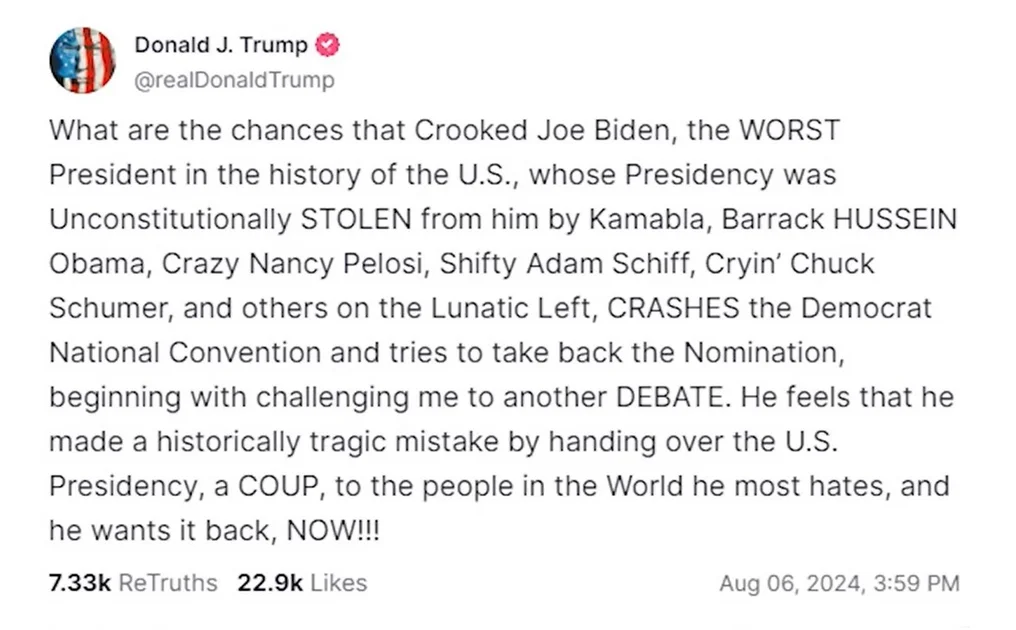
Truth Social Draws Renewed Attention as Scrutiny Intensifies
Trump Truth Social, the social media platform launched by former President Donald Trump in 2022, is once again making headlines as its parent company, Trump Media & Technology Group (TMTG), faces mounting questions about financial sustainability, stock volatility, and its deepening entanglement with Trump's political agenda.
Shares of TMTG, traded on the Nasdaq under the ticker symbol DJT, have continued to exhibit extreme volatility, a pattern that analysts say reflects the platform's precarious position between political symbol and viable business. The stock surged dramatically following Trump's return to the White House in January 2025, but has since experienced significant pullbacks, leaving retail investors — many of whom bought in for ideological as much as financial reasons — exposed to heavy swings.
Key Figures and Recent Data
According to filings with the Securities and Exchange Commission, Trump Media reported revenues of just over $1 million in its most recent quarterly period, a figure that stands in sharp contrast to its multi-billion-dollar market capitalisation at various points over the past year. The company has acknowledged in regulatory disclosures that it may need additional capital to sustain operations, a detail that has drawn attention from financial analysts and short-sellers alike. Donald Trump himself remains the majority shareholder, holding a stake worth several billion dollars on paper depending on the share price at any given time — a financial interest that critics argue creates an unprecedented conflict of interest for a sitting president.
Why This Matters: Stakes, Context, and the Platform's Political Role
Truth Social was created as a direct response to Trump's suspension from mainstream platforms following the January 6, 2021 Capitol riot. Since its launch, it has served as his primary megaphone, reaching millions of followers with posts on policy, political attacks, and personal grievances. As president, Trump's posts on the platform carry significant weight — market-moving announcements, foreign policy signals, and personnel decisions have all been communicated through Truth Social before reaching traditional media outlets.
This dual role — as a financial asset and political tool — raises questions that go beyond ordinary corporate governance. Trump Sues His Own Government for $10 Billion Over Leaked Tax Returns — And Experts Say He May Lose is just one example of how Trump's financial and political interests have become increasingly intertwined in ways that generate serious legal and ethical debate.
The Competitive Landscape and User Growth Challenges
Despite its political significance, Truth Social continues to lag behind mainstream competitors in terms of user numbers and engagement metrics. Platforms such as X (formerly Twitter), Facebook, and newer entrants like Bluesky and Threads boast user bases that dwarf Truth Social's reported figures. Independent analytics firms have consistently placed Truth Social's monthly active users in the low tens of millions at best — a fraction of what its rivals command.
Advertising revenue remains minimal, with most major brands reluctant to associate with a platform whose content moderation policies and political identity make brand safety a persistent concern. The platform's business model remains heavily dependent on subscription revenues and merchandise, neither of which has demonstrated sufficient scale to satisfy long-term investors focused on fundamentals.
Broader Implications: What Truth Social Signals About Politics and Media
The story of Trump Truth Social is ultimately about more than one platform or one company. It reflects a broader fracturing of the American media landscape, in which political identity increasingly determines where people consume and share information. The rise of ideologically aligned platforms — on both the left and the right — is reshaping how politicians communicate, how misinformation spreads, and how financial markets respond to political news.
For investors, the DJT stock saga has become something of a case study in sentiment-driven markets, where traditional valuation metrics are routinely overwhelmed by political enthusiasm or despair. Analysts tracking broader market volatility note that politically connected stocks have become a distinct — and distinctly unpredictable — asset class. Those watching VIX Spikes Amid Market Turmoil: What the 'Fear Gauge' Is Telling Investors Right Now will recognise that the mood driving retail investors into DJT shares is not entirely divorced from the broader anxieties shaking financial markets.
For the wider political ecosystem, the existence and influence of Truth Social as a presidential communications channel — one that is simultaneously a publicly traded company in which the president holds a controlling stake — sets a precedent with no clear historical parallel. Regulatory bodies, ethics watchdogs, and lawmakers have yet to produce a coherent framework for addressing this novel situation. Until they do, Truth Social will remain a flashpoint at the intersection of American politics, media, and finance.
Comments