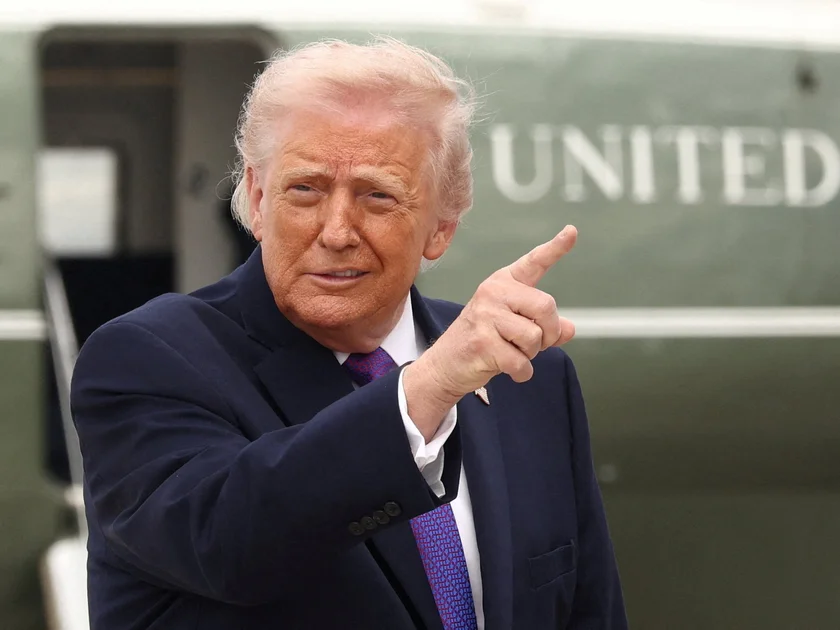
In an unprecedented legal move, Donald Trump has filed a $10 billion lawsuit against his own government, targeting the Treasury Department and the Internal Revenue Service over the leak of his federal tax returns during his first presidential term. Filed on January 29, the complaint marks the first time a sitting U.S. president has taken legal action against the administration he himself leads — a paradox that legal scholars say could ultimately doom the case.
A President Suing His Own Administration
The lawsuit centers on Charles "Chaz" Littlejohn, a former government contractor working for consulting firm Booz Allen Hamilton, who was re-hired in 2017 and subsequently stole Trump's confidential tax files. Littlejohn later shared those documents with major media outlets. In 2020, The New York Times published a widely read investigation revealing that Trump had paid little to no federal income tax over a 15-year period. A year later, ProPublica used the same leaked data to expose inconsistencies between how Trump's businesses valued their assets for tax purposes compared to what they reported to lenders.
Littlejohn has since been convicted and is currently serving time in prison. Despite this, Trump's legal team argues that the IRS — as the agency overseeing Littlejohn's contract — bears institutional responsibility for the breach. The lawsuit claims the leak was politically motivated and inflicted "significant and irreparable harm" on Trump, his family members, and his business empire.
Legal Experts Question the Strategy
While analysts acknowledge that the underlying grievance has merit — federal law strictly prohibits the unauthorized disclosure of tax information — many are skeptical about the lawsuit's chances of success given the unusual circumstances surrounding it.
"This is a weird Donald Trump lawsuit where it's not entirely performative," said Samuel Brunson, a law professor at Loyola University Chicago School of Law. "He does have a legitimate complaint. The leaking of the information is an actual wrong, and it's one that Congress has recognized."
However, Brunson was quick to add that the broader legal claim is "not great." The central problem, experts say, is structural: as president, Trump effectively oversees the very agencies he is suing. That means he would be in a position to influence the administration defending the case — and potentially arranging his own financial settlement.
This conflict of interest raises serious ethical questions that could lead courts to treat the case with unusual scrutiny, or prompt procedural challenges that delay or block any payout.
A Historic But Complicated Precedent
Trump is not the first president to pursue legal action against the federal government, but earlier cases were filed after the presidents had left office. Richard Nixon, for instance, sued the government in 1974 following his resignation amid the Watergate scandal. No sitting commander-in-chief had ever initiated such action while in power — until now.
No trial date has been set as of mid-March 2026, though legal observers expect the government to push for a swift resolution of the complaint, one way or another.
The case also reignites the long-standing debate over presidential financial transparency. Since the 1970s, every U.S. president except Trump has voluntarily released their tax returns as a gesture of openness to the public. Trump broke with that tradition during both his first and second campaigns, arguing there was no legal obligation to do so — a position that fueled much of the public interest that ultimately motivated Littlejohn's actions, according to some analysts.
What Happens Next
For now, the lawsuit sits in a legal gray zone. Courts will need to grapple with questions that have no clear precedent: Can a sitting president pursue damages from a government he controls? Does the conflict of interest disqualify the claim, or simply complicate it? And if damages were ever awarded, who would oversee the payment process?
These questions are unlikely to be resolved quickly. Legal teams on both sides are expected to file preliminary motions in the coming months, and the case could be tied up in procedural disputes long before any substantive hearing takes place.
What is clear is that Trump's decision to file the suit has injected fresh controversy into an already turbulent second term — and given legal scholars an entirely new set of constitutional puzzles to untangle. Whether the $10 billion figure ever materializes remains, at best, deeply uncertain.
Comments