The Announcement and Its Immediate Context
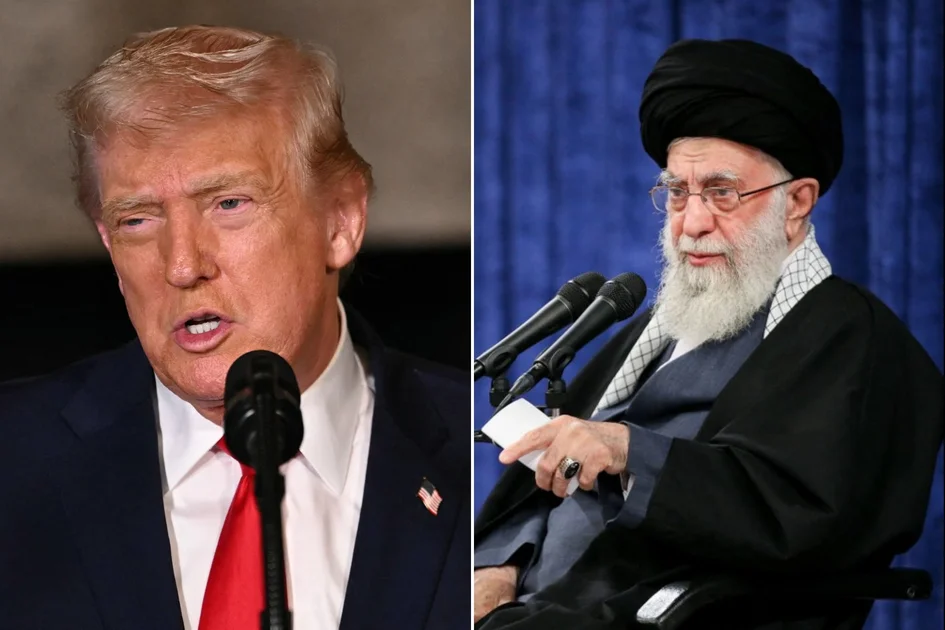
In a dramatic and unprecedented move, former and current U.S. President Donald Trump announced the death of Iranian Supreme Leader Ali Khamenei, sending shockwaves through international diplomatic and political circles. The announcement, made via Trump's preferred communication channels, immediately triggered a cascade of reactions from world governments, intelligence agencies, and media organizations scrambling to verify the claim.
Khamenei, born on April 19, 1939, has served as the Supreme Leader of Iran since 1989, making him one of the longest-serving and most powerful theocratic leaders in modern history. Any news concerning his health or death would represent a seismic geopolitical event with far-reaching consequences for the Middle East and beyond.
How the Statement Was Made
Trump's announcement came in the form of a direct public statement, consistent with his well-documented approach of using bold, unfiltered declarations to shape news cycles. The statement lacked the typical diplomatic language or coordinated intelligence briefing format that would normally accompany a revelation of this magnitude. This immediately raised questions among analysts and foreign policy experts about the sourcing and verification behind the claim.
White House and U.S. government officials were reportedly caught off guard by the timing and nature of the announcement, with many seeking to confirm or contextualize the statement through official intelligence channels.
Geopolitical Implications of Khamenei's Death
If confirmed, the death of Ali Khamenei would mark the end of an era in Iranian politics and fundamentally reshape the power dynamics of one of the world's most consequential nations. Khamenei has been the central figure in Iran's theocratic system, wielding supreme authority over the military, judiciary, and foreign policy — far exceeding the powers of any elected Iranian president.
Succession and Internal Power Struggles
Iran's constitution outlines a process for selecting a new Supreme Leader through the Assembly of Experts, an 88-member body of Islamic scholars. However, the transition of power in practice has never been tested at this scale since the founding of the Islamic Republic. Potential successors have long been speculated upon, including Khamenei's son Mojtaba Khamenei and several senior clerics with strong Revolutionary Guard backing.
The announcement has the potential to trigger an intense internal power struggle within Iran's ruling establishment, with hardline factions, pragmatists, and reformists all positioning themselves in the wake of any leadership vacuum.
Regional and Global Reactions
The announcement prompted immediate and varied responses across the globe. Israeli officials, long engaged in a shadow conflict with Iran, were monitoring the situation closely. Gulf states, including Saudi Arabia and the UAE, which have had complex and often adversarial relationships with Tehran, were also reported to be seeking confirmation through their own intelligence networks.
Russia and China, both of which maintain strategic partnerships with Iran, called for calm and urged the international community to await verified information before drawing conclusions. European governments echoed similar calls for restraint, emphasizing the importance of stability in a region already fraught with tension.
Verification Challenges and Media Scrutiny
One of the most critical aspects of Trump's announcement is the challenge of independent verification. Iran is a highly closed state with strict controls over information flow. The Iranian government, through its state media outlets, has historically been quick to dismiss or counter any foreign-sourced claims about the health or status of its senior leadership.
The Role of Intelligence Agencies
U.S. intelligence agencies, including the CIA and the Defense Intelligence Agency, operate extensive networks focused on Iran. However, the opaque nature of the Iranian leadership's inner circle means that even the most sophisticated intelligence operations face significant limitations. Analysts noted that Trump's announcement, if based on credible intelligence, would represent a remarkable intelligence coup — but also a potentially destabilizing disclosure made without the usual diplomatic groundwork.
Iran's Official Response
Iranian state media and government officials were expected to respond swiftly to what they characterized as foreign disinformation. Iran has a well-established pattern of denying or suppressing information about its leadership's vulnerabilities, and any acknowledgment — or furious denial — of Khamenei's death would itself be a significant data point for international observers.
Historical Precedent and What Comes Next
The announcement echoes other high-stakes moments in recent history when U.S. presidents have publicly announced the deaths of foreign adversaries or leaders — most notably Barack Obama's announcement of Osama bin Laden's death in 2011. In those cases, the announcements were carefully staged, backed by extensive intelligence and military operations, and coordinated with allied governments.
Trump's approach, by contrast, appears to follow a more unilateral and unscripted model, raising concerns about the diplomatic fallout regardless of whether the claim proves accurate.
The Broader U.S.-Iran Relationship
This announcement comes against the backdrop of decades of hostility between Washington and Tehran, including the 1979 hostage crisis, the maximum pressure campaign of Trump's first term, Iran's nuclear ambitions, and ongoing proxy conflicts across the region. Any development involving the Supreme Leader has the potential to either escalate or fundamentally reset this volatile relationship.
As the world awaits confirmation and Iran's official response, the international community finds itself at a pivotal moment — one that underscores the extraordinary weight carried by the words of a sitting U.S. president and the enduring fragility of peace in the Middle East.
Comments