
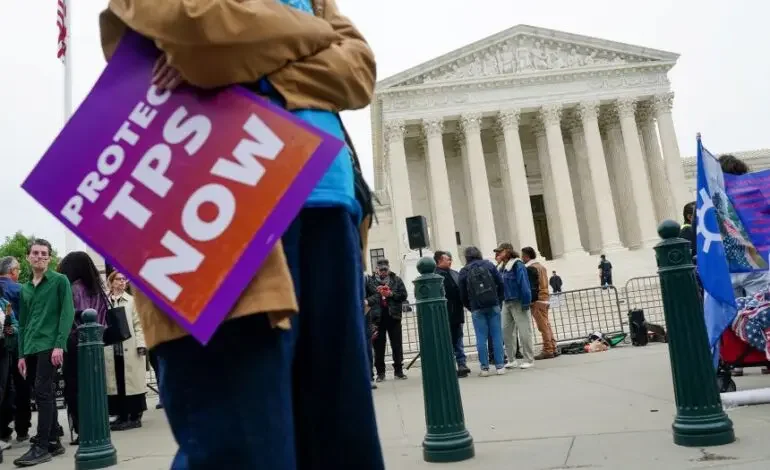
TPS Terminations Accelerate Under Second Trump Administration
As of August 15, 2026, the Trump administration has taken steps to end Temporary Protected Status (TPS) for 13 countries, impacting an estimated 1 million of the 1.3 million immigrants who held the status as of March 2025. The most recent developments include the termination of designations for Somalia, South Sudan, Burma (Myanmar), Yemen, and Syria, with effective dates spanning from July to August 2026.
According to U.S. Citizenship and Immigration Services (USCIS), the agency has been issuing termination notices following reviews by former Homeland Security Secretary Kristi Noem, who determined that conditions in these countries no longer warrant TPS. The U.S. Supreme Court's decision in Mullin v. Doe on June 25, 2026, has been pivotal, allowing the administration to proceed with terminations that had been challenged in court.
El Salvador Termination and Impact on Employers
A notable case is El Salvador, whose TPS designation is set to terminate on September 9, 2026. USCIS is currently sending notices to Salvadoran TPS holders whose employment authorization documents (EADs) are expiring, confirming an automatic extension until the termination date to ease the transition for workers and employers. The agency has provided guidance for Form I-9 compliance, allowing affected employees to present their expired EADs along with the USCIS notice as proof of work authorization until September 9.
Scope of the Program and Recent History
Temporary Protected Status was created under the Immigration Act of 1990 to offer humanitarian relief to immigrants already in the U.S. who cannot safely return to their home countries due to ongoing armed conflict, environmental disasters, epidemics, or other extraordinary conditions. The Department of Homeland Security (DHS) secretary can designate or extend TPS for six, 12, or 18-month periods.
As of March 2025, 17 countries held TPS designations, covering approximately 1.3 million individuals. The largest groups were from Venezuela (605,000), Haiti (330,000), El Salvador (170,000), and Ukraine (101,000). The Biden administration had expanded TPS significantly, but the second Trump administration has reversed that course, ending protections for most recipients.
Supreme Court Ruling and Legal Challenges
The Supreme Court's decision in Mullin v. Doe upheld the administration's authority to terminate TPS designations, rejecting arguments from advocates that the terminations were discriminatory. This ruling has cleared the way for terminations in Haiti and Syria, which had been blocked by lower courts, and has set a precedent for other countries. The administration argues that the affected nations have improved enough to be safe for return, emphasizing that TPS is temporary by design. Critics, however, contend that dangerous conditions persist and that the rapid terminations are politically motivated.
Broader Implications and the Future of TPS
The end of TPS for such a large number of immigrants marks a significant shift in U.S. immigration policy with far-reaching consequences. For the approximately 1 million affected individuals, the loss of status means they become deportable and lose work authorization, affecting families, employers, and communities across the country. Many have lived in the U.S. for years and have U.S.-born children, creating potential humanitarian concerns.
The administration's actions also signal a stricter interpretation of the program, which historically had seen extensions for countries like El Salvador and Honduras for decades. By contrast, the current approach aims to enforce the "temporary" nature of the status, potentially setting a precedent for future designations.
Economic and Social Effects
Employers in sectors like construction, hospitality, and agriculture, which rely heavily on TPS holders, face disruptions as they lose workers. The E-Verify system has been updated to reflect the new expiration dates, and employers are advised to monitor USCIS guidance. Communities with significant TPS populations are bracing for potential departures or undocumented status, which could affect local economies and social services.
What's Next?
As the administration continues to review remaining TPS designations, including those for Venezuela, Ukraine, and Honduras, advocates are preparing for further legal battles and lobbying Congress for a path to permanent residency for long-term TPS holders. The Supreme Court's ruling, however, makes it likely that more terminations will proceed. For now, TPS recipients and their employers must navigate a rapidly changing legal landscape, with the next deadlines looming in September 2026.
For more on how immigration policy intersects with other news, check out our coverage of India vs Sri Lanka 1st Test Live: Gill Era Begins in Galle Amid WTC Rebuild or WWE SmackDown Results 8/14: Three Titles on the Line, CM Punk and Kevin Owens Collide.
Conclusion
The termination of TPS for over a million immigrants is a historic policy reversal with deep social, economic, and legal implications. As the administration presses forward, the program's future in its current form remains uncertain. For those affected, the coming months will be critical as they seek alternatives to remain in the U.S. or prepare to return to their home countries.
Comments