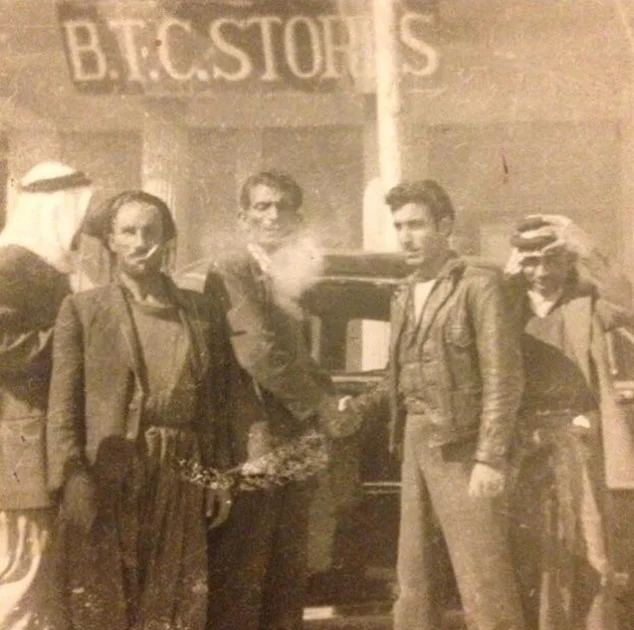
Who Are the Kurds?
The Kurds are an Iranian ethnic group indigenous to a mountainous region of the Middle East known as Kurdistan, which spans parts of modern-day Turkey, Iraq, Iran, and Syria. With a population estimated between 25 and 35 million people, they represent one of the largest ethnic groups in the world that does not have its own independent nation-state. Their language, Kurdish, belongs to the northwestern Iranian branch of the Indo-European language family and is spoken in several dialects, including Kurmanji, Sorani, and Zazaki.
Geographic Distribution
The Kurdish population is distributed across four primary countries. Turkey hosts the largest Kurdish community, estimated at around 15 to 20 million people. Iraq is home to approximately 5 to 8 million Kurds, concentrated mainly in the north of the country. Iran and Syria each have significant Kurdish minorities as well, with communities also present in Armenia, Lebanon, and among diaspora populations in Europe and beyond. The geographic region of Kurdistan does not correspond to any single administrative boundary, making political unity a persistent challenge.
Language and Identity
Kurdish identity is shaped by a combination of language, shared history, and cultural traditions. Despite geographic fragmentation, Kurds maintain a strong sense of collective identity. The Kurdish language has faced suppression in various countries throughout the 20th century, including bans on its use in education and media. Today, Kurdish-language broadcasting and publishing exist in parts of Iraq, and to a lesser degree in other regions.
A Complex Political History
The political history of the Kurds is deeply intertwined with the events that shaped the modern Middle East, particularly the aftermath of World War I and the collapse of the Ottoman Empire.
The Treaty of Sèvres and Its Aftermath
The 1920 Treaty of Sèvres briefly promised the Kurds the possibility of an autonomous region, raising hopes for eventual statehood. However, the subsequent Treaty of Lausanne in 1923, which established the borders of modern Turkey, made no provision for Kurdish autonomy. This outcome left millions of Kurds divided among newly formed states and set the stage for decades of tension, uprisings, and suppression.
The Kurdish Question in the 20th and 21st Centuries
Throughout the 20th century, Kurdish groups in multiple countries pursued varying degrees of autonomy or independence, often meeting with violent state repression. In Iraq, the regime of Saddam Hussein carried out the Anfal campaign in the late 1980s, which involved mass killings and the use of chemical weapons against Kurdish civilians, most notably in the town of Halabja in 1988. This event is recognized internationally as a genocidal act.
In Turkey, the Kurdistan Workers' Party (PKK), founded in 1978, launched an armed insurgency in 1984 that has resulted in tens of thousands of deaths. The PKK is designated a terrorist organization by Turkey, the United States, and the European Union, though the broader Kurdish political movement encompasses many non-violent parties and civil society organizations.
The Kurdistan Region of Iraq
The most significant example of formalized Kurdish self-governance exists in northern Iraq. The Kurdistan Region of Iraq (KRI) is an autonomous region with its own parliament, government, and military forces known as the Peshmerga. Established in its current form after the 2003 invasion of Iraq, the KRI has developed considerable economic and political institutions, including a thriving oil sector.
The 2017 Independence Referendum
In September 2017, the Kurdistan Regional Government held a non-binding independence referendum, in which over 90% of voters expressed support for independence. The vote was declared unconstitutional by the Iraqi federal government and was condemned by neighboring countries and many Western governments who feared regional destabilization. Following the referendum, Iraqi federal forces moved to retake disputed territories, including the oil-rich city of Kirkuk, significantly reducing the KRI's territorial control.
Culture and Society
Kurdish culture is rich and diverse, shaped by centuries of history in the mountainous landscapes of the Middle East. Traditional music, poetry, and oral storytelling are central to Kurdish cultural life. Nowruz, the Kurdish and Persian New Year celebrated on the spring equinox, is among the most important cultural celebrations and has been recognized by UNESCO as an Intangible Cultural Heritage.
Kurdish cuisine, clothing, and folk dance vary by region but share common elements that reflect both nomadic traditions and settled agricultural life. Women have historically played a notable role in Kurdish society, and in recent decades, female fighters in Kurdish military units, particularly in Syria and Iraq, have drawn international attention for their participation in conflicts against groups such as the Islamic State.
The Kurds continue to navigate the complex intersection of cultural preservation, political aspiration, and regional geopolitics, making them a central subject of study in Middle Eastern affairs.
Comments