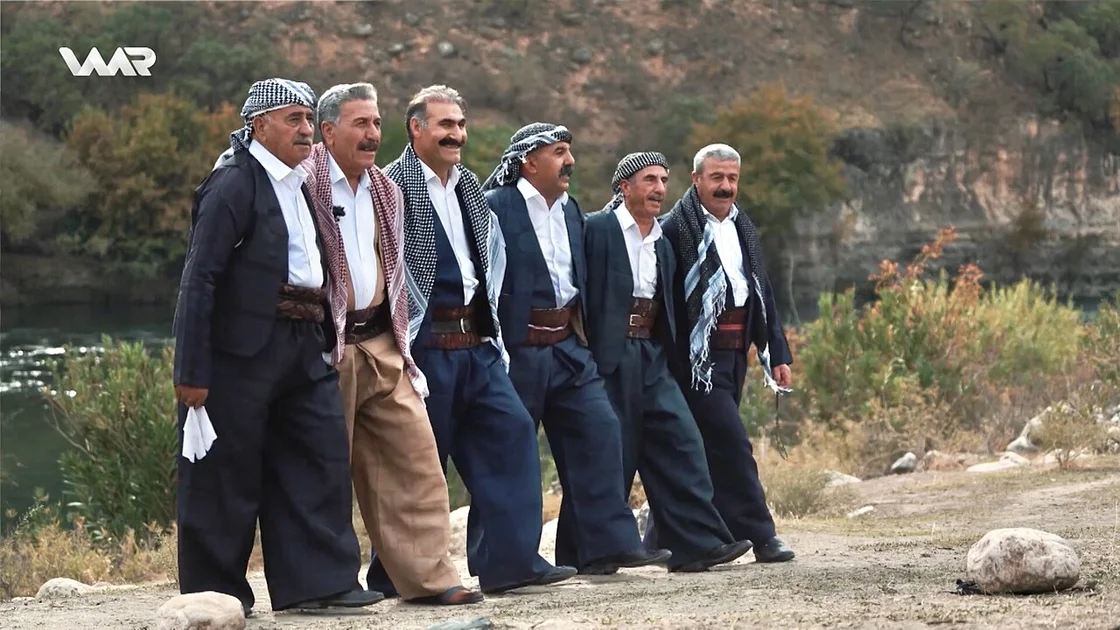
The Kurdish people represent one of the most significant ethnic groups in the Middle East, with a population estimated between 30 and 45 million people. Despite their large numbers, Kurds remain stateless, spread across four major countries: Turkey, Iran, Iraq, and Syria. Understanding Kurdish history, language, and culture offers important insight into the complex social and political dynamics of the region.
Origins and Historical Background
The Kurds are an Indo-European people whose roots trace back thousands of years to the mountainous regions of the Middle East, an area historically known as Kurdistan. While the exact origins of Kurdish civilization remain a subject of academic discussion, archaeological and historical evidence suggests continuous habitation of this mountainous region since ancient times.
The Rise and Fall of Kurdish Autonomy
Throughout history, various Kurdish kingdoms and principalities emerged and dissolved. The medieval period saw Kurdish dynasties such as the Shaddadids and the Marwanids hold regional power. The Treaty of Sèvres in 1920, signed after World War I, initially proposed an autonomous Kurdish region, but the subsequent Treaty of Lausanne in 1923 redrew boundaries without Kurdish recognition, cementing their division across modern nation-states.
In Iraq, the Kurdistan Region gained formal autonomous status following the 2005 Iraqi constitution, making it the most politically recognized Kurdish entity in the world. The capital, Erbil, serves as a major cultural and economic hub for Kurdish people globally.
The Kurdish Language
Kurdish belongs to the Iranian branch of the Indo-European language family, closely related to Persian and Pashto. It is spoken by millions across the Middle East and in diaspora communities worldwide.
Major Dialects
The Kurdish language is not monolithic. It comprises several distinct dialects, the most widely spoken of which include:
- Kurmanji (Northern Kurdish): The most widely spoken dialect, used predominantly in Turkey, northern Syria, and parts of Iraq and Iran.
- Sorani (Central Kurdish): Widely spoken in Iraqi Kurdistan and parts of Iran. This dialect is often used in official publications and media in the Kurdistan Region of Iraq.
- Gorani and Zazaki: Spoken by smaller communities, these dialects are sometimes classified as separate languages by linguists.
Written Kurdish uses different scripts depending on the region. In Turkey and Syria, the Latin alphabet is commonly used, while Arabic script predominates in Iraq and Iran. This variation reflects the political and cultural fragmentation that has shaped Kurdish linguistic development.
Kurdish Culture and Traditions
Kurdish culture is rich and diverse, shaped by centuries of history, geography, and interaction with neighboring peoples. Despite political divisions, many cultural elements remain shared across Kurdish communities.
Music, Dance, and Art
Music holds a central place in Kurdish cultural identity. Traditional instruments such as the tembûr (a long-necked string instrument) and the duduk (a woodwind instrument) are widely used in folk music. The dengbêj tradition — a form of oral storytelling through song — has been recognized for its cultural importance and is practiced by trained singers known as dengbêjs, who preserve historical narratives and epics.
The Halay and Govend are popular forms of traditional group dance, often performed at celebrations, weddings, and the Kurdish new year known as Newroz.
Newroz: The Kurdish New Year
Newroz, celebrated on or around March 21, is among the most important cultural events for Kurdish people. Marking the arrival of spring and the Persian new year, it carries deep symbolic meaning of renewal, resistance, and identity. Bonfires are lit, traditional clothing is worn, and communities gather for festivities. Newroz is recognized as a public holiday in Iraq's Kurdistan Region and is celebrated by Kurdish diaspora communities worldwide.
Religion and Social Structure
The majority of Kurds are Sunni Muslims, though significant minorities practice Shia Islam, Yazidism, Alevism, and Christianity. The Yazidis, a religious minority found predominantly in Iraq, have faced significant persecution, including a widely condemned genocide carried out by ISIS in 2014. Kurdish society has traditionally been organized around tribal structures, though urbanization has altered these patterns in recent decades.
The Kurdish Question in Contemporary Politics
The political status of Kurdish populations remains one of the most debated issues in Middle Eastern geopolitics. In Turkey, the Kurdish conflict has involved decades of tension between the state and the Kurdistan Workers' Party (PKK), which the Turkish government, the United States, and the European Union classify as a terrorist organization. In Syria, Kurdish forces played a pivotal role in the fight against ISIS, gaining international attention and temporary territorial control in northeastern Syria.
In Iraq, the Kurdistan Regional Government (KRG) maintains a semi-independent administration with its own parliament, military forces known as the Peshmerga, and significant oil revenues. A 2017 independence referendum resulted in an overwhelming vote for independence, though the international community did not recognize the result.
The Kurdish situation continues to evolve, shaped by regional conflicts, diplomacy, and the ongoing aspirations of millions of people for greater political recognition and cultural rights.
Comments