
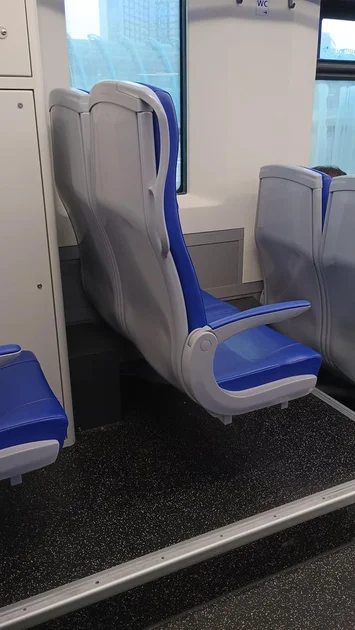
Thameslink to Replace 60,000 'Ironing Board' Seats in Public Ownership Push
New cushions and backrests for all 115 trains after years of complaints
Transport Secretary Heidi Alexander announced on August 26, 2026, that all 115 Thameslink trains will receive new seat cushions and backrests, replacing the notorious "ironing board" seats that have drawn commuter complaints for over a decade. The £1.6bn fleet, built by Siemens and rolled out between 2016 and 2019, will see more than 60,000 seats upgraded starting in 2027, with the work expected to take two years.
Speaking at a press event, Alexander framed the upgrade as a direct benefit of public ownership: "Less than 100 days since GTR transferred into public control, we're delivering on the improvements commuters have been asking for." Govia Thameslink Railway (GTR), which operates Thameslink, came under public ownership in May 2026 as part of the new Great British Railways programme.
What the upgrade includes
GTR says the new seat base cushions and backrests have been developed following extensive customer testing with everyday commuters. The upgrades will be rolled out across the entire Class 700 fleet, which serves some of Britain's busiest commuter routes, including London, Bedford, Brighton, and Cambridge. First-class seating will retain its current backrest design but will also receive improved seat base cushions. Additionally, seat-back tables will be added to 70 trains that currently lack them.
The project is part of a broader package of improvements announced by GTR, including increased Gatwick Express services from December and a fleet-wide refurbishment of toilet facilities, which includes graffiti removal. GTR CEO John Whitehurst said, "Our customers tell us that comfort matters, which is why we've been working on plans to improve seating on Thameslink services and give the millions of people who use our extensive network a better experience."
Why the seats became a symbol of commuter frustration
A decade of discomfort
The thin, hard seats on Thameslink's Class 700 trains quickly became a symbol of poor passenger experience after their introduction. Commuters nicknamed them "ironing boards" for their rigid, flat design, and social media has been filled with photos of passengers using makeshift cushions or standing to avoid sitting. The seats were so thin that some passengers joked they were designed to discourage lingering, prioritizing capacity over comfort.
The trains were originally procured by the Department for Transport (DfT) in 2013, with the £1.6bn contract awarded to German manufacturer Siemens. The DfT's own procurement guidance, seen by the BBC, stressed the need for "high capacity" and "reduced weight," specifying that the trains should cater for around 1,000 people boarding or alighting at once and feature a "2+2 seat layout to ease flow and provide standing space." Critics argue that this emphasis on maximizing standing space led to the minimal cushioning.
Public ownership as the catalyst for change
The seat upgrade is being touted by the government as evidence that public ownership can deliver tangible improvements for passengers. Alexander wrote on X (formerly Twitter): "This is what public ownership looks like in action." However, not everyone is convinced. Graeme Pickering, senior correspondent at Railway Magazine, responded on X: "Might have been wise not to frame this as 'public ownership fixes private sector mess' when it was the DfT which procured said trains." Indeed, the DfT was responsible for the original procurement, raising questions about accountability.
Wider rail reforms
The announcement comes as part of a series of reforms under the new Great British Railways (GBR) organisation, which is intended to oversee rail services across England. GBR was launched in May 2026, with GTR becoming one of the first operators to be brought into public ownership. Alexander said, "We know fixing Britain's railway is more than a refurb job and moves like this are just the start of putting our railway back on the right track. We've frozen fares for the first time in 30 years and publicly owned operators have added 76,000 extra seats on to the network."
The future of rail travel: comfort vs. capacity
A broader trend towards passenger experience
The Thameslink seat upgrade reflects a growing recognition across the rail industry that passenger comfort is a key factor in encouraging people to choose trains over cars. For decades, the focus was on cramming in as many passengers as possible to maximize revenue per train, particularly on commuter routes. However, this approach led to a backlash, with passengers demanding better conditions not just in terms of speed and reliability, but also in terms of basic comfort.
Other operators have also begun to address seating issues. For example, many intercity fleets have been refurbished with more ergonomic seats, and some new trains are being designed with adjustable headrests and increased legroom. The Thameslink upgrade is one of the most high-profile examples of this trend, given the scale of the fleet and the notoriety of its seats.
The role of technology and testing
GTR says the new seat design was developed through "customer research with everyday commuters," which helped shape the best possible solution for cushion comfort. This approach marks a departure from the top-down procurement of the past, where seating seemed to be an afterthought. By involving passengers in the design process, the operator hopes to avoid similar complaints in the future.
Challenges ahead
Despite the positive reception, the upgrade is not without challenges. The work will take two years, during which some trains will be out of service for retrofitting, potentially causing temporary overcrowding. Moreover, the cost of the upgrade has not been disclosed, though it is likely to run into hundreds of millions of pounds. Some commentators have questioned whether the money could be better spent on improving punctuality or reducing fares, but the government argues that comfort is a key part of the passenger experience.
A positive step for commuters
For the millions of people who use Thameslink services every week, the announcement is a welcome relief. The "ironing board" seats have been a source of daily misery for commuters on routes such as London to Bedford, Brighton, and Cambridge. The upgrade, combined with other improvements like increased Gatwick Express services and toilet refurbishments, signals a new era under public ownership.
Conclusion: A turning point for Thameslink
The seat replacement is more than a cosmetic fix; it represents a shift in priorities from pure capacity to a balance between capacity and passenger well-being. Under the new Great British Railways framework, operators are being pushed to focus on "putting passenger experience at the heart of everything it does," as Alexander put it. While the seats won't be replaced overnight, the commitment to do so is a clear sign that the rail industry is listening to its customers.
As the two-year upgrade program begins in 2027, Thameslink passengers can look forward to journeys that are not only efficient but also comfortable. The move also highlights the potential benefits of public ownership, though critics note that the original mistake was made under public procurement. Either way, the end of the "ironing board" era is a positive development for one of the UK's busiest commuter networks.
For more on how other industries are adapting to consumer feedback, see Humanoid Robot Cleaners Spark Debate as $30-an-Hour Service Goes Viral. And for a look at how large organizations handle public scrutiny, check out State Farm Secret Documents Show Alleged Scheme to Underpay Oklahoma Homeowners.
Comments