U.S.-Iran Negotiations Reach a Critical Juncture in Tehran
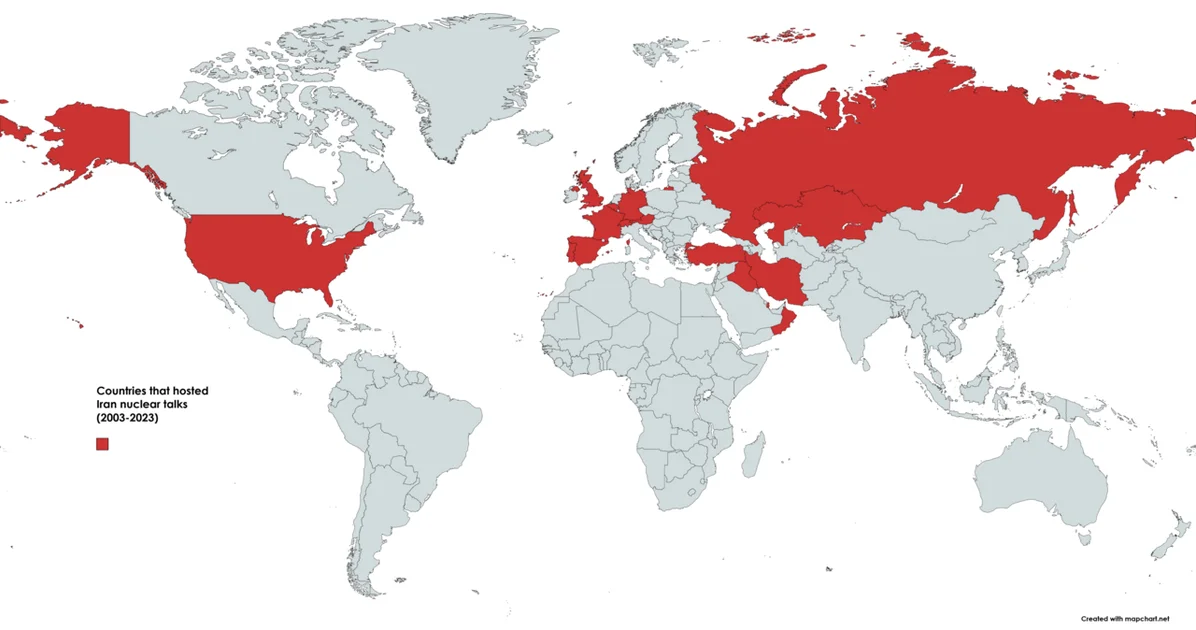
Direct and indirect negotiations between the United States and Iran have entered a decisive phase, with diplomatic envoys meeting in Oman and European capitals to hammer out the terms of a potential new nuclear agreement. The talks, which have been building momentum over the past several weeks, center on limiting Iran's uranium enrichment program in exchange for significant sanctions relief.
U.S. Special Envoy Steve Witkoff and Iranian Foreign Minister Abbas Araghchi have both confirmed that multiple rounds of discussions have taken place, with both sides describing the tone as constructive. According to statements from Tehran, Iran is willing to cap enrichment levels and allow enhanced International Atomic Energy Agency (IAEA) inspections, but insists that any deal must guarantee permanent sanctions removal — a condition that remains a sticking point in Washington.
Key Numbers on the Table
Iran currently enriches uranium to 60 percent purity, well above the 3.67 percent ceiling set by the 2015 Joint Comprehensive Plan of Action (JCPOA). The IAEA has reported that Iran's stockpile of highly enriched uranium now stands at a level sufficient to produce several nuclear devices if enriched further — a finding that has added urgency to the diplomatic push. Negotiators are reportedly discussing a return to the 3.67 percent threshold, paired with a phased sanctions-relief mechanism structured over 12 to 18 months.
Why These Talks Matter More Than Ever
The renewed focus on Tehran comes at a particularly volatile moment in the Middle East. The war in Gaza, ongoing tensions in Lebanon, and shifting alliances across the Gulf have reshuffled regional dynamics in ways that complicate any bilateral deal. For the United States, a nuclear-armed Iran represents a red line that both Republican and Democratic administrations have consistently maintained. For Iran, sanctions relief is not merely economic — it is existential, with inflation running above 40 percent and the national currency having lost more than 80 percent of its value over the past decade.
European powers — France, Germany, and the United Kingdom — remain deeply invested in the outcome. The so-called E3 have been coordinating closely with Washington while also maintaining their own back-channel communications with Tehran. A collapse of talks would likely trigger a new round of European sanctions and potentially accelerate Iran's nuclear timeline in ways that could be irreversible.
The Regional Stakes
Israel has made clear that it views a nuclear-capable Iran as an existential threat and has not ruled out unilateral military action if diplomacy fails. Saudi Arabia, for its part, has signaled that any deal must include regional security guarantees, adding another layer of complexity to negotiations already strained by mutual distrust. The Mexico at a Crossroads: Trade Tensions, Security Pressures, and a Reshaping Relationship with the United States moment facing Washington in the Western Hemisphere further illustrates how the Biden and Trump-era foreign policy legacies continue to collide with present-day realities, forcing U.S. diplomats to manage multiple high-pressure negotiations simultaneously.
For ordinary Iranians in Tehran, the outcome of these talks has immediate and tangible consequences. Foreign investment, access to international banking, and the price of basic goods are all directly tied to whether sanctions are lifted. Polling conducted by independent researchers suggests that a majority of Iran's urban population supports a diplomatic resolution, even as hardliners within the Islamic Revolutionary Guard Corps and the clerical establishment remain deeply skeptical of any American commitments.
What a Deal — or Its Failure — Would Change
A successful agreement would mark one of the most significant diplomatic achievements in the Middle East in more than a decade. It would effectively freeze Iran's nuclear program at a non-weapons threshold, reintegrate Tehran into the global financial system, and potentially open the door to broader regional de-escalation talks. Energy markets would also respond: Iran holds the world's second-largest natural gas reserves and fourth-largest proven oil reserves, and its full return to global markets could meaningfully affect prices.
Failure, however, carries consequences that are harder to contain. Without a deal, Iran's nuclear program would likely continue advancing, the IAEA's monitoring access could be further restricted, and the risk of military escalation — whether by Israel, the United States, or a combination — would increase substantially. Analysts at the International Crisis Group have warned that the current diplomatic window may be narrow, with domestic political pressures on both sides capable of closing it within months.
The world is watching Tehran not merely as a geographic capital, but as the focal point of one of the most consequential geopolitical negotiations of the current decade. How the next few weeks unfold could determine the shape of Middle Eastern security — and global energy stability — for years to come.
Comments