
Sydney Marathon 2026: Medal Blunder Goes Global as Munich Stadium Replaces Sydney Landmark
With just days to go before the 2026 Sydney Marathon, organizers have found themselves at the center of an unexpected international controversy—not over the race route or elite fields, but over a design flaw on the finisher’s medal. The official medal, which 40,000 participants are set to receive on August 30, mistakenly features Munich’s Allianz Arena, home of Bayern Munich, instead of Sydney’s Allianz Stadium, a landmark on the actual course.
The error came to light earlier this week when the race’s social media accounts unveiled the medal design. Runners and eagle-eyed observers quickly noticed that the stadium engraved on the back of the medal—alongside the Sydney Harbour Bridge and the Opera House—bore the unmistakable diamond-shaped facade of the German arena, not the bronze-finned exterior of the Sydney venue. The Sydney Marathon’s official Instagram post, which promised that runners would “find the story of the course in the details,” instead delivered a geographic mix-up that has since gone viral.
In a statement to the BBC, a spokesperson for the Sydney Marathon acknowledged the mistake with a touch of humor: “A little too much international flavour has found its way onto the back of the finishers medal, with an incorrect depiction of the stadium.” The spokesperson added, “We’re not going to run from it. It was an unfortunate error, though it’s certainly given everyone something to talk about this weekend, mostly in good humour.” The organizers also confirmed that, with the race just one week away, the medals as designed will be distributed—there is no time to correct them. They described the medal as “beautiful” and “now a little more unique.”
Why This Medal Mistake Matters More Than You Think
At first glance, a misprinted stadium on a marathon medal might seem like a trivial oversight. But for the Sydney Marathon, the stakes are higher than a single piece of hardware. The race is vying for a spot as the seventh World Marathon Major, a prestigious designation that would place it alongside Tokyo, Boston, London, Berlin, Chicago, and New York. The event has been under evaluation since 2022, and its 2026 edition—with a record 40,000 participants, up from 35,000 in 2025—is seen as a critical showcase.
The medal design was intended to celebrate “Sydney’s place on the world stage” and to symbolize the marathon’s growing international status. Instead, it has become a lesson in the dangers of branding oversights. The mix-up is particularly awkward because both stadiums share the same naming sponsor, Allianz, which may have contributed to the confusion. Sydney’s Allianz Stadium, home to rugby league’s Sydney Roosters and A-League’s Sydney FC, has a flat facade with long bronze fins, while Munich’s Allianz Arena, built in 2005, is known for its inflatable ETFE cushion panels that glow in red, blue, or white. The two structures look nothing alike, but their similar names likely played a role in the engraver’s error.
The mistake has not only embarrassed organizers but also sparked a broader conversation about quality control in event merchandise. Running blogs and international media, including the BBC and The Guardian, have picked up the story, and social media responses have ranged from amused to critical. Munich’s Allianz Arena even joined the fun, commenting on Instagram: “Oh wow, we didn’t have that on our bingo card!” The German stadium’s response has been widely shared, turning a potential PR disaster into a moment of light-hearted engagement.
A Medal Design Story: From First Nations Art to a German Stadium
The medal’s design was meant to be a fusion of local culture and athletic achievement. The reverse side features an indigo and gold pattern created by First Nations artist Ambrose Killian, which represents the kilometres of the course and the eight global major marathons. Killian, however, has clarified that he was “not involved in the design or production” of the back of the medal, where the error lies. He only contributed artwork for the lanyard and the front side of the medal, which depicts the Sydney skyline.
This clarification has shifted attention to the production process, raising questions about how such a glaring mistake slipped through. The Sydney Marathon organizers have not yet explained how the error occurred, but they have accepted responsibility. In a post on Sunday, they wrote: “You noticed. We noticed. We’re human. See you in Sydney.” This candid approach has resonated with many runners, who appreciate the transparency.
For participants, the medal remains a cherished symbol of months of training and the culmination of a 42.2-kilometre journey. One organizer told The Athletic: “What it represents does not change. Behind every one of these medals is months of early mornings, long runs and quiet determination, and having it placed around your neck at the Sydney Opera House is a moment our participants will never forget.”
The Race Goes On: Sydney’s Big Weekend
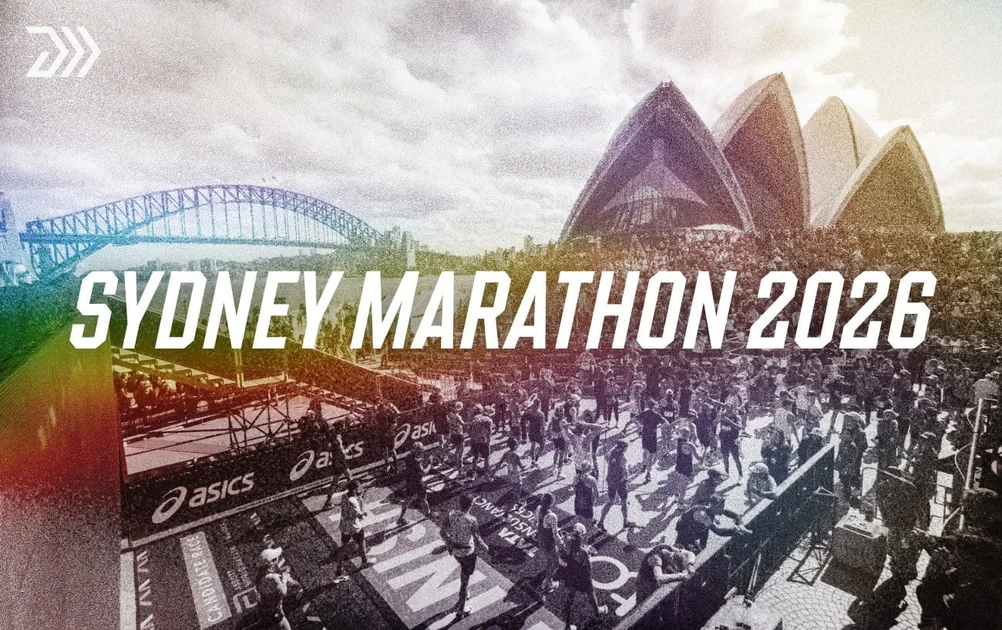
Despite the distraction, the Sydney Marathon is gearing up for its biggest event yet on August 30. The course starts near the site of the Sydney 2000 Olympic Games marathon, passes landmarks like Centennial Park and the Royal Botanic Gardens, and finishes at the iconic Opera House. The race is part of the Abbott World Marathon Majors series, which this year has seen Tokyo, Boston, and London already completed, with Berlin, Chicago, and New York to follow.
More than 9,500 participants are expected to run for charity, part of a field that has doubled in size since the event was first included in the World Marathon Major evaluation process. The influx of international runners is a key factor in Sydney’s bid, and organizers are keen to present a flawless experience. The medal error, while embarrassing, has not dampened enthusiasm. In fact, it may have inadvertently increased the event’s profile, with many social media users now talking about the race who might otherwise have ignored it.
Olympic medalists and elite athletes are expected to compete, adding to the event’s prestige. The organizers have emphasized that their focus remains on “delivering a safe, spectacular and unforgettable weekend.” For the runners, the chance to earn a World Marathon Major medal—even one with an unintended international twist—is a powerful motivator.
Medal Mishaps and the Trend of High-Profile Event Errors
The Sydney Marathon is not the first event to suffer a medal design error, nor will it be the last. In 2025, organizers of the Great North Run, the world’s biggest half marathon, apologized after their medal depicted an aerial view of Sunderland and the River Wear instead of Newcastle and Gateshead. That error also sparked online ridicule, but did little to harm the race’s popularity.
Such mistakes highlight the challenges of producing millions of medals with intricate designs and tight deadlines. Event organizers often work with overseas manufacturers, and proofreading is not always as rigorous as it should be. The result is a growing collection of collectible oddities, which some runners now seek out precisely because of their flaws. The Sydney medal, with its German stadium, could become a sought-after item on resale markets, with some speculating that its uniqueness will only add to its value.
The light-hearted response from organizers has been praised as a model for crisis management. Instead of defensive denials, they have embraced the error, turning it into a talking point and even a marketing hook. As one running blogger noted, “Who wouldn’t want a medal that’s truly one of a kind?” The episode also serves as a reminder that in an age of instant social media, transparency and humor can defuse what might otherwise escalate into a public relations nightmare.
Perspectives: What This Means for Sydney’s Marathon Major Bid
The medal gaffe comes at a delicate time for Sydney’s bid to become the seventh World Marathon Major. The Abbott World Marathon Majors organization evaluates races on several criteria, including course quality, elite field strength, and overall participant experience. While a medal design error is unlikely to derail the bid, it is a reminder that no detail is too small in the eyes of global scrutiny.
Sydney’s bid has been strengthened by the record participation and its popular inclusion in the marathon calendar. The event generates significant economic impact for the city, with an estimated AU$8.8 million raised for charity in 2025. The 2026 edition is expected to be even more profitable, and the international attention from the medal story may actually boost tourism and registration for future editions.
Organizers have been careful to keep the focus on the race itself, and the running community has largely rallied behind them. Many participants have taken to social media to express their excitement about receiving a “unique” medal, and some have even joked that they will now have a story to tell beyond the marathon itself. The episode has also sparked discussions about the importance of local representation in event branding, with some calling for more rigorous vetting of designs that feature city landmarks.
For now, the Sydney Marathon seems to have weathered the storm with grace. The organizers’ plea to “See you in Sydney” has been met with enthusiasm, and the mood is optimistic. As the race day approaches, the attention will shift from the medal to the athletes, and to the spectacle of 40,000 runners crossing the Harbour Bridge and finishing under the Opera House. The city’s resilience in the face of a silly mistake may be a more fitting tribute to its character than any medal design.
A No-Nonsense Run: Lessons for Event Organizers Everywhere
The Sydney Marathon episode offers a valuable lesson for event organizers worldwide: in a hyper-connected world, even the smallest error can become a global story. The key, as Sydney has shown, is to respond with humility and a dash of wit. By acknowledging the mistake and not over-apologizing, organizers have managed to turn a negative into a positive, demonstrating that the running community values authenticity over perfection.
As the marathon prepares to welcome runners from around the world, the medal will be a constant reminder of the event’s human side. Some participants may even feel a strange pride in carrying a piece of Munich through the streets of Sydney. After all, as the organizers put it, “It’s a beautiful medal, and now a little more unique.”
In the end, the marathon is about more than a piece of metal. It’s about the journey, the achievement, and the collective energy of thousands of people pushing their limits. The Sydney Marathon’s response to its medal mishap has captured that spirit perfectly. As thousands prepare to take their marks, one thing is certain: this year’s finisher’s medal will be talked about for years to come, both for its unintended design flaw and for the grace with which the city handled it.
Comments