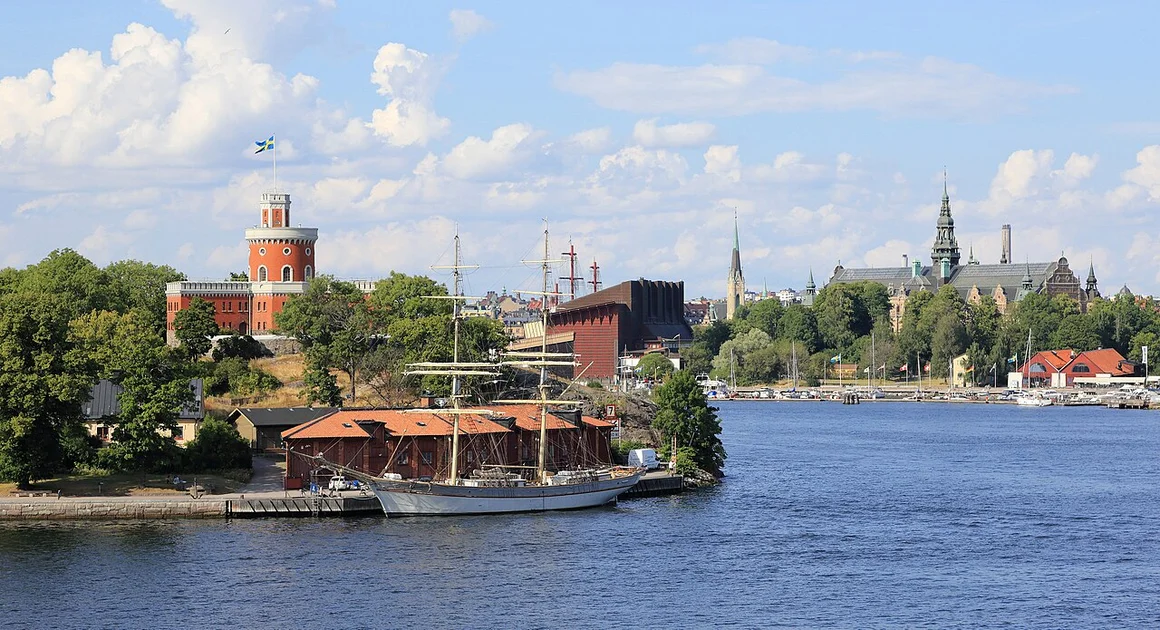
Stockholm stands as one of Europe's most visually striking capitals, spreading across 14 islands where Lake Mälaren meets the Baltic Sea. Founded in the 13th century, it has evolved into a modern metropolis of approximately 1 million residents, serving as the political, cultural, and economic heart of Sweden.
History and Origins
Medieval Foundations
The city's origins trace back to 1252, when Birger Jarl, a Swedish statesman, established a fortified settlement on the island of Stadsholmen — today known as Gamla Stan, or the Old Town. The strategic location allowed control over trade routes between Lake Mälaren and the Baltic, making it a commercially vital site from the outset.
During the 14th and 15th centuries, Stockholm grew into a significant trading hub under the influence of the Hanseatic League. The city's cobblestone streets, medieval churches, and the Royal Palace in Gamla Stan still reflect this heritage, drawing visitors who wish to experience centuries of Scandinavian history in a compact area.
Growth into a Modern Capital
By the 17th century, Stockholm had become the capital of the Swedish Empire, one of the great powers of its era. Rapid industrialisation in the 19th century transformed the city, driving urban expansion and population growth. Today, Stockholm is recognised for its blend of historic architecture and contemporary Scandinavian design.
Geography and Urban Structure
Island Configuration
One of Stockholm's defining characteristics is its archipelago setting. The city proper is built across 14 islands, while the greater Stockholm archipelago contains roughly 30,000 islands, islets, and rocks extending into the Baltic Sea. This geography gives residents and visitors unique access to nature, with ferries and bridges connecting the various districts.
The city is divided into several distinct areas. Östermalm is known for its upscale residences and galleries, while Södermalm — affectionately called "Söder" — has developed a reputation for its bohemian atmosphere, independent shops, and vibrant food scene. Kungsholmen hosts many of the city's municipal institutions, and Djurgården functions as a green recreational island home to several major museums.
Climate
Stockholm has a humid continental climate with clearly defined seasons. Winters are cold and dark, with average temperatures around -3°C in January and limited daylight hours. Summers are mild and relatively bright, with temperatures averaging 22°C in July and extended periods of daylight that approach the phenomenon of the midnight sun at midsummer.
Economy and Innovation
A Leading Tech Hub
Stockholm has established itself as one of Europe's foremost centres for technology and entrepreneurship. The city has produced a disproportionate number of billion-dollar tech companies — so-called "unicorns" — relative to its population size. Spotify, Klarna, King, and Mojang (creator of Minecraft) all originated in Stockholm, contributing to its global reputation as a startup ecosystem.
The concentration of engineering talent, strong venture capital networks, and Sweden's historically high internet penetration rate have all supported this growth. The city regularly features among the top European cities for innovation in independent assessments.
Traditional Industries and Trade
Beyond the tech sector, Stockholm's economy encompasses finance, life sciences, clean energy, and media. Sweden's major banks and financial institutions are headquartered in the city, and a number of pharmaceutical companies maintain significant operations in the greater Stockholm region. Tourism also plays a meaningful role, attracting millions of international visitors each year.
Culture, Museums, and Nobel Legacy
World-Class Cultural Institutions
Stockholm is home to an impressive array of museums and cultural venues. The Vasa Museum houses the remarkably preserved 17th-century warship Vasa, which sank on its maiden voyage in 1628 and was salvaged in 1961. The ABBA Museum on Djurgården celebrates one of the best-selling music acts in history and draws large numbers of visitors annually.
The Moderna Museet offers an extensive collection of modern and contemporary art, while the Swedish History Museum presents archaeological and cultural artefacts spanning thousands of years. Skansen, established in 1891, is widely considered the world's oldest open-air museum, showcasing traditional Swedish buildings and rural life from various historical periods.
The Nobel Prize Connection
Every December, Stockholm becomes the global centre of attention as it hosts the Nobel Prize Award Ceremony. The prizes in Physics, Chemistry, Physiology or Medicine, Literature, and Economics are presented at the Stockholm Concert Hall, followed by the Nobel Banquet at Stockholm City Hall — a grand event attended by laureates, royalty, and dignitaries. This annual tradition reinforces Stockholm's identity as a city that values scientific progress and intellectual achievement.
From its medieval island origins to its current status as a technology powerhouse and cultural capital, Stockholm continues to occupy a prominent place on the world stage.
Comments