
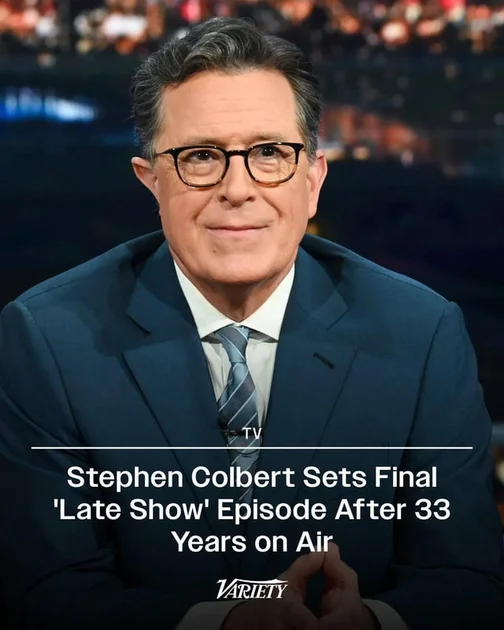
A Late-Night Era Draws to a Close
After more than a decade anchoring the 11:35 p.m. slot at the Ed Sullivan Theater in New York, Stephen Colbert will tape his final episode of The Late Show with Stephen Colbert on May 21, 2026. The cancellation, announced by Paramount Global last year, marks not just the end of Colbert's tenure but the retirement of the Late Show franchise itself at CBS — a brand that stretches back through David Letterman's two-decade run before Colbert took over.
The show is currently in its final stretch. After a brief dark period the week of April 27, it will launch into its last three-week run before the series finale. In the meantime, the rest of late night's so-called "Core Four" — NBC's Tonight Show Starring Jimmy Fallon, Late Night with Seth Meyers, ABC's Jimmy Kimmel Live!, and Comedy Central's The Daily Show — continue to air originals, keeping the competitive landscape lively right up until Colbert's exit.
The Political Backdrop
The cancellation has not escaped political commentary. President Donald Trump claimed credit on Truth Social for Colbert's removal, stating he was glad to see the host leave the air — a reference to the long-running tension between the two figures. The broader context includes a $16 million settlement CBS parent company Paramount Global reached with the Trump administration over a 60 Minutes interview featuring then-presidential candidate Kamala Harris, which contributed to the financial pressure on the network. Paramount has been clear, however, that the decision was driven primarily by economics, not politics, calling Colbert "irreplaceable" and choosing to retire the franchise rather than recast it.
What Stephen Colbert Is Doing Next
For fans wondering what becomes of one of television's sharpest satirical voices, Colbert has already signaled a significant creative pivot. The host publicly announced that he will co-write a Lord of the Rings movie alongside his son, Peter McGee, a screenwriter. Colbert, a famously devoted Tolkien enthusiast, framed the project with characteristic wit during a recent broadcast: "I knew I couldn't do that and do this show at the same time, but it turns out, I'm going to be free starting this summer. So if you'll excuse me, I've got to finish a television show, and I've got to write a movie script, but I will see you all in The Shire."
The move to film represents a genuine departure from the live, topical, five-nights-a-week rhythm of late-night television. It also speaks to a broader shift happening across the entertainment industry, where veteran TV talent is increasingly exploring streaming-era formats, film, and direct-to-audience content.
CBS Scrambles to Fill an Iconic Slot
With the Ed Sullivan Theater's future uncertain, CBS has announced a temporary solution: a one-year deal with media mogul Byron Allen to bring his syndicated programs to the network's late-night hours. Starting May 22, Comics Unleashed with Byron Allen will occupy the 11:35 p.m. slot, with Funny You Should Ask filling the 12:35 a.m. hour. Allen's shows are filmed in California, a logistical and cost contrast to the New York-based Late Show operation.
CBS executives were candid during an April press briefing in Hollywood about the limitations of this arrangement. George Cheeks, chair of TV Media at Paramount, described the Allen deal as a financial stopgap that allows the network to turn a small, immediate profit — critical as CBS absorbs the mounting costs of its NFL broadcast rights. "If we are going to go back into that space, we have to go back into that space with a different financial model," Cheeks said, acknowledging that the network has no firm long-term plan but that development executives are actively exploring new concepts.
Why the Old Model No Longer Works
The financial math of traditional late-night television has deteriorated significantly. Younger audiences increasingly consume comedy content through YouTube clips, social media highlights, and on-demand platforms rather than tuning in live at 11:35 p.m. The advertising revenue that once made a flagship late-night show a reliable profit center no longer justifies the production costs — particularly for a network like CBS that is simultaneously managing billion-dollar sports rights commitments.
The Broader Implications for Late-Night Television
Colbert's exit and CBS's uncertain path forward reflect a structural reckoning that has been building across the late-night genre for years. The traditional five-night talk show format — born in the broadcast era and refined through the cable years — is under pressure from every direction: cord-cutting, fragmented attention spans, rising production costs, and the algorithmically driven content ecosystems of YouTube and TikTok.
While NBC and ABC still maintain robust late-night operations with Fallon and Kimmel respectively, and while The Daily Show continues to evolve on Comedy Central, the loss of CBS as a full-time original programming player removes one of the genre's legacy pillars. It also raises a pointed question: if CBS does eventually develop a new late-night concept, what does a financially viable, digitally native version of that format actually look like in 2027 and beyond?
The answer, if CBS finds one, could help define the next chapter of American late-night comedy. For now, the spotlight belongs to Stephen Colbert's final weeks — a send-off to both a host and an era that shaped political satire on television for more than a decade.
Comments