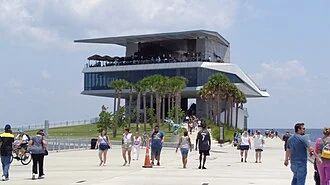
St. Petersburg, Florida, often called "St. Pete," is a coastal city located on the Pinellas Peninsula along the Gulf of Mexico. With a population of approximately 260,000 residents, it ranks as the fifth-largest city in Florida and one of the most visited destinations in the southeastern United States. Known for its year-round sunshine, waterfront parks, and thriving arts scene, St. Petersburg offers a diverse blend of natural beauty and urban culture.
History and Background
The area now known as St. Petersburg was originally inhabited by the Tocobaga people for thousands of years before European contact. Spanish explorers arrived in the region during the 16th century, though permanent European settlement did not take hold until the 19th century.
Founding and Early Development
St. Petersburg was officially founded in 1888 by John C. Williams and Peter Demens, a Russian entrepreneur who named the city after his hometown of Saint Petersburg, Russia. The arrival of the Orange Belt Railway, which Demens helped establish, was instrumental in opening the region to settlers and tourists alike. By the early 20th century, the city had grown rapidly, fueled by tourism, real estate development, and its reputation as a warm-weather destination.
In 1914, St. Petersburg made aviation history when the world's first scheduled commercial airline flight departed from its waterfront, traveling to Tampa. This milestone helped put the city on the national map and symbolized its forward-thinking character.
Geography and Climate
St. Petersburg occupies the southern tip of Pinellas County and is bordered by Tampa Bay to the east and the Gulf of Mexico to the west. The city's unique peninsular location means that residents are never far from water.
Weather Patterns
The city holds a Guinness World Record for the most consecutive sunny days recorded in a single location — 768 days of sunshine logged between 1967 and 1969. This distinction earned it the nickname "The Sunshine City." St. Petersburg has a humid subtropical climate, with hot, humid summers and mild, dry winters. Average high temperatures range from around 70°F (21°C) in January to 91°F (33°C) in July and August. Hurricane season runs from June through November, and the city occasionally experiences tropical storms.
Arts, Culture, and Attractions
St. Petersburg has built a strong reputation as a cultural hub in Florida, boasting one of the highest concentrations of museums per capita in the United States.
Museums and Galleries
The Salvador Dalí Museum, opened in its current waterfront location in 2011, houses the largest collection of Dalí's work outside of Europe. The museum draws hundreds of thousands of visitors annually and is widely considered one of the premier art institutions in the South. The Museum of Fine Arts St. Petersburg features collections spanning ancient to contemporary works, including pieces from Europe, Asia, and the Americas.
The city's Central Arts District is home to dozens of independent galleries, murals, and creative spaces, reflecting a grassroots arts movement that has grown steadily over the past two decades.
Outdoor Recreation
St. Petersburg's waterfront is a defining feature of daily life. Fort De Soto Park, consistently ranked among the best beaches in the United States, offers pristine white sand beaches, nature trails, and camping facilities. The city maintains an extensive network of parks and trails, including the Pinellas Trail, a 38-mile multi-use trail that runs through the county.
Boating, kayaking, paddleboarding, and fishing are popular year-round activities. The city's waterfront parks, including Vinoy Park and North Shore Park, serve as gathering spaces for events, outdoor concerts, and community activities.
Economy and Development
St. Petersburg's economy is diverse, with significant contributions from healthcare, finance, technology, and tourism sectors.
Major Industries
Johns Hopkins All Children's Hospital is one of the largest employers in the region and serves as a major pediatric healthcare center for the Tampa Bay area. Raymond James Financial, headquartered in nearby St. Petersburg, is one of the largest independent financial services firms in North America. The city has also attracted a growing number of tech startups and creative industries, contributing to its economic diversification.
Tourism remains a vital economic driver. The city's hotels, restaurants, and entertainment venues generate significant revenue, particularly during the winter months when visitors escape colder northern climates.
Urban Growth and Infrastructure
In recent years, St. Petersburg has experienced considerable urban development, with new residential towers, mixed-use developments, and renovated public spaces reshaping its downtown core. The redevelopment of the Historic Gas Plant District — the former site of Tropicana Field, home of Major League Baseball's Tampa Bay Rays — represents one of the most significant urban planning projects in the city's recent history.
St. Petersburg, Florida continues to evolve as a city that balances its historical roots with modern growth, making it a significant destination and residential hub along Florida's Gulf Coast.
Comments